The Chillenden Murders: A Case That Shook Britain
"Spare us the tears." That was the stark message on one front page the morning after Michael Stone was found guilty of battering Lin Russell and her six-year-old daughter Megan to death with a claw hammer. The brutal attack occurred in broad daylight on a country lane in Kent in July 1996. Another headline declared "Josie's day of justice," referencing Lin's elder child, who miraculously survived the frenzied assault.
A Villain Emerges from the Shadows
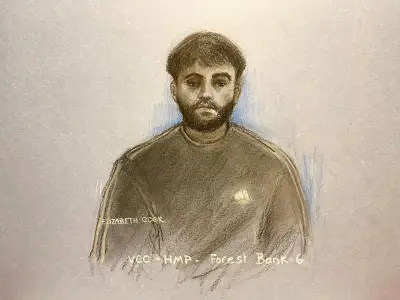
It was October 1998 when Stone, a 38-year-old heroin addict who sobbed in the dock upon learning his fate, became Britain's most-hated man. Kent Police captured the public mood perfectly: "We were looking for a maniac, and we found one." Yet as the dust settled on this high-profile trial, a very different narrative began to emerge—one that has endured, on and off, for nearly three decades.
Stone, a dishonest and occasionally violent individual, certainly made a convincing villain. In many ways, he did fit the description of a "maniac." However, many experienced observers who sat through three weeks of proceedings at Maidstone Crown Court were surprised by the guilty verdict. Their scepticism hinged on that fundamental legal principle: reasonable doubt.
The Flimsy Case Against Stone
As the days passed, it became clear the prosecution's case was almost entirely circumstantial. Bizarrely, given the appalling violence of the Chillenden Murders, prosecutors had absolutely no forensic evidence linking Stone to the blood-spattered scene. Witness statements appeared vague and contradictory at best. Despite Stone being a hardened criminal with convictions for violence, his motive for carrying out this particular attack remained unclear.
Not every juror had been convinced of Stone's guilt either. The panel reached a 10-2 majority decision. When the verdict was delivered, Stone turned to the public benches, stretched out his arms and pleaded: "It wasn't me, I never done it! It wasn't me, I haven't done it!" Today, he continues to maintain his innocence during a legal odyssey that has now endured for almost 30 years.
A Bumpy Legal Journey
Stone's initial conviction was quashed in 2001 after one key witness retracted his evidence. A retrial was held later that year, resulting in another guilty verdict by a 10-2 majority and a 25-year sentence. Stone filed a second appeal, which was rejected in 2005. His lawyer Mark McDonald has since made extensive submissions to the Criminal Cases Review Commission (CCRC), which first rejected his case in 2010, reopened it in 2017, briefly closed it in 2023, then reopened it again weeks later.
Stone is currently incarcerated at HMP Frankland in Durham, a Category A prison nicknamed "monster mansion" due to its roster of high-profile inmates including Ian Huntley, Wayne Couzens and Levi Bellfield. Despite becoming eligible for parole in July 2022, Stone has refused to countenance such a move on the grounds that doing so would require him to admit guilt.
The Horrific Crime Scene
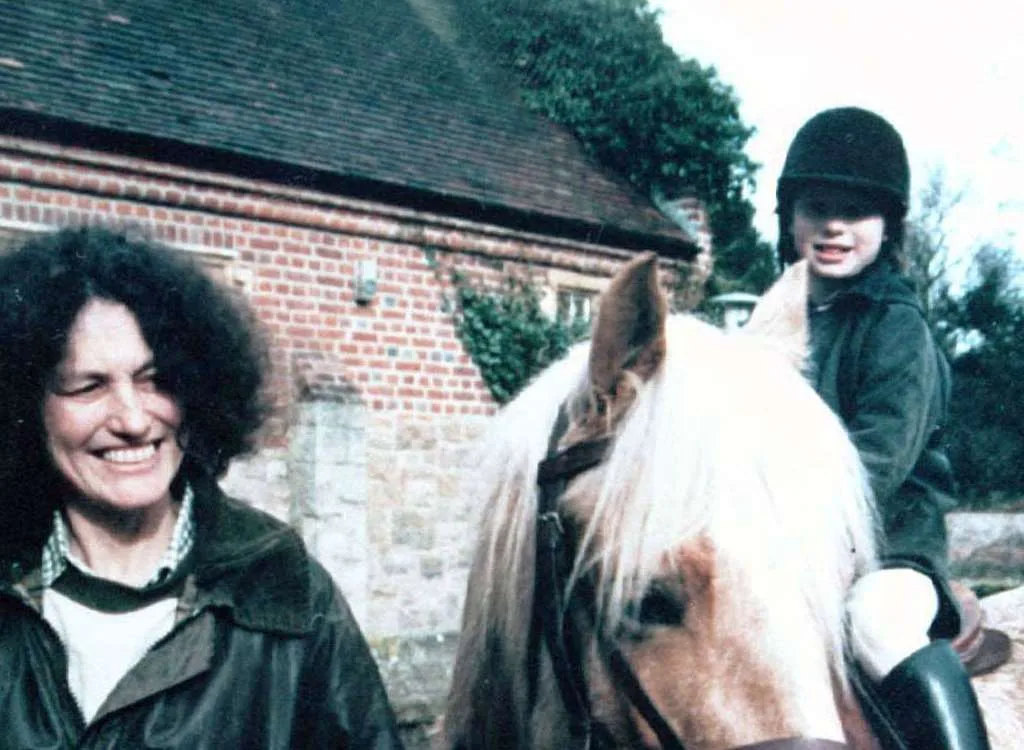
On the afternoon of July 9, 1996, Lin Russell was walking her two daughters, Josie and Megan, home from their school in the Kentish village of Goodnestone. The girls, aged nine and six respectively, had spent part of the day at a swimming gala and were carrying towels and swimsuits. Lin, a 45-year-old geologist, was accompanied by the family's white terrier, Lucy.
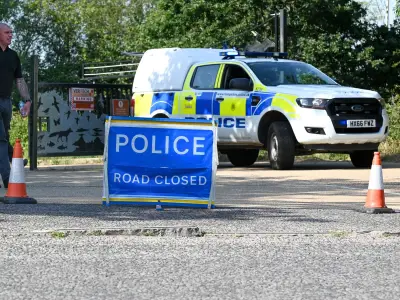
At 4.25pm, the group turned into Cherry Garden Lane—a quiet, unmade track just outside Chillenden. As they walked along this secluded road, a man wielding a claw hammer accosted them. Josie later recalled that he emerged from a car, asking for money. What happened next would shock and appal the nation.
The stranger forced Lin and her daughters into a copse, where he subjected them to a frenzied attack lasting at least half an hour. The trio were tied up with ripped swimming towels and shoelaces, blindfolded, and repeatedly struck with both the hammer and fallen tree branches. No money or belongings were stolen, and forensics teams found no evidence of a sexual motive. The assailant seemed motivated entirely by bloodlust.
A pathologist's report outlined their horrendous injuries. Lin, like her daughters, suffered "a sustained, severe, repeated and vicious assault about the head." Lucy the terrier received similar treatment before the man disappeared—leaving Lin and Megan lying dead on ivy-covered ground, a few feet apart. Josie had been blindfolded and tied to a tree.
It took eight hours for the grisly scene to be discovered. Miraculously, Josie was still alive. Just before 2am, the nine-year-old was rushed to Kent and Canterbury Hospital with severe cuts on her scalp, heavy bruising suggestive of skull fractures, and brain tissue protruding from an injury behind her left ear. It would be nine months before she regained the ability to speak.
The Investigation Stalls
Fast forward a year and Kent Police was approaching its wits' end. Although the Chillenden Murders remained front-page news, the killer was still at large. Despite huge pressure to crack the case, their investigation had stalled. The crime scene had been strewn with evidence—from blood-stained shoelaces and shredded towels to a lunchbox containing a bloody fingerprint—yet none had led to a suspect. Detectives interviewed 9,000 people and took 1,000 statements, to little avail.
Against this backdrop, DCI Dave Stevens agreed to roll the dice. On the first anniversary of the murders, he allowed BBC Crimewatch to screen a vivid reconstruction of the hammer attack on prime-time television. The show included an e-fit of a suspect, put together by Josie and a witness who had seen an angry-looking man in a car's wing-mirror near the scene. The broadcast resulted in 600 calls to both the TV studio and Kent Police's incident room.
One call from psychiatrist Dr Philip Sugarman provided what seemed like an answer to the DCI's prayers. Dr Sugarman had a client named Michael Stone who bore at least a passing resemblance to the e-fit. More importantly, Dr Sugarman described his patient as a violent and aggressive character prone to uncontrollable rages, who had confessed to fantasising over torturing people and killing children. Stone also had a 1981 conviction for attacking someone with a hammer and had asked to be admitted to a psychiatric hospital around the time of the attack, only to be refused. Soon after the Crimewatch screening, Stone was arrested.
Stone's Troubled Background
The more detectives looked into Stone while he was held on remand, the more convinced they became that he was their man. Born Michael John Goodban in Tunbridge Wells, he was the product of a terrible childhood marked by grotesque physical and sexual abuse, some occurring in local authority care. His stepfather Peter allegedly beat him with a hammer. In school, he reportedly tortured animals and forced a girl to strip at knifepoint in a playground.
Now resident in Gillingham, about 50 minutes from Chillenden, Stone had grown into a violent and mentally disturbed adult who exacerbated his condition through persistent heroin use. He was jailed at least three times in the 1980s for robbery, burglary, grievous bodily harm and assault causing actual bodily harm. The 1981 hammer attack occurred during a robbery. Two years later, he stabbed a former schoolmate in the chest while they slept, then gouged a policeman's eye during the subsequent arrest.
Yet there was a significant problem: to charge Stone with the murders, police needed proper evidence. Despite their best efforts, they couldn't find any. The various hairs and clothing fibres found at the scene did not provide a forensic match. Nor did the bloody fingerprint on the lunchbox. A knotted black bootlace covered with blood and saliva—which had been used to restrain the girls and looked like something a heroin addict might use—was tested in 64 areas, but none contained Stone's DNA.
Witness Testimony Falls Apart
Placing Stone at the scene proved equally challenging. At lunchtime on the day of the attacks, detectives could place him in a pawn shop at Chatham, 40 miles away. But the trail went cold after that. Stone claimed to be unable to remember what he did that afternoon, and by the time of his arrest, the clothes he'd been wearing were gone.
Witnesses offered little help. At an identity parade, Josie was unable to pick Stone out. She said the man who attacked them was blond, clean-shaven, 6ft tall and aged 25. Stone was 38, 5ft 7in, with brown, receding hair. Then came the question of the assailant's car. Several witnesses reported seeing beige or rust-coloured vehicles near the scene. This evidence could have been helpful in court—but not for the prosecution, because Michael Stone's car was a white Toyota.
The Prison Confessions
To secure murder charges, police needed more witnesses. They ultimately relied on testimony from four men who claimed to have met Stone following the crime—all with extensive criminal convictions. First came Lawrence Calder, a drug addict who'd been a regular associate of Stone in Gillingham. He alleged that Stone had turned up at his house the morning after the murders with blood on his T-shirt and groin. However, Calder's testimony quickly disintegrated under cross-examination. He admitted lying to police and became confused about dates, ultimately conceding: "I'm no good with dates."
Next were three fellow prisoners who met Stone during his time on remand. Each alleged that Stone made some form of "prison confession." The testimony of one, murderer Mark Jennings, collapsed when it emerged he had been paid £5,000 by The Sun, which was offering cash for evidence leading to Stone's conviction.
But the other two proved crucial to Stone's conviction. Barry Thompson, serving two years for dishonesty and intimidating a witness, recalled a hostile encounter in Elmley Prison where Stone allegedly said: "I made a mistake with her; I won't make the same mistake with you." Thompson insisted the "mistake" referred to leaving Josie Russell alive.
The final witness was Damien Daley, a 23-year-old gangster from Folkestone held next door to Stone at Canterbury Prison. Daley claimed that Stone, who had requested solitary confinement to prevent other inmates "making up confessions," had spoken to him via a cracked drainpipe between their cells. He alleged that during this conversation, Stone made a full confession to the Chillenden Murders, explaining in vivid detail how he killed Lin and Megan Russell.
The Case Collapses and Rebuilds
That, more or less, was the extent of the case against Michael Stone. Within months of the guilty verdict, it spectacularly collapsed. A high-profile Daily Mail investigation in March 1999 revealed that Barry Thompson had signed a sworn statement retracting his evidence. "None of what I said was true. Stone never said the words I attributed to him. I told the jury a pack of lies," confessed Thompson, who claimed to be a paid police informant.
In 2001, the original conviction was quashed. A retrial was held at Nottingham Crown Court later that year, with Damien Daley as the only one of those four key witnesses to testify. His evidence proved so crucial that jurors travelled to Canterbury Prison's solitary confinement wing to see whether sound could indeed travel down a cracked pipe between cells. They were also invited to consider whether the entire prison confession could have been fabricated, since almost every detail Stone allegedly told Daley was already in the public domain—much of it contained in a copy of the Daily Mirror that Daley had in his cell.
During cross-examination, Daley admitted to having lied at least once during the previous court case. Specifically, he confessed that he had been wrong to claim, under oath, to having never taken drugs. "I am a crook," he admitted. Despite these revelations, extensive deliberations ensued, and on October 3, Stone was again convicted by a 10-2 majority and sentenced to 25 years.
Ongoing Doubts and New Developments
Efforts to overturn the 2001 verdict have continued ever since, with significant concerns about Daley's testimony at their heart. Acquaintances are adamant he has privately confessed to fabricating it. The Folkestone Herald newspaper reported in 1998 on a furore outside Daley's home, where family members shouted abuse and accused him of telling lies about Stone.
Lawyer Mark McDonald now says he possesses statements signed by five different witnesses who believe Daley made up his evidence. McDonald claims to have evidence that Daley was addicted to Class-A drugs, needed to escape the segregation unit to access them, and agreed to give evidence against Stone to secure such a move.
A further surreal chapter unfolded in December 2019 when Stone's legal team received a letter from serial killer Levi Bellfield, convicted of the murders of Milly Dowler, Amélie Delagrange and Marsha McDonnell. Initially denying involvement in the Chillenden Murders, Bellfield later claimed to have relevant information. In February 2020, he confided that while he didn't commit the murders, he was in the area that day. Two years later, Bellfield confessed to the murders via a statement to his solicitor.
However, not everyone believes him. Bellfield is a narcissistic psychopath who could be making the whole thing up to attract attention. His then-girlfriend Johanna Collings owned a beige car at the time but is adamant it couldn't have been used because the murders occurred on her birthday, when she and Bellfield visited a nightclub together. Additionally, Bellfield's "confession" doesn't appear to contain any details that weren't already public knowledge.
The Search for Definitive Answers
The Daily Mail's extensive inquiries into the Michael Stone case first cast serious doubt on the safety of his convictions over 25 years ago. Important doubts raised then still stand, and several significant holes in the prosecution's case have grown wider over time. Stone's future now rests with the CCRC—an organisation widely criticised last year over its failure to deal competently with the case of Andrew Malkinson, who spent 17 years in jail for a rape he didn't commit.
Stone's interactions with the CCRC have been similarly turgid. His lawyer has since 2017 been calling for evidence gathered from the original murder scene to be subjected to modern DNA tests that didn't exist at the time of the original murders. Frustrated by the lack of progress, McDonald commissioned forensic scientist Angela Gallop to produce an 18-page report explaining how a state-of-the-art technique called DNA-17 could help definitively establish whether Stone was the killer. But no such tests have yet been carried out.
"Michael is calling me every day. He is pulling his hair out," says McDonald. "We're screaming, 'Please start the testing!', but nothing is happening." Meanwhile, after eight years of lobbying, the CCRC has belatedly greenlit a probe into the credentials of Damien Daley, the "prison confession" witness central to the prosecution's case at the 2001 retrial.
"Michael Stone has spent over 28 years in prison for a crime he did not commit," adds McDonald. "I have now put before the CCRC evidence that Daley lied to the jury, evidence that Daley was addicted to Class-A drugs and needed to get off segregation to get access to more drugs, evidence that he has retracted his statement several times and most importantly a detailed and lengthy confession from another person who said he committed the murders. I ask, what more do you need to prove innocence?"