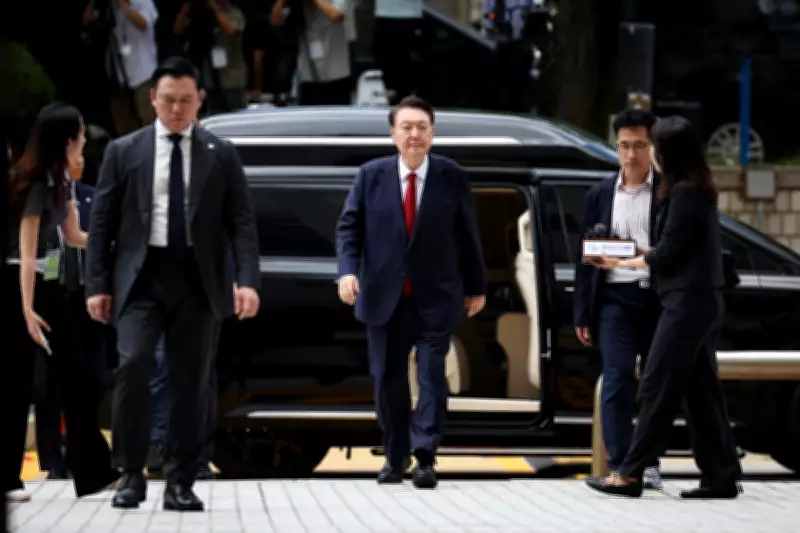
In a landmark ruling that has sent shockwaves through the political landscape, former South Korean President Yoon Suk Yeol has been handed a life imprisonment sentence. The verdict was delivered by the Seoul Central District Court, which found Yoon guilty of rebellion and abuse of authority in connection with his controversial attempt to impose martial law in 2024.
Failed Martial Law Declaration Sparks Unrest
The charges stem from a dramatic six-hour episode in 2024 when Yoon, then serving as president, attempted to paralyse the legislature and arrest political opponents through a martial law decree. This move triggered immediate and significant street protests across South Korea, with citizens expressing outrage at what many perceived as an authoritarian power grab.
Prosecutors Sought Maximum Punishment
During the trial, prosecutors had called for the death sentence, arguing that Yoon's actions represented a grave threat to South Korea's democratic institutions. They presented evidence showing how the former president had sought to undermine the constitutional order and suppress political dissent through his martial law declaration.

The court ultimately rejected the death penalty request but imposed the maximum custodial sentence available for the charges, making Yoon the first former South Korean leader to receive such a severe punishment for these specific offenses.
Swift Parliamentary Response Prevented Crisis
The martial law episode lasted only six hours before members of parliament regained control of the national assembly, effectively ending Yoon's attempt to consolidate power. This quick parliamentary response prevented what could have escalated into a full-blown constitutional crisis.
Historical Significance of the Verdict
Legal experts note that this case represents a significant moment in South Korea's judicial history. The life sentence sends a strong message about the consequences of attempting to undermine democratic processes, particularly for those in the highest positions of power.
The ruling comes after extensive legal proceedings that examined the events of 2024 in detail, including testimony from political figures, security officials, and constitutional experts. The court found compelling evidence that Yoon had knowingly abused his presidential authority in an attempt to subvert the democratic system.
Public Reaction and Political Implications
While the verdict has been welcomed by many who viewed Yoon's actions as a dangerous precedent, some political analysts express concern about the potential for increased polarization in South Korean politics. The case has already become a focal point for discussions about presidential powers, constitutional limits, and democratic safeguards.
Yoon's defense team had argued throughout the trial that his actions were motivated by national security concerns, but the court rejected this justification, finding that the martial law declaration represented an unlawful attempt to suppress political opposition rather than address legitimate security threats.
The life sentence ensures that Yoon, who was impeached following the martial law episode, will spend the remainder of his life in prison unless a future appeal succeeds or he receives a presidential pardon, though legal experts consider both scenarios unlikely given the gravity of the offenses.