Greece has announced it will attempt to acquire a series of photographs that appear to depict the final moments of 200 Greeks executed by a Nazi firing squad in Athens during World War II. The previously unknown images emerged for sale on an online auction site over the weekend, prompting immediate action from Greek authorities.
Discovery of Disturbing Historical Images
The photographs were listed on eBay by a collector in Belgium who specializes in German military memorabilia. According to descriptions, the images allegedly show the men being led to their deaths on May 1, 1944, at a shooting range in the Kaisariani suburb of Athens. While the Kaisariani executions have been well-documented historically, no photographic or film evidence of the actual event was previously known to exist.
Authenticity Assessment Underway
Greece's Culture Ministry stated on Monday that "it is very possible that these are authentic photographs" and confirmed it would seek to obtain them as important historical archives. The ministry has already initiated contact with the Belgian collector and plans to send experts to Ghent, Belgium, to examine both the authenticity of the images and the legality of their origin.

The series of pictures reportedly show men being led through a gateway and down a path before standing straight as they are lined up in front of a wall. The visual documentation of this atrocity has created significant emotional resonance in Greece, where the Kaisariani executions remain one of the most traumatic events from the Nazi occupation period.
Historical Significance and Contemporary Reactions
The execution of 200 communist political prisoners at Kaisariani represents one of the worst atrocities committed during the Third Reich's occupation of Greece. This event occurred as World War II was drawing to a close, shortly before Greece descended into a brutal civil war between Western-backed government forces and communist fighters that lasted until 1949.
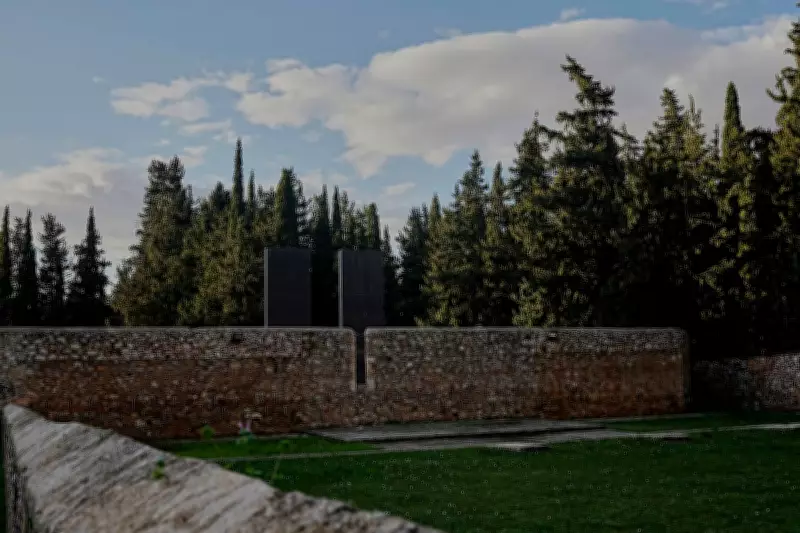
In a disturbing parallel development, shortly after the photographs appeared online, the memorial at the execution site was vandalized. Plaques listing the names of those killed were smashed, prompting the Kaisariani municipality to issue a statement declaring that "historical memory will not be erased, no matter how much it bothers some people." The municipality pledged to repair the monument and described the photographs as having caused "a chill of emotion for the heroic, valiant stance of the 200 communist heroes who stood up against the firing squad."
Legal and Heritage Considerations
The Culture Ministry acknowledged there are "quite a few legal complications" involved in laying claim to the photographs. A ministry committee is scheduled to convene on Wednesday to determine whether the images should be classified as part of Greece's cultural heritage. This classification would strengthen the country's legal position in seeking to acquire the photographs.
If the images are determined to be both authentic and legally obtained, the ministry stated it would "immediately finalize the measures for their acquisition through the appropriate legal means." The process represents a complex intersection of historical preservation, legal jurisdiction, and emotional national memory that continues to resonate deeply in Greek society.