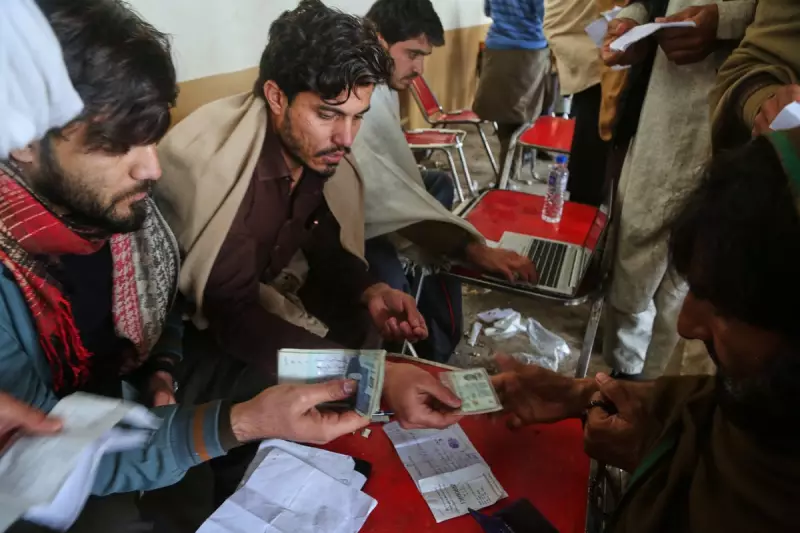
Tens of thousands of civilians have fled a remote region in northwestern Pakistan bordering Afghanistan, driven by fears of an impending military operation against the Pakistani Taliban, according to residents and local officials. More than 70,000 people, predominantly women and children, have evacuated the Tirah area in Khyber Pakhtunkhwa province, creating a significant humanitarian crisis.
Government Denials and Conflicting Accounts
Pakistan’s Defense Minister Khawaja Mohammad Asif has firmly denied claims of a military operation in Tirah. Speaking at a news conference in Islamabad, Asif asserted that no such operation is currently underway or planned. Instead, he attributed the mass migration to harsh weather conditions, including heavy snowfall, rather than any military action. His comments come weeks after residents began leaving the area, spurred by uncertainty and local warnings.
Evacuation Orders and Provincial Tensions
The exodus intensified after mosque loudspeakers urged residents to leave Tirah by January 23 to avoid potential fighting. This follows a similar military operation last August in the Bajaur district, which displaced hundreds of thousands. Provincial authorities in Khyber Pakhtunkhwa have criticised the federal government, with spokesman Shafi Jan posting on social media that Islamabad is retracting its earlier stance on the operation. Chief Minister Suhail Afridi, whose party is led by imprisoned former Prime Minister Imran Khan, has condemned the military and vowed to prevent a full-scale operation in Tirah.

Humanitarian Impact and Registration Efforts
Local government administrator Talha Rafiq Alam, overseeing relief efforts, reported that approximately 10,000 families—about 70,000 people—have been registered so far from Tirah, which has a total population of around 150,000. The registration deadline has been extended from January 23 to February 5 to accommodate the influx. Alam stated that displaced individuals will be allowed to return once the law-and-order situation improves, but many remain in limbo.
Personal Stories of Displacement
Among those affected is 35-year-old Zar Badshah, who evacuated with his wife and four children after authorities issued evacuation orders. He described mortar shells exploding in villages in recent weeks, resulting in the death of a woman and injuries to four children in his community. “Community elders told us to leave. They instructed us to evacuate to safer places,” he recounted. At a government school in Bara, hundreds of displaced people queued outside registration centres, facing slow processes to access government assistance.
Broader Security Context and Minority Concerns
The military has affirmed its commitment to intelligence-based operations against the Pakistani Taliban, known as Tehrik-e-Taliban Pakistan (TTP). Although separate from the Afghan Taliban, the TTP has gained strength since the Taliban’s return to power in Afghanistan in 2021. Authorities allege that many TTP leaders have found sanctuary in Afghanistan, with hundreds crossing into Tirah and using residents as human shields during raids. This has exacerbated security fears, impacting minority communities such as Sikhs. Narendra Singh, a 27-year-old Sikh, cited severe food shortages worsened by heavy snowfall and uncertain security as reasons for fleeing. “There was a severe shortage of food items in Tirah, and that forced us to leave,” he said.
Historical Incidents and Ongoing Risks
Tirah previously gained national attention in September after an explosion at a compound allegedly used to store bomb-making materials killed at least 24 people. While authorities claimed most victims were TTP-linked militants, local leaders disputed this, asserting that civilians, including women and children, were among the dead. This incident underscores the volatile environment and the risks faced by residents caught between militant activities and military responses.
The situation remains fluid, with displaced families seeking refuge in Bara and nearby towns, awaiting clarity on their future amidst conflicting narratives from federal and provincial authorities.