One of the most sought-after secrets of the ancient world, the final resting place of Queen Nefertiti, may finally be revealed, according to a world-renowned archaeologist.
The Hunt Narrows in the Valley of the Kings
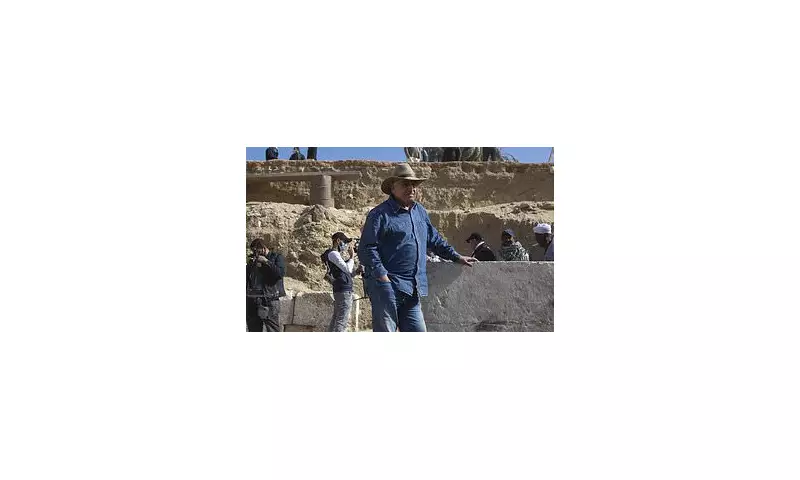
Dr Zahi Hawass, the famed Egyptologist and former Egyptian Minister of Tourism and Antiquities, has declared he is 'close' to a groundbreaking discovery. In a new documentary about his life, The Man with the Hat, Dr Hawass reveals he has narrowed the search for the enigmatic queen's tomb to a specific area in the eastern part of the Valley of the Kings.
He stated: 'If I made this discovery, I think I would be happy to end my career with the most important discovery of the most important queen of Egypt – Queen Nefertiti. This will lead us to the greatest discovery of the century.'

The Enduring Mystery of a Powerful Queen
Nefertiti, widely celebrated for her power and beauty, was the Great Royal Wife of Pharaoh Akhenaten, who reigned from 1353 to 1336 BC. She was stepmother to the famous boy king Tutankhamen and mother to his wife, Ankhesenamun. Her life coincided with one of Egypt's most turbulent periods, when Akhenaten attempted to revolutionise the nation's religion into a monotheistic cult worshipping the sun disc, Aten.
Intriguingly, Nefertiti is often depicted in art performing acts traditionally reserved for a Pharaoh, such as smiting enemies. This has led experts like Dr Hawass to theorise she may have ruled as Pharaoh herself after her husband's death, possibly under the name Neferneferuaten. Despite her immense historical significance, her tomb has never been located.
Past Claims and Present Excavations
This is not the first time archaeologists have believed they were on the verge of this monumental find. In 2015, British archaeologist Dr Nicholas Reeves claimed hidden passages in Tutankhamun's tomb led to Nefertiti's burial chamber, but subsequent scans disproved the theory. Later, in 2022, a mummy from a cache was incorrectly identified as Nefertiti; DNA analysis by Dr Hawass's team confirmed it was actually Tutankhamun's mother.
Dr Hawass, who has himself made premature announcements in previous years, now bases his confidence on ongoing excavations. His team is currently working in the eastern Valley of the Kings, near the tomb of another powerful female pharaoh, Hatshepsut. He told Live Science: 'I'm hoping that this could be the tomb of Queen Nefertiti,' adding that the work is continuing and 'this discovery could happen soon.'
The potential discovery would not only be a sensational archaeological triumph but could also solve the mystery of whether Nefertiti was buried with the full rites and honours of a ruling Pharaoh, shedding new light on her true power at the end of her life.