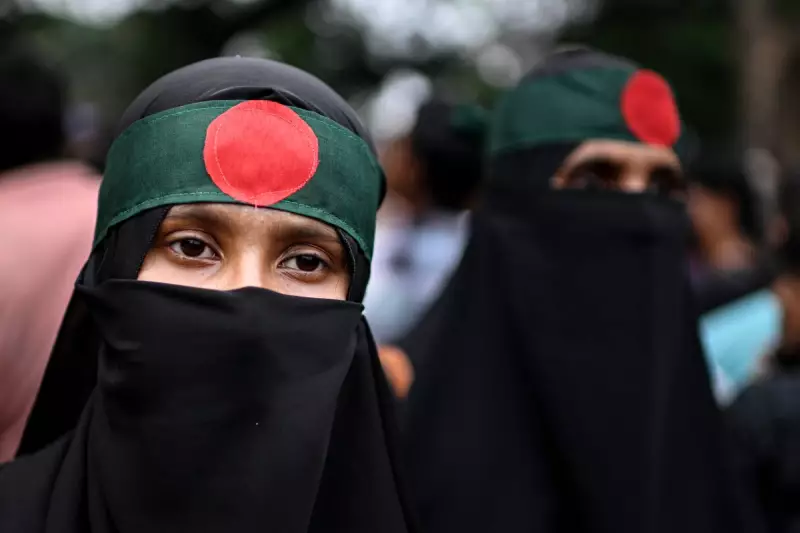
As Bangladesh approaches a landmark national election next month, the nation stands at a critical crossroads. This will be the first electoral contest since the ousting of former Prime Minister Sheikh Hasina, who fled to India following a widespread revolution in 2024 demanding political reform and respect for human rights. The movement marked the collapse of over a decade of authoritarian rule, characterised by the severe erosion of civic space and widespread violations by state actors.
A Legacy of Repression and a Hope for Change
The period under Hasina's Awami League was defined by systematic repression. Security forces and party members killed hundreds of protesters during the countrywide demonstrations that precipitated her downfall. The main opposition, the Bangladesh Nationalist Party (BNP), saw its members and supporters subjected to arbitrary arrest, torture, and enforced disappearance, with many victims never returning. These abuses, well-documented by human rights groups, created a climate of fear designed to neutralise dissent.
Whoever emerges victorious from the forthcoming poll will inherit a nation wearied by this repression yet hopeful for genuine democratic renewal. This opportunity, however, will be wasted unless human rights are placed unequivocally at the centre of the new political agenda. The likely frontrunner, the BNP, now faces a defining transition following the recent death of its long-time leader, Khaleda Zia, who died after years of imprisonment under Hasina. Her passing closes a chapter of personal persecution and opens a critical test for the party: can it move beyond grievance politics and its own historical record of repression to demonstrate a practical commitment to democratic norms?

New Political Forces and Persistent Dangers
The post-Hasina landscape is not solely the domain of returning established parties. New political forces have emerged from the youth-led 2024 uprising. The National Citizen Party (NCP) reflects a generation shaped more by lived experience of state violence and economic exclusion than by traditional party loyalty. Its rise signals profound frustration with the old political order and a demand for authentic reform.
Independent candidates have also come to the fore, often at great personal risk. Tragically, political violence has not vanished with the old regime. In a stark reminder of the fragile transition, independent candidate and youth leader Sharif Osman Bin Hadi was assassinated in broad daylight in December, with his killers still at large. This killing underscores how easily fear can be reintroduced into public life and highlights the urgent need for accountability if political participation is to be meaningful.
The Imperative for a Human Rights Agenda
Any government formed after the election must begin by restoring core human rights norms. This requires a multi-faceted approach:

- Truth and Accountability: There must be credible investigations, fair trials, and meaningful prosecutions for past violations, particularly enforced disappearances, killings, and torture. Families of the disappeared have waited years for truth and justice. Without a transparent process aligned with international standards, reconciliation will remain hollow, and mistrust will fester.
- Judicial and Law Enforcement Independence: The independence of the judiciary must be restored. Courts cannot be used as instruments of political retribution, and security forces must not operate with impunity. Authorities face the delicate task of addressing rising political violence while strictly avoiding excessive force and upholding due process.
- Reopening Civic Space: Space for free expression, peaceful assembly, independent journalism, and legitimate political opposition must be reopened. Under Hasina, criticism was treated as sedition. No election can be free or fair if journalists and activists work under threat. The interim government led by Muhammad Yunus must urgently defend press freedom and the rule of law in the lead-up to the polls.
Protecting the Most Vulnerable
A genuine commitment to human rights must extend beyond the ballot box to protect all minorities, including women, religious groups, LGBTQI people, and refugees. This includes the one million Rohingya refugees who fled genocide in neighbouring Myanmar. Ongoing violations against Rohingya, even under the interim government—including cases of forced return—must cease. Candidates must articulate clear plans for addressing refugee rights and engaging with Myanmar on accountability for atrocity crimes.
The International Role in Supporting Democracy
Governments worldwide have a supporting role in safeguarding Bangladesh's democratic trajectory. The United Kingdom, with its significant Bangladeshi diaspora and several MPs of Bangladeshi heritage, is particularly well-placed to act. The British government should demand a genuine level playing field, insisting on accountability and fair-trial standards for all, including former Hasina officials. It must also defend peaceful assembly, the rule of law, and support credible election monitoring. Crucially, Britain should increase support for national human rights organisations documenting abuses and electoral conditions on the ground.
The February election is not merely about who will govern next; it is a test of whether Bangladesh can finally break its long cycle of authoritarianism and political violence. The 2024 revolution was, at its core, a demand for human rights. To betray that demand would mean the next government inherits not stability, but merely a lull before another inevitable upheaval. The path forward must be paved with accountability, protection, and an unwavering commitment to the rights of every citizen.