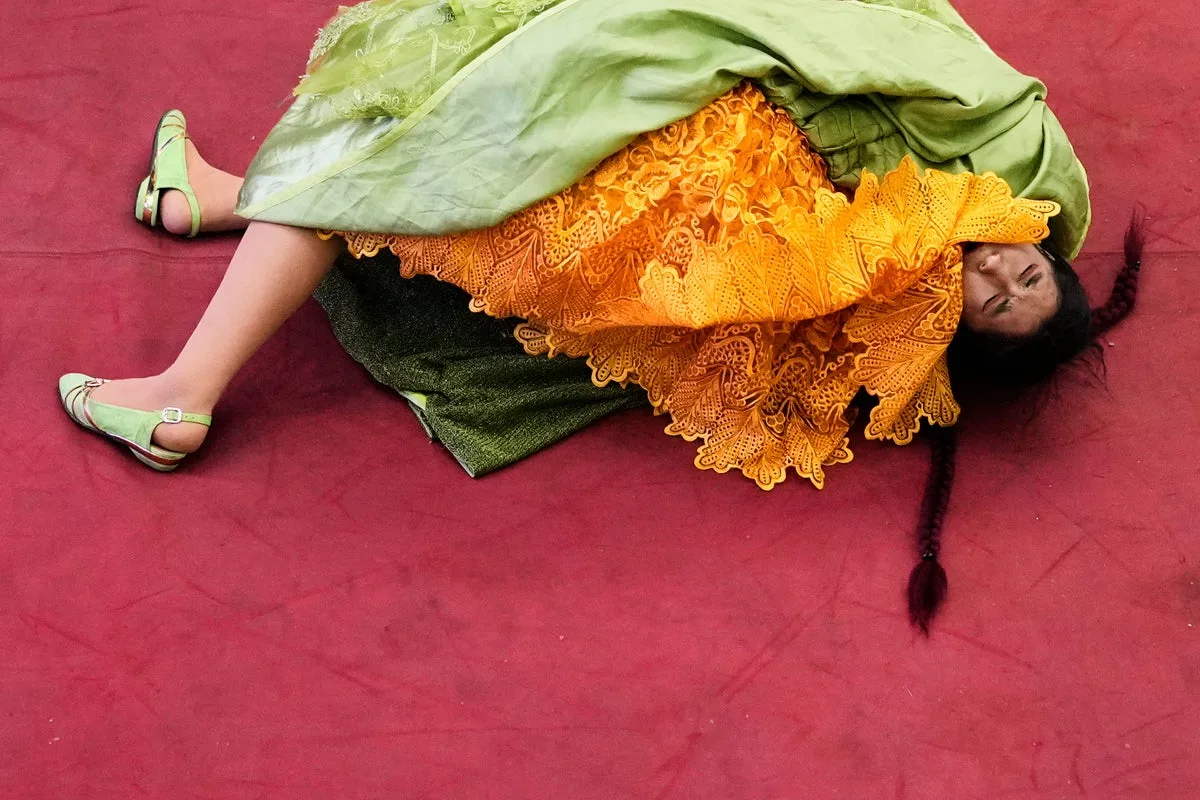
Ana Lia González Maguiña, a 40-year-old professional mountain climber, prepares to scale Huayna Potosi, one of Bolivia's tallest peaks, wearing the traditional pollera skirt. For her and many other Indigenous women, the garment—imposed by Spanish colonisers centuries ago but now reclaimed as a symbol of pride—is no hindrance to physically demanding work in male-dominated fields.
“Our sport is demanding, it’s super tough. So doing it in pollera represents that strength, it’s about valuing our roots,” said González Maguiña. Skirt-clad miners, skaters, football players and wrestlers across Bolivia echoed that sentiment, portraying their adoption of polleras for all professional purposes as an act of empowerment.
Macaria Alejandro, a 48-year-old miner in Oruro, said: “We, women in polleras, want to keep moving forward. I work like this and wear this for my children.” However, many pollera-wearing women now face uncertainty under Bolivia’s first conservative government in nearly two decades, led by President Rodrigo Paz.

Under former President Evo Morales, Bolivia’s first Indigenous leader, pollera-wearing ministers and officials walked the halls of power, and the Indigenous wiphala flag was adopted as a national symbol. But disillusionment with the Movement Toward Socialism party grew, and some cholitas now fear their hard-won rights may be eroded under the new administration, which has no Indigenous members and has removed Indigenous symbols from official emblems.
“I feel like the government won’t take us into account,” said Alejandro. “It’s sad to see there are no powerful people wearing polleras. I see it as discrimination.” Despite these concerns, González Maguiña remains hopeful: “We already have the strength and everything that comes with it. We’re certainly going to knock on the doors of this new government.”