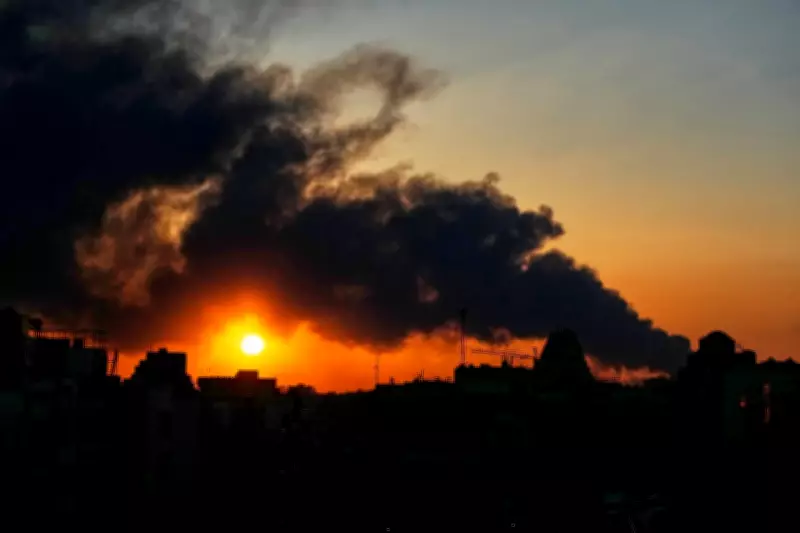
The Longstanding Undeclared War Between the US and Iran
The undeclared military conflict between the United States and Iran has been a persistent feature of international relations since the 1980s, evolving through distinct phases that include direct naval engagements, proxy wars, and air confrontations. This protracted struggle has deep historical roots, with perceptions of its origins differing significantly between the two nations.
Divergent Origins and Historical Context
For Americans, the conflict's genesis is often traced back to 1979, when Iranian students seized the US embassy in Tehran, holding 52 diplomats hostage for 444 days—an event that profoundly shaped US foreign policy and public opinion. In contrast, Iranians view the conflict as beginning earlier, with US support for the Shah's regime and later for Iraq during the devastating Iran-Iraq War, which lasted from 1980 to 1988. These differing perspectives highlight the complex and multifaceted nature of the hostilities.
Civilian Casualties and Tragic Incidents
Both nations have been implicated in civilian casualties over the decades, underscoring the human cost of this undeclared war. In 1988, the US downed Iran Air Flight 655, resulting in the deaths of 290 passengers and crew. More recently, in 2020, Iran mistakenly shot down Ukraine International Airlines Flight 752, believing it to be a US military aircraft, which led to 176 fatalities. These incidents have fueled mutual distrust and animosity, complicating diplomatic efforts.

Recent Escalations and Breaking Equilibrium
Recent years have seen significant escalations that threaten to destabilize the delicate equilibrium previously maintained by both states. The US withdrawal from the Iran nuclear deal under President Donald Trump in 2017 marked a turning point, leading to renewed hostilities and increased tensions. This was followed by the US killing of General Qassem Soleimani in 2020, a move that provoked widespread Iranian retaliation and raised fears of broader conflict.
Experts suggest that while both nations have historically avoided total war, the current dynamics indicate this balance may be breaking down. The surge in military posturing and retaliatory actions points to a potential shift towards more direct confrontations, with implications for global security.
In summary, the US-Iran conflict is a decades-long struggle characterized by evolving tactics and tragic consequences, with recent events signaling a precarious phase that could redefine the future of their relations.