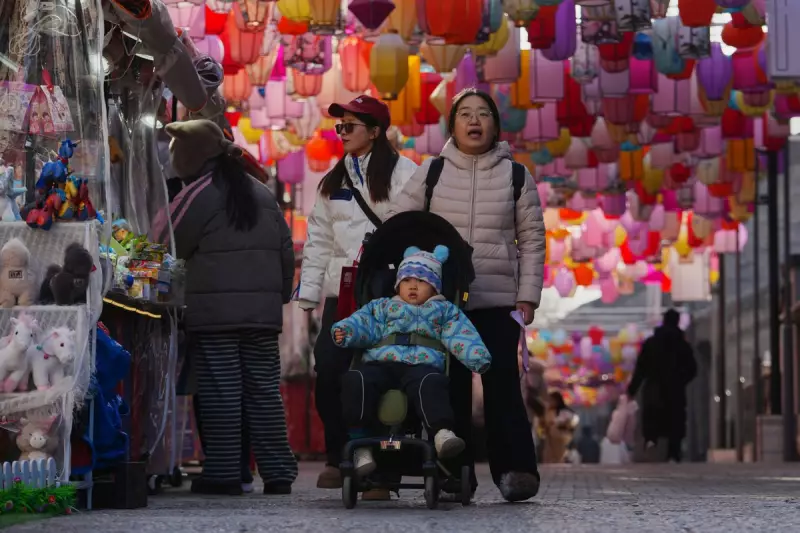
Experts are now questioning the fundamental necessity of China's one-child policy, a decades-long social experiment that imposed severe population controls and left a complex legacy of demographic challenges. The policy, which lasted for 35 years, was officially abandoned in 2015 as authorities grew alarmed by a shrinking workforce and rapidly ageing society.
A Policy of Severe Measures and Lasting Scars
Implemented in 1980, the one-child policy stands as one of the world's most drastic attempts at population control. It was enforced through a system of stiff financial penalties, widespread forced sterilisation campaigns, and coerced abortions. The preference for a male heir, exacerbated by the single-child limit, led to tragic outcomes including the sale or killing of baby daughters.
China's leadership at the time viewed unbridled population growth as a direct threat to economic development and the nation's ability to feed its then one billion people. This fear was not unique to China; globally, the 1970s and 80s saw intense debate about overpopulation, with experts warning that rapid growth in nations like China and India could overwhelm the Earth's resources.

Official statistics now show China's birth rate has fallen to record lows, with the population declining for four consecutive years. Author Mei Fong, who wrote "One Child: The Story of China's Most Radical Experiment," summarised the dilemma starkly: "It's hard to escape the fact that China demographically shot itself in the foot."
The Difficult Demographic Reversal
It remains unclear how much of the fertility decline resulted directly from the policy versus broader economic and societal changes over the last forty years. The birth rate had already begun falling in the 1970s before the policy's introduction. Nevertheless, its impact was profound and its reversal has proven difficult.
The government first eased the rules in 2016, allowing two children per couple, and raised the limit to three in 2021. Data cited by Yi Fuxian, a senior scientist at the University of Wisconsin-Madison, shows the immediate effect of this relaxation: sterilisation numbers plunged from 1.4 million women and 180,000 men in 2014 to just 190,000 women and 2,600 men by 2020.
However, reversing a deeply ingrained societal mentality has been harder than changing the law. China now faces a significant gender imbalance from the one-child generation and the pressures of an ageing population. The so-called "little emperors," who were once the sole focus of their parents' attention, now bear the heavy burden of supporting two parents and often four grandparents as they enter their 30s and 40s.
An Ageing Society and the Uphill Battle for Babies
China is not alone in facing the challenges of an ageing populace; the trend of declining birth rates accompanies rising wealth worldwide. But the one-child policy accelerated China's demographic shift dramatically. The nation is now an ageing society staring down a major shortfall: a shrinking working-age population unable to support a growing number of retirees, potentially crippling state finances and pension systems.
In response, Beijing has launched a slew of pronatalist policies, from offering cash subsidies to couples who have children to the symbolic move of eliminating a tax exemption for condoms. Yet, as the experience of other developed nations shows, reversing a declining birth rate is an exceptionally difficult task. The legacy of the one-child policy continues to shape China's future, raising enduring questions about the cost of its radical experiment in social engineering.