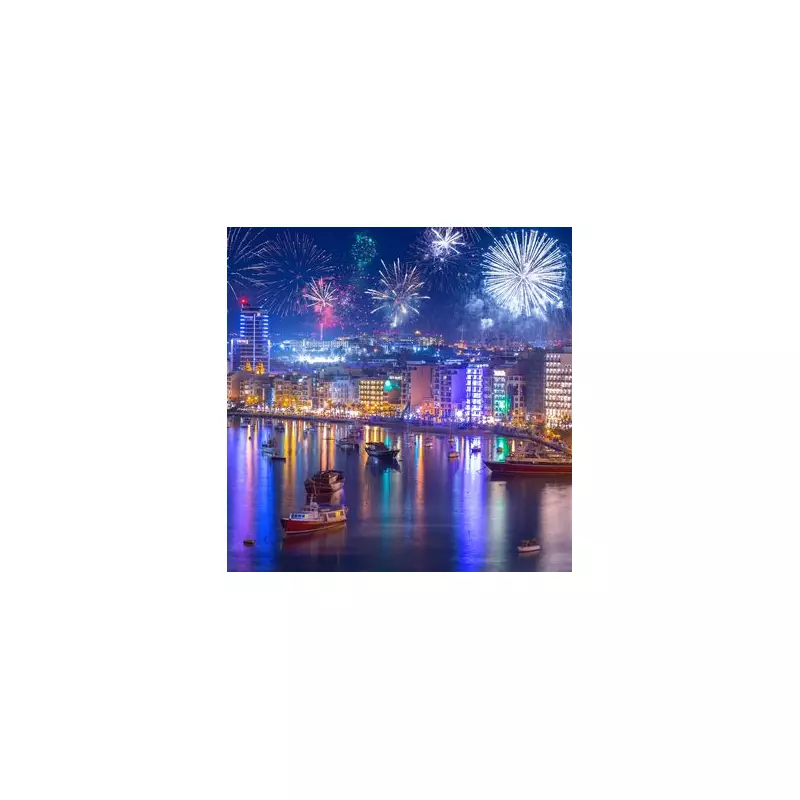
As the final seconds of the old year tick away, a spectacular wave of celebration sweeps across the globe. While revellers in the UK await the chimes of Big Ben at midnight, millions in other nations have already toasted the new beginning, and many more are still hours away from their own moment. This global staggered party is all down to the complex interplay of international time zones and the quirky path of the International Date Line.
The Mechanics of the Global Countdown
Figuring out the precise order in which countries welcome the New Year is a more intricate puzzle than many realise. The system hinges on the International Date Line, established back in 1884 to bring order to international travel and communication. This imaginary line roughly follows the 180th meridian through the Pacific Ocean but zigs and zags to accommodate national borders.
Countries have the autonomy to decide which side of this line they fall on, and they can also set their own official times. This leads to fascinating anomalies. For instance, despite spanning a landmass that could cover multiple zones, China operates on a single official time—Beijing Time—across its entire territory. Meanwhile, vast nations like Russia and the United States contain several time zones within their borders, meaning their own citizens celebrate at different times.

Who Celebrates First and Last?
So, where does the global party begin? The honour of being the first to step into the New Year goes to the Pacific island nation of Kiribati. Its Line Islands, including Kiritimati (Christmas Island), are in time zone UTC+14. When it strikes midnight there, it is still only 10:00 AM on December 31st in the United Kingdom.
Following closely behind are other Pacific nations like Samoa and Tonga. The celebrations then ripple westward across Asia, Europe, Africa, and the Americas in a continuous wave lasting over 26 hours. The final fireworks will burst over islands in the Pacific like Baker Island and Howland Island (UTC-12), long after the UK's celebrations have ended and its residents are waking up on New Year's Day.
The Definitive Global Celebration Order
Based on data from sources like the World Population Review, we can map a cohesive sequence of nations welcoming the New Year. It's important to note that many countries share the same position due to being in identical time zones. For example, a large group including China, the Philippines, Malaysia, and Singapore all jointly hold the 8th position.
The journey begins in the Pacific: Kiribati, Samoa, Tonga, Tokelau, and New Zealand lead the charge. Russia, Fiji, and the Marshall Islands follow swiftly.
The wave then moves through Asia and Australasia: Nations like Australia, Japan, South Korea, and the collective group of China and its neighbours mark the turn of the year.
On through Europe and Africa: The celebrations reach the Middle East, with the UAE and Saudi Arabia, before moving across the African continent and into Eastern Europe. The United Kingdom celebrates in the 95th position, alongside Ghana and Ivory Coast, when it is midnight in Greenwich.
Finally, the Americas: South American nations like Brazil and Argentina ring in the new year, followed by countries in North and Central America. The last places to celebrate are remote Pacific islands like Baker Island, meaning the United States, spanning multiple zones, features at both the middle and the very end of the global list.
This annual planetary ritual is a powerful reminder of our shared humanity and the fascinating, human-made systems that organise our experience of time. As you raise a glass at midnight, remember you are part of a 26-hour global wave of hope, celebration, and new beginnings.