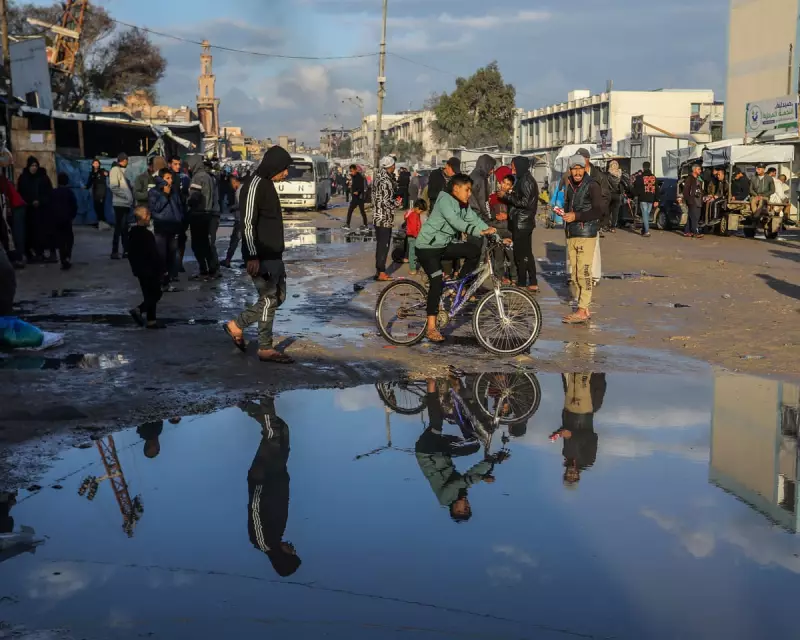
The United Nations has announced that the famine previously declared in Gaza has ended, citing a significant increase in humanitarian aid deliveries. However, the organisation issued a stark warning that the situation remains critically dangerous, with nearly one in eight people still confronting severe food shortages and approximately 1.6 million individuals expected to face 'crisis' levels of hunger in the coming four months.
From Famine to Emergency: A Precarious Improvement
On Friday, the UN's Integrated Food Security Phase Classification (IPC) initiative confirmed that no areas in Gaza are currently classified in famine. This marks a shift from August, when the IPC first declared a famine in parts of the territory following severe Israeli restrictions on aid, which the Gaza health ministry said led to at least 450 starvation deaths.
The improvement is attributed to the easing of aid restrictions after a US-mediated ceasefire took effect in October. "Following the ceasefire … the latest IPC analysis indicates notable improvements in food security and nutrition compared to the August 2025 analysis, which detected famine," the monitor stated.

Despite this, the crisis is far from over. The entire Gaza Strip remains classified at the 'emergency' phase, which is just one step below famine on the IPC's five-tier scale. This phase indicates households suffer from very high acute malnutrition and excess mortality due to food scarcity.
Winter Woes and a Fragile Truce Compound Suffering
The already dire humanitarian situation has been severely exacerbated by the onset of winter. Torrential rains and cold weather have flooded the makeshift tent encampments where most of Gaza's displaced population now lives, following the widespread destruction of housing and infrastructure during the two-year war.
The health consequences are devastating. The Gaza health ministry reported that a 29-day-old baby died of hypothermia on Wednesday. Bilal Abu Saada, nursing team supervisor at Nasser hospital, stated, "Children are losing their lives because they lack the most basic items for survival." Aid workers warn that the threat of disease outbreaks is high due to subpar hygiene conditions in the crowded settlements.
Furthermore, the ceasefire that enabled more aid flows remains fragile. Aid agencies report that delivery is still limited and inconsistent, with near-daily Israeli strikes and mutual accusations of violations. Oxfam accused Israel of blocking humanitarian groups, claiming it has $2.5 million worth of aid, including 4,000 food parcels, stuck in warehouses just across the border.
Diplomatic Stalemate and Contested Claims
The path to a lasting peace is stalled. Negotiators have been unable to bridge the differences needed to move to the second phase of the ceasefire deal, which envisions an Israeli withdrawal, a transitional authority replacing Hamas, and an international stabilisation force. The Qatari prime minister warned that delays and violations "endanger the entire process."
Israeli officials have vehemently contested the UN's previous famine classifications. Following the latest IPC report, foreign ministry spokesperson Oren Marmorstein stated on X that "in the face of overwhelming and unequivocal evidence, even the IPC had to admit that there is no famine in Gaza." Cogat, the Israeli body overseeing humanitarian affairs in Gaza, called the report "distorted, biased, and unfounded."
Nevertheless, the IPC, considered the global authority on food crises, maintains its grave assessment. It warns that if the current ceasefire breaks down, Gaza could rapidly slip back into famine. With 1.6 million people on the brink and winter conditions intensifying, the international community faces a race against time to secure a permanent peace and sustain the flow of lifesaving aid.