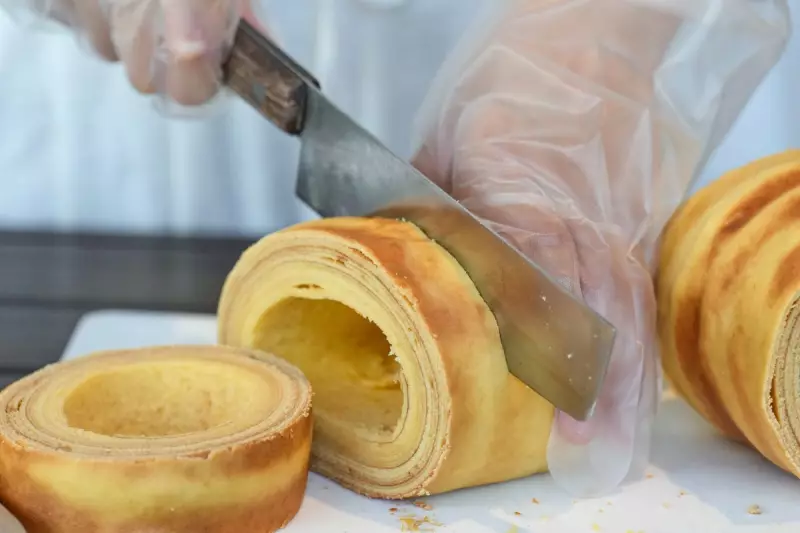
In a remarkable tale of culinary resilience, the German Baumkuchen or 'tree cake' has weathered world wars and natural disasters to become an enduring symbol of prosperity in Japan. This distinctive confection, known for its characteristic rings resembling a tree trunk, now holds a cherished place in Japanese culture, far from its European origins.
From Prisoner of War to Pastry Pioneer
The cake's incredible journey began over a century ago with a German confectioner named Karl Juchheim. While running a bakery in Qingdao, China—then a German territory—Juchheim was captured by Japanese forces in 1915. He was subsequently transferred to the island of Ninoshima, a short ferry ride from Hiroshima, arriving in 1917 with approximately 500 other German prisoners of war.
Despite his circumstances, Juchheim found a degree of freedom in the camp. The German prisoners at Ninoshima were permitted to cook, and it was here that Juchheim is believed to have first tested his Baumkuchen recipe in Japan. Using traditional methods, he would pour batter onto a bamboo pole and roast it over a charcoal fire, adding layer upon layer to create the cake's signature rings.

Surviving Earthquakes and War
When the First World War ended in 1918, Juchheim chose to remain in Japan. His big break came in March 1919 at the Hiroshima Prefectural Products Exhibition, where his handmade Baumkuchen made its commercial debut. The cake was an instant sensation, attracting large crowds of Japanese visitors.
Juchheim opened a pastry shop in Yokohama in 1922, but disaster struck the following year. The Great Kanto earthquake of 1923 destroyed his business, forcing him to relocate his family to Kobe. There, he opened a coffee shop serving his signature cake. Yet adversity struck again when U.S. firebombing raids levelled this Kobe store just two months before the end of the Second World War.
Tragically, Juchheim died of illness on 14 August 1945, the day before Japan announced its surrender. However, his legacy was secured by his wife Elise and their devoted Japanese staff, who rebuilt the business into what is now Juchheim Co., Ltd., one of Japan's leading confectioners.
A Sweet Symbol for Modern Japan
Today, Baumkuchen has been wholeheartedly embraced by Japanese society. The cake is considered a symbol of longevity and prosperity, making it a popular gift at weddings and birthdays. Japanese adaptations have emerged, incorporating local flavours like maccha (green tea) and sweet potato.
You can find elaborately packaged versions in luxury department stores and individually wrapped, smaller cakes in convenience stores. The cake's history is remembered on Ninoshima, where making Baumkuchen remains a popular activity for visitors, who also learn about the island's complex wartime role.
As Kazuaki Otani, head of the Juccheim Ninoshima Welcome Center, reflects, "His baking was an expression of his wish for peace. By sharing with visitors what things were like back then, I hope it gives people an opportunity to reflect on peace." From its humble beginnings in a prisoner of war camp, the tree cake has grown into a beloved Japanese institution, its layered history as rich as its flavour.