Gulf Stability Shattered as US-Israel War on Iran Escalates Regional Tensions
The war on Iran, initiated by the United States and Israel, is fundamentally reshaping the Middle East, with Gulf states such as Saudi Arabia, Qatar, and the United Arab Emirates finding their carefully projected image of stability blown away. These countries, often perceived as static due to immense wealth and monarchical rule, are now grappling with profound consequences that extend beyond energy-supply challenges to the global economy.
Fragile Political Order Exposed
Amid the recent airstrikes and retaliations, the complex and overlapping political order in the Middle East has been revealed as far more fragile than it appears. The low-key evolution of Saudi Arabia, Qatar, and the UAE over recent years has been significant, with changes felt from Libya to Palestine. The 7 October attacks, partly inspired by Hamas's desire to halt Saudi Arabia's normalisation process with Israel, highlight how regional dynamics are deeply interconnected.
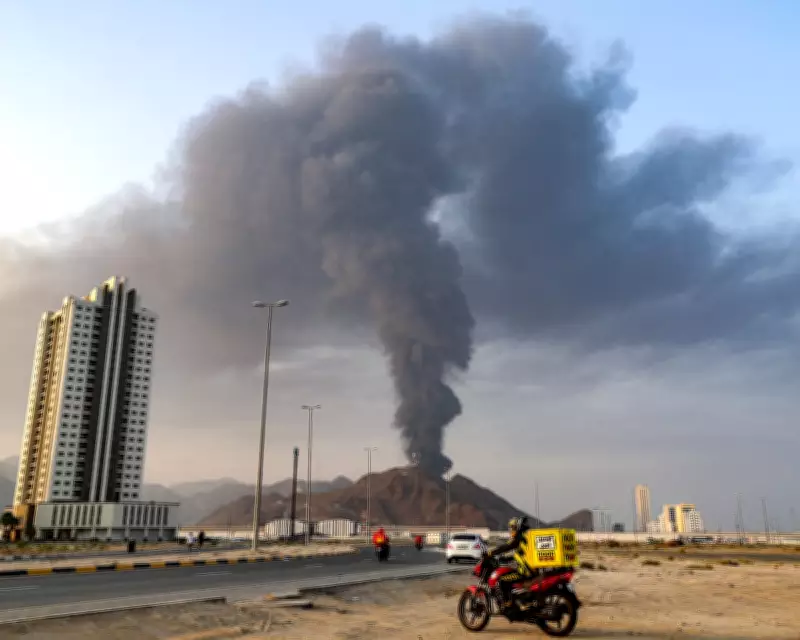
Saudi Arabia has been liberalising domestically, overturning social and religious conventions to host events like outdoor raves and fashion shows, while Qatar and the UAE have invested heavily in becoming hubs of finance and entertainment. However, their pivot relies on attracting international footfall, which depends on the absence of war. The recent wave of Iranian missile and drone attacks on the UAE and Saudi Arabia has disrupted this model, challenging their efforts to neuter geopolitics for stability.

Divergent Agendas and Internal Conflicts
These Gulf powers have pursued ambitious global and regional agendas, often at odds with each other. The UAE has engaged in empire-building projects in Yemen, Libya, and Sudan, securing strategic influence and gold assets, which recently put it in conflict with Saudi Arabia over Yemen. By signing the Abraham accords with Israel, the UAE has signalled a transactional approach, prioritising might and money over traditional articles of faith like Palestinian statehood.
In contrast, Qatar walks a thin line, balancing support for the Palestinian cause with hosting Hamas officials, while maintaining the largest US military base in the region and cooperating with Iran over shared gasfields. The 2017 blockade by the UAE and Saudi Arabia underscores the sharp competitions between these states, now exacerbated by the war.
Economic and Security Ramifications
The closing of airspaces, halting of liquefied natural gas production, and potential stoppage of oil output are not temporary disruptions. Sovereign wealth may absorb some costs, but the state of insecurity is harder to resolve. Key concerns include the duration of the fallout, risks to drinking water from energy-intensive desalination plants, and the revelation that Gulf states have been recruited to the US-Israeli agenda for Middle East dominion.
Unintended consequences loom large, such as economic shocks intensifying the UAE's drive to fuel wars in Africa for raw materials, potential falling outs between Gulf powers over underwriting US-Israeli ambitions, and spillover from instability in Iran. This represents a colossal haemorrhaging of political and economic capital accumulated by the Gulf.
Human Impact and Future Resentments
Beyond caricatures of energy providers, these are places with human populations facing real threats. The US and Israeli approach, based on a notion that Middle Eastern populations are not "true human beings," risks leaving a legacy of new resentments and security ramifications. Once the war ends, a redrawn map of the region will emerge, with competitions that local populations must navigate for generations.
In summary, the Gulf's stability is under severe strain, with the war on Iran exposing vulnerabilities that could reshape the Middle East's political and economic landscape indefinitely.