Water, Not Oil, Emerges as Critical Vulnerability in Persian Gulf Conflict
As missiles and drones disrupt energy production across the Persian Gulf, experts are sounding the alarm that water, not oil, may be the resource most imperiled in this arid, energy-rich region. While oil built the Gulf's modern economies, desalinated water sustains its cities, and war now threatens both pillars of survival.
The Lifeline of Desalination
Hundreds of desalination plants line the Persian Gulf coast, placing systems that supply water to millions within range of Iranian missile or drone strikes. Without these facilities, major urban centers could not support their current populations. In Kuwait, approximately 90% of drinking water comes from desalination, alongside roughly 86% in Oman and about 70% in Saudi Arabia. This technology, primarily using reverse osmosis to remove salt from seawater, produces the freshwater that sustains cities, hotels, industry, and some agriculture in one of the world's driest areas.
For those outside the Middle East, the Iran war has primarily raised concerns about energy prices, given the Gulf produces about a third of global crude exports. However, the infrastructure providing drinking water is equally vulnerable. Michael Christopher Low, director of the Middle East Center at the University of Utah, notes, "Everyone thinks of Saudi Arabia and their neighbors as petrostates. But I call them saltwater kingdoms. They're manmade fossil-fueled water superpowers." He describes this as both a monumental achievement and a significant vulnerability.

Early Signs of Risk and Asymmetrical Tactics
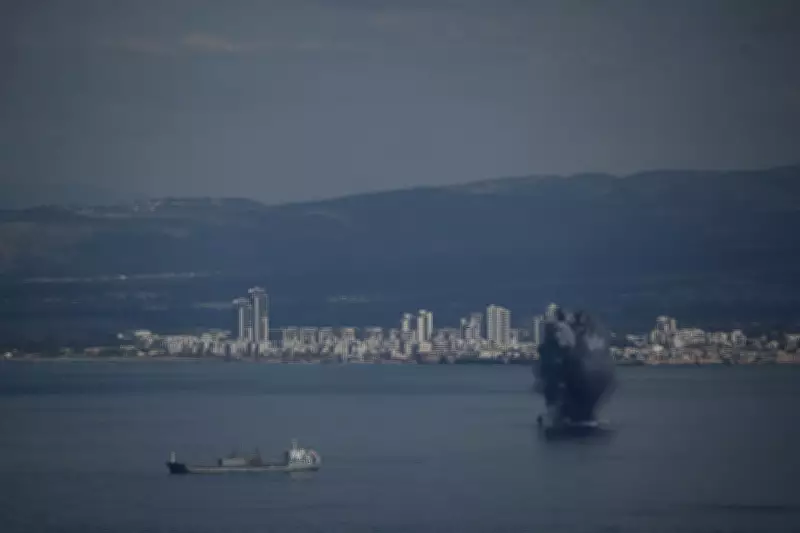
The conflict, which began on February 28 with U.S. and Israeli attacks on Iran, has already brought fighting near key desalination infrastructure. On March 2, Iranian strikes on Dubai's Jebel Ali port landed about 12 miles from one of the world's largest desalination plants, which supplies much of the city's drinking water. Damage was also reported at the Fujairah F1 complex in the UAE and Kuwait's Doha West plant, though experts say there is little evidence of intentional targeting of water sites so far.
Many Gulf desalination plants are integrated with power stations as co-generation facilities, meaning attacks on electrical infrastructure could also hinder water production. David Michel, a senior fellow for water security at the Center for Strategic and International Studies, explains, "It's an asymmetrical tactic. Iran doesn't have the same capacity to strike back at the United States and Israel. But it does have this possibility to impose costs on the Gulf countries to push them to intervene or call for a cessation of hostilities." Ed Cullinane, Middle East editor at Global Water Intelligence, adds that these assets are no more protected than municipal areas currently under attack.
A Long-Standing Concern with Historical Precedents
Gulf governments and U.S. officials have long recognized the risks to regional stability if major desalination plants were knocked offline. A 2010 CIA analysis warned that attacks could trigger national crises, with prolonged outages lasting months if critical equipment were destroyed. The report noted that over 90% of the Gulf's desalinated water comes from just 56 plants, each extremely vulnerable to sabotage or military action.
Historical incidents underscore this threat. During the 1990-1991 Gulf War, Iraqi forces sabotaged power stations and desalination facilities as they retreated, leaving Kuwait largely without fresh water and dependent on emergency imports for years. More recently, Yemen's Houthi rebels have targeted Saudi desalination facilities. Michel points out that these events reflect a broader erosion of norms against attacking civilian infrastructure, as seen in conflicts in Ukraine, Gaza, and Iraq. International humanitarian law prohibits targeting water facilities indispensable to survival.

Climate Change and Environmental Impacts
Climate change adds another layer of risk. Warming oceans increase the likelihood of cyclones in the Arabian Sea, which could damage coastal desalination plants with storm surges and extreme rainfall. Desalination itself is energy-intensive, producing between 500 and 850 million tons of carbon emissions annually, and its by-product, concentrated brine, can harm marine ecosystems when discharged back into the ocean.
As climate change intensifies droughts and disrupts rainfall, desalination is expected to expand globally, making its security even more critical.
Iran's Own Water Crisis
Ironically, Iran faces its own water supply challenges. After five years of extreme drought, water levels in Tehran's reservoirs have plunged to about 10% of capacity, prompting warnings that the capital may need evacuation. Unlike Gulf states, Iran relies mostly on rivers, reservoirs, and aquifers, with limited desalination capacity due to infrastructure constraints, energy costs, and sanctions. Cullinane remarks, "They were already thinking of evacuating the capital last summer. I don't dare to wonder what it's going to be like this summer under sustained fire, with an ongoing economic catastrophe and a serious water crisis."
The potential for cyberattacks on water infrastructure is also a growing concern, with U.S. officials blaming Iran-aligned groups for hacking into American water utilities in 2023 and 2024.
In summary, as the Iran war widens, the Persian Gulf's dependence on desalinated water presents a strategic weak point that could have devastating consequences for millions, highlighting the urgent need for enhanced protections and regional cooperation.