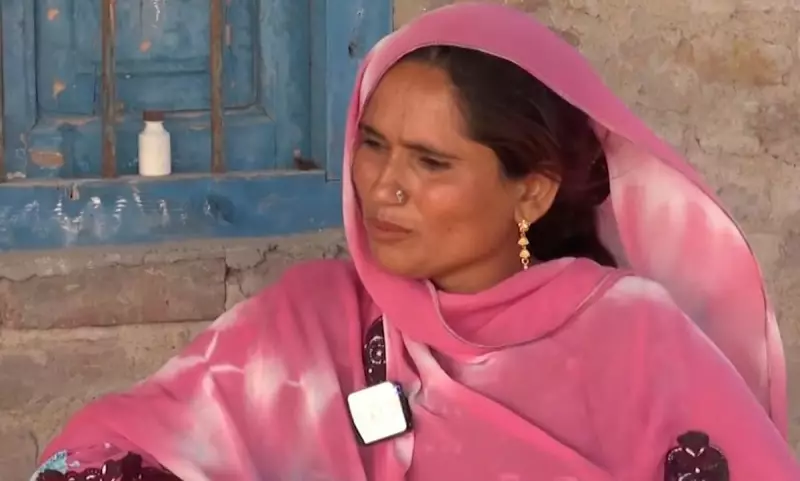
In a powerful story of resilience from rural Pakistan, a community health worker who was once ostracised by her own family for pursuing an education and a career is now campaigning for political office. Naushaba Roonjho, from Sheikh Soomar village in Sindh province, aims to transform her community from within the political system.
A journey marked by defiance and determination
Naushaba Roonjho's path has been anything but conventional. In 2010, at the age of 17, she achieved a significant milestone by becoming the first girl in her district to pass Pakistan's national secondary school exam, known as the matric. Instead of celebration, her father delivered an ultimatum: her studies were over and she was to remain at home. Within weeks, she was married to labourer Muhammad Uris.
Despite leaving formal education after primary school, Roonjho had continued studying independently, often facing mockery from villagers who believed education "spoiled" girls. After several years dedicated to raising her children and managing household chores, she spotted an opportunity that would change her life: an advert for a national rural development programme seeking community workers.

Her decision to apply and subsequently work as a health worker, going door-to-door, was seen as deeply shameful. "Some accused me of dishonouring my family," Roonjho recalls. The conflict culminated in 2019 when her family demanded she stop working or leave their home. She and her husband chose to leave, using their savings to build a single-room home. This separation only strengthened her resolve, bolstered by her husband's unwavering support.
Grassroots impact and a vision for change
Through her work on polio vaccination drives and health hygiene initiatives, Roonjho witnessed the stark needs of her community firsthand. She observed poor sanitation practices and a critical lack of maternal healthcare knowledge. Pakistan's maternal mortality rate stands at 155 deaths per 100,000 live births, a figure still far above the UN's Sustainable Development Goal target of 70.
Her work was not always welcomed. Some families refused polio vaccinations, deeming them "fake," and her husband faced daily taunts for allowing his wife to work alongside men. Undeterred, the couple began focusing on girls' education. They discovered the local government school in Sheikh Soomar, while co-educational on paper, had no functioning space for girls.
"She went to each house, talked and convinced the parents," says Uris. Their efforts resulted in seven girls enrolling, including their two daughters—a monumental shift in a village where previously not a single girl attended school.
Roonjho's leadership flourished through the Sindh Rural Support Organisation (SRSO), a body that builds local leadership through community-run groups. She became president of her village's Local Support Organisation (LSO), coordinating development and mobilising women. Zulfiqar Kalhoro, CEO of SRSO, notes that women like Roonjho are central to rural change. "She never asked for anything for herself, she worked for other women. That's real leadership," he said.
Setting sights on the political arena
Now 33, and with enhanced confidence from disaster-preparedness training, Naushaba Roonjho has set her sights on the 2027 local elections. She plans to run for the position of Union Council (UC) chairman, the lowest tier of government in Pakistan responsible for basic neighbourhood services like water, electricity, and roads.
"The UC chairman doesn't do anything," Roonjho states bluntly, citing years of unmet requests for clean water and infrastructure. "I want to solve these problems. I want to be the voice for poor people." She has already begun visiting households to lay the groundwork for her political campaign.
Village elder Manzoor Ali, 60, attests to her transformative impact. "She has done so much for this village without even having a seat in politics. If she gets a seat, she will do even more." He believes her work has fundamentally shifted attitudes, noting that now there is likely not a single house in the village that refuses to send its daughters to school.

Roonjho's ultimate motivation remains deeply personal. "I wasn't allowed to study," she says. "But I will make sure no girl in this village grows up hearing those same words." Her story stands as a testament to the power of grassroots activism and the potential for local leadership to drive profound social change.