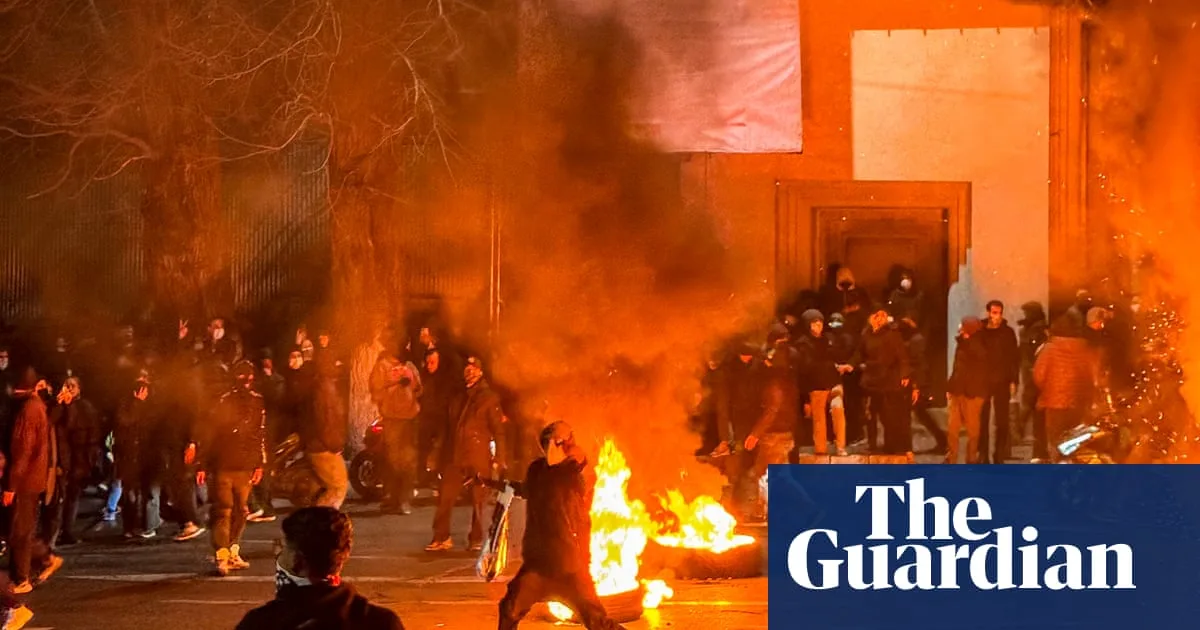
Iranian Campus Protests Defy Crackdown as US Military Threats Intensify
Iran Campus Protests Persist Amid US Military Threats

Iranian Campus Protests Defy Crackdown as US Military Threats Intensify

It has now been seven weeks since the Iranian government employed brutal force to suppress massive nationwide protests. However, public resistance against the Islamic Republic continues to simmer, particularly within the country's university campuses, where anti-government sentiment remains defiantly alive.

Persistent Demonstrations Across Multiple Campuses

According to an exiled Iranian activist monitoring the student movement, alongside four anonymous student witnesses and verified social media videos from The Associated Press, anti-government demonstrations have occurred on at least ten campuses in the past week alone. The students, who spoke anonymously due to fears of retaliation, described escalating anger toward Iran's leadership and widespread confusion about the nation's future direction.

These ongoing campus tensions unfold as Supreme Leader Ayatollah Ali Khamenei's government faces mounting threats of military action from the United States over Iran's nuclear ambitions. In response, the theocratic regime has intensified its warnings to students and administrators. One government official recently cautioned students against crossing a "red line," while a hard-line cleric leading Iran's judiciary threatened punishment for "crimes" if protests are not controlled.

University Closures and Remote Learning Measures

Numerous universities have shut down physical campuses and transitioned to online classes, echoing measures taken late last year. When protests over economic conditions erupted in Tehran's grand bazaar in December and spread nationwide, authorities imposed remote learning in early January, restricted internet access, and launched a violent crackdown.

The full casualty toll from that crackdown remains unclear due to government-imposed internet restrictions. The Human Rights Activists News Agency reports confirming over 7,000 deaths with thousands more under investigation. While the government acknowledges more than 3,000 killed, it has historically undercounted fatalities during unrest. Exiled activist Ali Taghipour, who tracks the student movement, states at least 128 university students died, calling it "the biggest massacre of university students" under the Islamic Republic.

Recent Protest Incidents and Memorial Gatherings

Taghipour notes that when universities resumed in-person classes, it coincided with memorials for those killed in January protests, some of which sparked new anti-government demonstrations. Last Saturday, protests erupted at Sharif University of Technology and Amir Kabir University. Verified AP videos show scuffles between apparent pro-government supporters and protesters chanting "Shameless!"—a taunt directed at security forces and plainclothes agents like the Basij, the Revolutionary Guard's volunteer arm present on campuses.

On Monday, students at the all-female Al Zahra University in northern Tehran chanted anti-government slogans, while students at the University of Tehran’s College of Foreign Languages held a rowdy demonstration, stamping feet and chanting, "For each person killed, a thousand stand behind them!" This gathering began as a memorial for a student killed in January.

Fears of Renewed Crackdown and Judicial Threats

The protests have heightened fears of another crackdown. On Tuesday, government spokeswoman Fatemeh Mohajerani warned students via the semiofficial Mehr news agency not to cross a "red line." Simultaneously, an Iranian state television anchor read a statement from Sharif University's president apologizing for "inappropriate" campus events.

On Wednesday, judiciary head Gholamhossein Mohseni Ejehi stated that judicial authorities would prosecute "crimes" on campuses if educational authorities fail to control them, as reported by state media. Ejehi has become synonymous with Iran's recent crackdown, advocating for accelerated punishments for protesters.

Taghipour reports that universities across Iran have barred some students from campus and conducted disciplinary hearings, which historically lead to expulsions or bans from further studies.

Historical Context and Student Activism

Iran's college students have long been catalysts for anti-government protests. In 1999, Tehran university students initiated some of the first demonstrations against the Islamic Republic. Campus unrest also fueled protests supporting reformist leaders in 2008-2009 and sustained openly anti-government demonstrations in 2022 that called for overthrowing the theocracy.

A doctoral student at the University of Tehran explained that hard-liners' refusal to enact policy changes, combined with the erosion of the middle class due to Western sanctions and economic mismanagement, has led many students to believe the Islamic Republic is irreformable. This void has elevated Reza Pahlavi—son of the ousted shah—as "a serious political cause" for some, despite mixed memories of his autocratic rule and growing nostalgia for past economic prosperity.

Repression and Diminished Political Space

Years of repression have stifled organized opposition within Iran and reduced campus opportunities for political debate. A social sciences student at Tehran University noted, "After 2022, around 70% of student associations were closed," including a progressive association he led. He expressed uncertainty about the protests' potential outcomes amid foreign military threats and the government's readiness to use deadly violence, stating, "On the one hand, we are facing a government that isn’t afraid of killing anyone, and on the other hand, we are facing outside powers that support people being killed."

War Threats and Campus Anxieties

A student from a university in Babol described rising campus fears about potential war consequences. While hoping for a "democratic secular republic," he worries armed conflict could exacerbate suffering and risk "the country’s disintegration." Iran already struggles with basic services like electricity and water in some regions.

His university has maintained remote learning since early January, preventing campus gatherings. Many students boycott online courses as a protest form. At the University of Tehran, the social sciences student opposes Pahlavi supporters, partly because the exiled figure has advocated for US strikes on Iran, questioning, "How will they accept responsibility for what happens tomorrow?"