Significant protests have erupted across Iran, driven by a severe economic crisis, placing the regime under intense domestic pressure. In a rare move, the government has signalled a willingness to engage in dialogue with demonstrators as external threats from the United States and Israel loom.
Widespread Demonstrations Hit Tehran
On Tuesday 30 December 2025, protests over the soaring cost of living intensified dramatically. For a third consecutive day, hundreds of students rallied at four universities in Tehran. Their actions followed demonstrations by bazaar merchants, who took to the streets chanting slogans and blocking roads.
The unrest, which represents the first major protests since US and Israeli strikes in June, saw crowds gather in key locations. Videos shared on Monday showed hundreds participating in rallies on Saadi Street in downtown Tehran and in the Shush neighbourhood near the Grand Bazaar. This area holds historical significance, having played a crucial role in the 1979 Islamic Revolution.

Chants heard during the protests included support for Reza Shah, the late founder of the Pahlavi dynasty overthrown in 1979. On social media, citizens voiced their fury. User Soroosh Dadkhah stated that rampant high prices and corruption had pushed people "to the point of explosion".
Government's Unusual Offer of Dialogue
Faced with this mounting internal pressure, the Iranian government took an unusual step. Government spokesperson Fatemeh Mohajerani stated on Tuesday, "We officially recognise the protests. We hear their voices and we know that this originates from natural pressure arising from the pressure on people's livelihoods."
She assured that a mechanism for dialogue with protest organisers would be established. President Masoud Pezeshkian echoed this sentiment in a meeting with trade unions and market activists, pledging the government would do its utmost to resolve their issues and address economic worries.
External Threats and Economic Collapse
The domestic turmoil unfolds against a backdrop of renewed external threats. This week, US President Donald Trump and Israeli Prime Minister Benjamin Netanyahu have weighed fresh strikes on Iran. This follows 12 days of US and Israeli airstrikes in June targeting Iran's military and nuclear installations, actions aimed at halting suspected atomic weapons development.
Separately, the Kremlin confirmed that Russian President Vladimir Putin discussed Iran's nuclear programme with President Pezeshkian in a phone call on Tuesday.
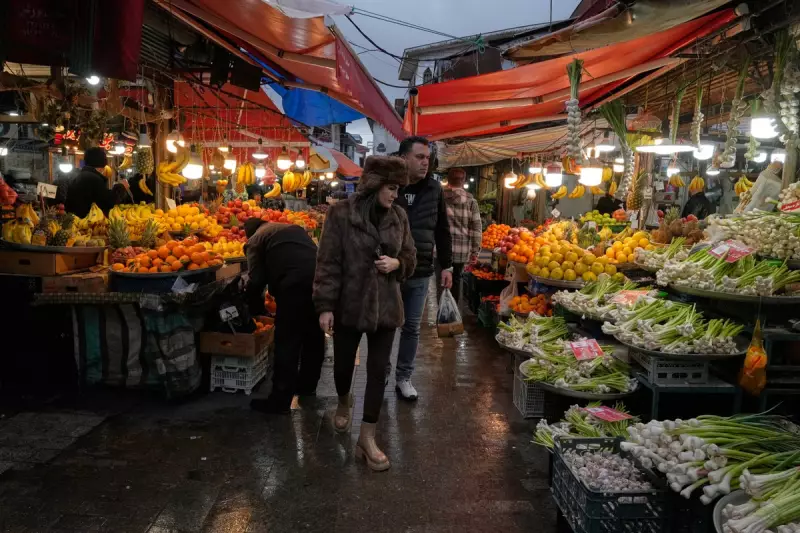
Meanwhile, Iran's economy is in freefall. The rial has lost nearly half its value against the dollar this year, with official inflation hitting 42.5% in December. This rapid currency depreciation has drastically increased the cost of food and essentials, crippling household budgets. Reports in official Iranian media suggest the government plans to raise taxes in the Iranian New Year starting March 2026, adding to public anxiety.
The economic suffering has been exacerbated since 2018, when the US reimposed sanctions after President Trump withdrew from the international nuclear deal.