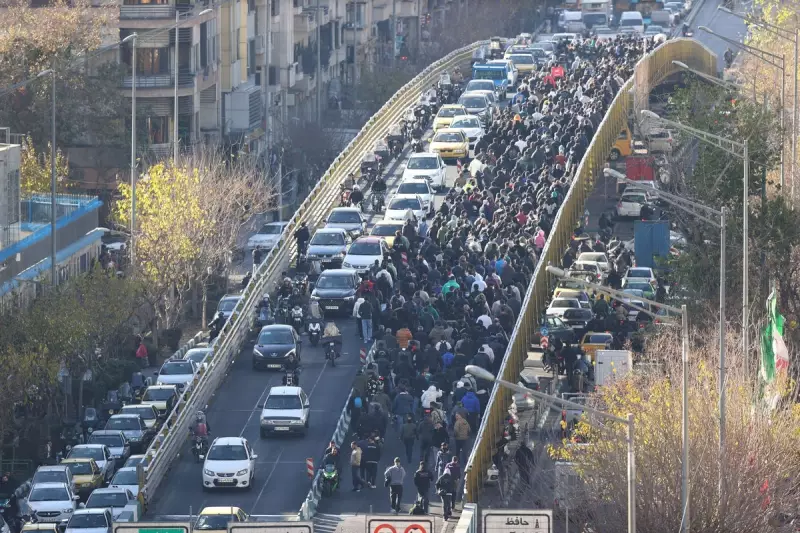
Iran has entered a third consecutive day of major nationwide protests, with hundreds of demonstrators, including students and shopkeepers, blocking roads and voicing fury over a severe economic crisis.
Economic Despair Fuels Widespread Unrest
Widespread discontent has boiled over into public demonstrations across the country. The protests, driven by the soaring cost of living and acute economic hardship, saw students rallying in Tehran on Tuesday 30 December 2025. This followed earlier action by bazaar merchants, who chanted slogans and occupied roads in a show of defiance.
The depth of public anger is palpable on social media. One user, Soroosh Dadkhah, captured the mood, writing that rampant high prices and corruption had pushed people "to the point of explosion."

Government's Unusual Pledge for Dialogue
Facing mounting pressure from the sustained protests, the Iranian government took an unusual step. On Tuesday, it publicly acknowledged that the grievances stem from economic pressures and assured that a mechanism for dialogue with protest organisers would be established.
This rare move to seek talks underscores the significant challenge the authorities face. The protests erupt against a backdrop of intense economic strain, severely exacerbated by external factors.
Root Causes: Sanctions and Currency Collapse
The economic triggers for the unrest are stark and measurable. The Iranian rial has lost nearly half its value, devastating purchasing power. Meanwhile, official inflation has skyrocketed to 42.5%, making basic goods unaffordable for many ordinary Iranians.
This situation has been dramatically worsened by the reimposition of US sanctions in 2018 under the administration of Donald Trump. These sanctions have crippled Iran's ability to trade internationally, strangling its economy and directly contributing to the current crisis.
As the protests continue, the government's promise of dialogue remains to be tested. The coming days will reveal whether this approach can quell the unrest or if the economic pressures are too great for promises alone to pacify a frustrated population.