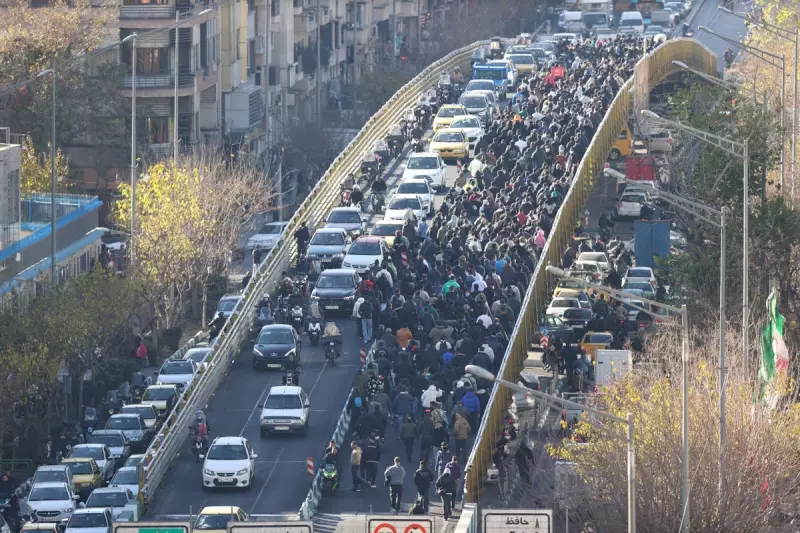
Nationwide protests have gripped Iran since late December, escalating from initial economic grievances into broader anti-government demonstrations. The unrest, sparked by a collapsing currency and soaring inflation, has seen significant violence, numerous arrests, and a severe response from authorities.
Economic Spark Ignites Widespread Discontent
The immediate catalyst for the demonstrations was a severe economic downturn. On December 28, protests erupted in two major markets in downtown Tehran. This followed the Iranian rial plunging to a record low of 1.42 million to the US dollar, which drastically increased the cost of food and daily essentials. Public frustration was already simmering after the government raised prices for subsidised petrol in early December.
The unrest spread rapidly. By December 29, demonstrations had reached other cities, prompting police in the capital to use tear gas. The head of the Central Bank, Mohammad Reza Farzin, resigned the same day. As protests expanded to university campuses, President Masoud Pezeshkian met business leaders, pledging his administration would "not spare any effort" to fix economic problems.

Escalation and Government Response
The situation intensified as the new year began. On January 1, the first fatalities were officially reported, with at least seven people killed. Violence was particularly severe in Azna, Lorestan province, where online videos showed streets ablaze and gunfire. A volunteer from the Basij paramilitary force was also reported killed.
By January 2, protests had expanded to over 100 locations across 22 provinces, according to the US-based Human Rights Activists News Agency (HRANA). The same day, former US President Donald Trump issued a warning on Truth Social, stating the US "will come to their rescue" if Iran "violently kills peaceful protesters."
The government's stance hardened significantly on January 3. Supreme Leader Ayatollah Ali Khamenei declared that "rioters must be put in their place," signalling a green light for a more aggressive crackdown. HRANA reported protests had spread to over 170 locations in 25 provinces, with at least 15 dead and 580 arrested.
Internet Blackout and Rising Death Toll
Protests continued to grow. On January 6, a sit-in at Tehran's Grand Bazaar was dispersed by security forces using tear gas. The death toll rose to 36, including two security force members, with demonstrations recorded in 27 provinces.
On January 8, following a call from Iran's exiled crown prince, people participated in overnight protests, shouting from windows and taking to the streets. The government responded by blocking internet access and international calls, isolating the country's 85 million people from the outside world.
By January 9, HRANA reported that at least 65 people had been killed in violence surrounding the demonstrations, with more than 2,300 detained. Despite signals of an impending major crackdown, protesters continued to demonstrate.
The protests, which began as a vent for economic anger over a faltering economy and currency collapse, have evolved into a significant challenge for the Islamic Republic, met with a determined and forceful response from the state.