Violent Clashes Erupt at Tehran University Amid Anti-Government Protests
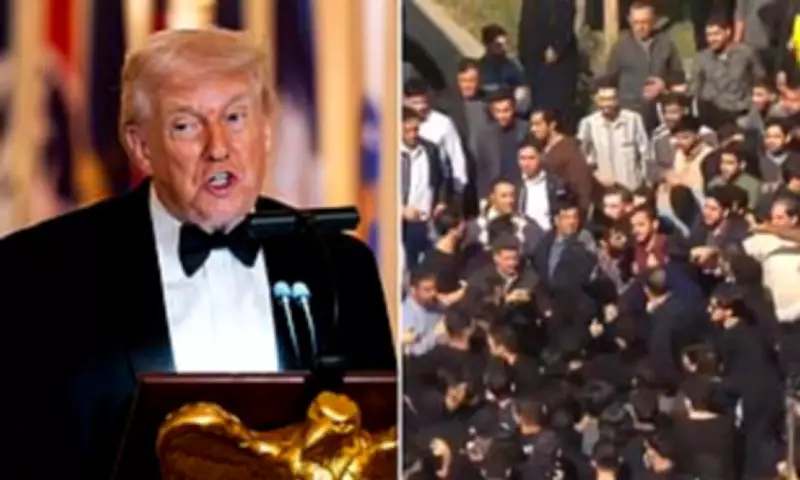
Mass student demonstrations in Iran have escalated into violent confrontations between anti-government protesters and pro-government security forces. At the prestigious Sharif University of Technology in Tehran, students were observed staging a significant protest against the regime of Supreme Leader Ayatollah Ali Khamenei. Visual evidence captured a substantial group of students dressed entirely in black with face coverings, marching through campus grounds while chanting slogans directly opposing the supreme leader's authority.
Security Forces Confront Student Demonstrators
The protest situation deteriorated rapidly when demonstrators became engaged in physical altercations with members of the Basij, a volunteer internal police force operating as a branch of the Islamic Revolutionary Guard Corps (IRGC). According to anti-government media reports, video footage documented the moment when both groups began exchanging punches and engaging in hand-to-hand combat. This confrontation represents a significant escalation in the ongoing protest movement that has gripped Iranian universities and cities.
Human Rights Organizations Report Severe Crackdown
The Iranian government's response to nationwide protests has resulted in severe human rights consequences. The US-based Human Rights Activists News Agency has documented that more than 50,000 individuals have been arrested in connection with the government's crackdown on demonstrations. The organization further reports that at least 6,876 people have been killed during these operations, though other human rights groups have tallied substantially higher numbers. Medical professionals working within Iran have estimated that the actual death toll could approach 30,000 individuals.

Disturbing Reports of Hospital Executions Emerge
Chilling accounts have surfaced regarding the treatment of injured protesters within medical facilities. Dr. R, a member of the Aida Health Alliance, has described how Iranian security forces have allegedly executed wounded civilians directly in their hospital beds. According to these reports, patients were discovered still connected to medical equipment with bullet wounds to their heads. The doctor explained that these injuries could not have occurred before hospital admission, suggesting deliberate executions occurred within medical treatment areas. Photographic evidence shared with international media shows bodies in black bags with apparent gunshot wounds to the head, though these images have not been independently verified.
US Military Buildup Intensifies Amid Nuclear Negotiation Stalemate
As internal tensions escalate within Iran, external pressure is mounting from the United States. President Donald Trump has explicitly alluded to potential military action against Iran if the nation refuses to engage meaningfully in nuclear negotiations. During a press briefing on Friday, the President confirmed he was actively considering military options to pressure Iranian officials to negotiate terms regarding their nuclear program. The United States has maintained longstanding concerns that Iran is developing nuclear weapons capabilities, and recent indirect negotiations in Geneva reportedly failed to produce substantive agreements.
Significant Military Movements Across Middle Eastern Bases
Multiple intelligence reports indicate a substantial increase in US military presence throughout the Middle East region. According to information provided to ABC News, hundreds of military personnel stationed at a base in Qatar have been relocated in anticipation of potential strikes against Iranian targets. While the specific base was not identified in initial reports, the major military facility in Qatar is the strategically important Al Udeid Air Base. Additional reporting suggests approximately 35,000 troops have been positioned throughout the Middle East ahead of possible military action, supported by significant assets including the USS Gerald Ford aircraft carrier, approximately 100 cargo planes, numerous fighter jets, and the USS Abraham Lincoln strike group.

Satellite Imagery Reveals Dramatic Aircraft Buildup
Recent satellite surveillance has captured compelling evidence of military preparations. At the Muwaffaq Salti Air Base in Jordan, flight tracking data reviewed by the New York Times shows approximately 60 attack aircraft parked on the tarmac—roughly triple the normal complement stationed at this location. Since Sunday, at least 68 additional cargo planes have landed at this facility. Further satellite analysis reveals the presence of multiple drones, helicopters, F-35 stealth fighter jets, and newly deployed air defense systems at various bases throughout the region.
Political Pressure Mounts for Military Intervention
President Trump's longtime political ally, South Carolina Senator Lindsey Graham, has publicly urged the administration to authorize strikes against Iran. In statements to Axios, Graham acknowledged concerns about military entanglements in the Middle East but argued that failing to confront Iranian aggression would have severe consequences. The senator described Supreme Leader Khamenei as "a religious Nazi" who seeks to destabilize the region and threaten global security. Graham recently visited multiple Middle Eastern nations including Israel, the United Arab Emirates, and Saudi Arabia to discuss coordinated approaches to Iranian threats.
Iran Maintains Nuclear Rights While Denying Weapons Development
The Iranian government continues to deny any intention to develop nuclear weapons while simultaneously asserting its sovereign right to enrich uranium for peaceful energy purposes. This position has created a diplomatic stalemate with Western nations concerned about nuclear proliferation. Meanwhile, Iran has conducted joint naval exercises with Russia near the strategic Strait of Hormuz, demonstrating its military capabilities and international partnerships. As tensions continue to escalate both internally and internationally, the situation remains highly volatile with significant implications for regional stability and global security.