Iran is engulfed in its most significant wave of civil unrest in years, with nationwide protests that began in December 2025 escalating into a severe political crisis. The demonstrations, initially triggered by soaring inflation and the collapse of the national currency, the rial, have rapidly evolved into broader demands for fundamental political change.
A Nationwide Uprising Met with Force
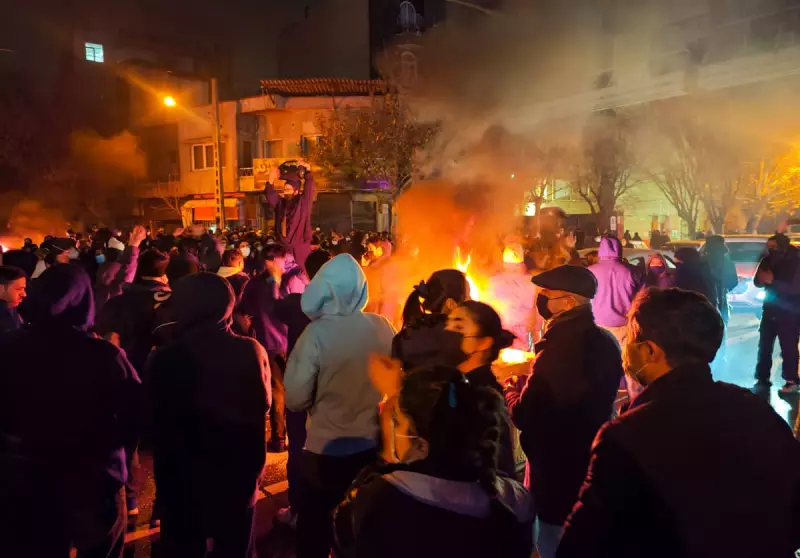
What started in Tehran's Grand Bazaar as a reaction to failing economic policies has spread to universities and cities across the country. Images from the capital show protesters rallying around bonfires and blocking streets, their slogans shifting from economic grievances to direct anti-government chants. The regime's response has been brutally decisive.
Security forces have launched a severe crackdown, implementing nationwide internet blackouts starting on 8 January 2026 to stifle communication and the flow of information. Despite these blackouts, journalists and activists have struggled to document the violence. According to estimates cited in international reports, at least 2,500 people have been killed by regime forces since the protests began.

The physical scars of the unrest are visible in Tehran, with buildings like the heavily damaged tax affairs building, pictured on 10 January, standing as testament to the growing turmoil. Meanwhile, the government has organised its own rallies, such as one at Enghelab Square on 12 January, where Parliament Speaker Mohammad Bagher Ghalibaf blamed western interference for the country's instability.
Global Echoes of Dissent
The protest movement has transcended Iran's borders, sparking demonstrations of solidarity at Iranian diplomatic missions worldwide. In a powerful display of dissent, Iranians and supporters in the diaspora have taken to the streets, often brandishing symbols of the pre-1979 monarchy.
In central London, protesters outside the Iranian embassy burned pictures of Supreme Leader Ayatollah Ali Khamenei and held aloft the historic 'lion and sun' flag. Similar scenes unfolded in Berlin, where demonstrators displayed photos of Reza Pahlavi, the son of Iran's last Shah, and in Rome, where the pre-revolution flag was waved proudly. Solidarity rallies were also reported in Milan, Toronto, and on Whitehall in London, where crowds gathered in support of the Iranian resistance.
A Deepening Crisis with International Repercussions
The situation presents a profound challenge to the Iranian establishment and has drawn sharp international concern. The scale of the protests and the regime's deadly retaliation point to a deep-seated crisis of legitimacy, fuelled by years of economic hardship and political repression.
The communications blackout, a familiar tactic during periods of unrest in Iran, highlights the authorities' fear of the protests' narrative spreading. However, the global demonstrations indicate that the story is being told, applying further pressure on the regime. The crisis has escalated to the point where former US President Donald Trump warned that the United States would 'take very strong action' if Iran began executing arrested protesters, signalling potential international consequences.
As fires burn in the streets of Tehran and flags are raised in capitals across Europe and North America, Iran faces a pivotal moment. The combination of domestic fury over economic collapse and a courageous demand for political freedoms, met with violent suppression, has created a flashpoint with uncertain but potentially far-reaching outcomes.