Jimmy Lai's Sentencing: A Stark Declaration That Democracy Is Extinct in Hong Kong
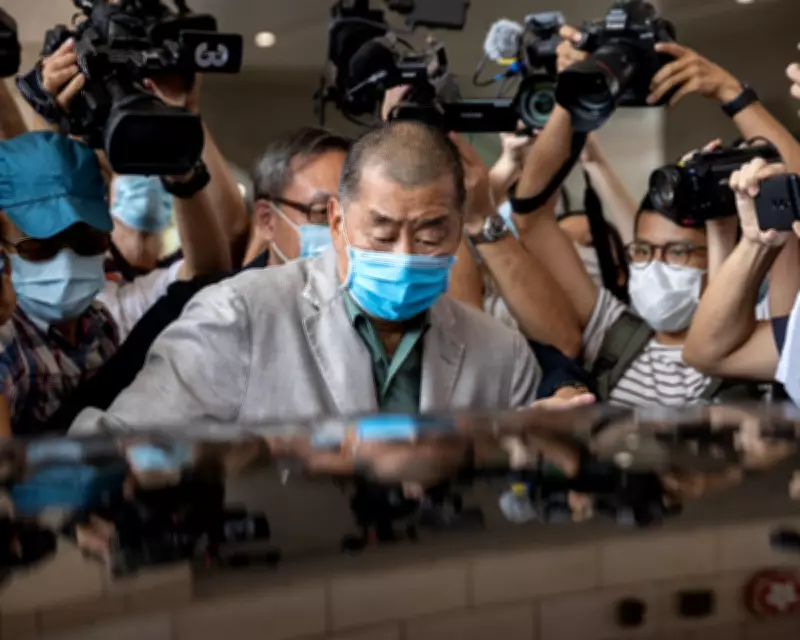
Waking up on Monday morning to the news that pro-democracy activist Jimmy Lai had been handed a 20-year prison sentence for national security offences felt utterly surreal. I could easily have been in his position if I had not fled Hong Kong just before the implementation of the notorious national security law (NSL), under which Lai has received the harshest penalty ever imposed. In fact, Lai chose to remain and stand shoulder to shoulder with the people of Hong Kong, facing an uncertain and repressive future. Now, his family fears he may die behind bars.
A Political Verdict Disguised as Justice
A mix of emotions overwhelmed me. I was immensely disgusted by the audacity and malevolence of such a punishment. This sentence has a transparently political objective, yet the Hong Kong and Chinese governments make no attempt to conceal it. Their sole purpose is to silence critics, and they have succeeded: civil society and domestic media, which should act as watchdogs for individual rights and government overreach, are now dead silent in criticising the trial.
The so-called neutral institutions in Hong Kong have lost that status entirely. Carefully handpicked NSL judges in the judiciary claimed in their verdict that Lai harbours "rabid hatred" and "deep resentment" toward the Chinese Communist Party (CCP), despite his repeated assertions that he embraces the People's Republic of China as a country. The court also accused Apple Daily, the newspaper Lai founded which was critical of the CCP's human rights record, of "poisoning the minds of his readers" and spreading "venomous assertions". These emotionally charged terms are rare in legal documents; the verdict reads more like a political manifesto than a judicial ruling.

The Erosion of Opposition and Free Speech
Hong Kong's Chief Executive, John Lee, celebrated the effective life sentence, describing Lai's crimes as "heinous" and "utterly despicable". Many branches of the civil servants union united to glorify the verdict as if it were a victory for Hong Kong against foreign interference. There is no counter-voice in the legislature, as the recent election overhaul has eliminated any possibility of opposition in the council; the last pro-democracy party disbanded last year, leaving no Hong Kong-based political group to express concern over the judgment.
The one-sided celebration of Lai's sentencing underscores the importance of what he fought for: the right to express oneself and the right to conscience. The pervasive political violence against Hong Kong's people has resulted in hundreds being imprisoned and has silenced millions. Political consciousness is now dangerous in today's Hong Kong; individuals can be charged with sedition even for creating children's books that metaphorically criticise the regime.
Personal Reflections and Global Implications
I feel immensely fortunate to wake up in a place of my choosing and write freely. However, I still live with restrictions and intimidation: I face an active arrest warrant from Hong Kong, have been disinvited from events due to fears of Beijing's reprisals, denied entry to some countries despite holding a legal visa, and spied on by the Hong Kong government. Yet, these hurdles are trivial compared to the suffering of friends still in Hong Kong, who have served years behind bars.
This situation reflects the consequences of allowing an emboldened authoritarian regime to expand its influence globally. When bad actors go unpunished or are even welcomed, they tend to act more aggressively. And why wouldn't they? If the rights of the persecuted in China are seen as secondary, or even trivial, and leaders of democratic countries prioritise "repairing relationships" to navigate between major powers, then why should the CCP feel compelled to change its actions?

A Call for British Leadership
It appears we have entered an era where discussions about values and rights have become cheap and obsolete. Power is viewed as transactional, and international politics has devolved into pure "realpolitik". It might be compelling for the UK to follow suit, but I believe we can do better. I still hold that one of Britain's strengths lies in its foundation of liberalism and democratic values. These principles set it apart from countries like China and are embodied by individuals such as Jimmy Lai.
Given Lai's deteriorating health, time is running out for decisive action. Under the Sino-British joint declaration of 1984, the Chinese government was obliged to uphold the rights and freedoms of Hong Kong's people. The UK can safeguard this agreement by placing the argument for Lai's release at the heart of UK-China relations and elevating his case to a matter of national importance. This is the strongest way for Britain to demonstrate its leadership in promoting freedom and democratic values on the world stage.