Jimmy Lai's 20-Year Prison Sentence Ignites International Controversy
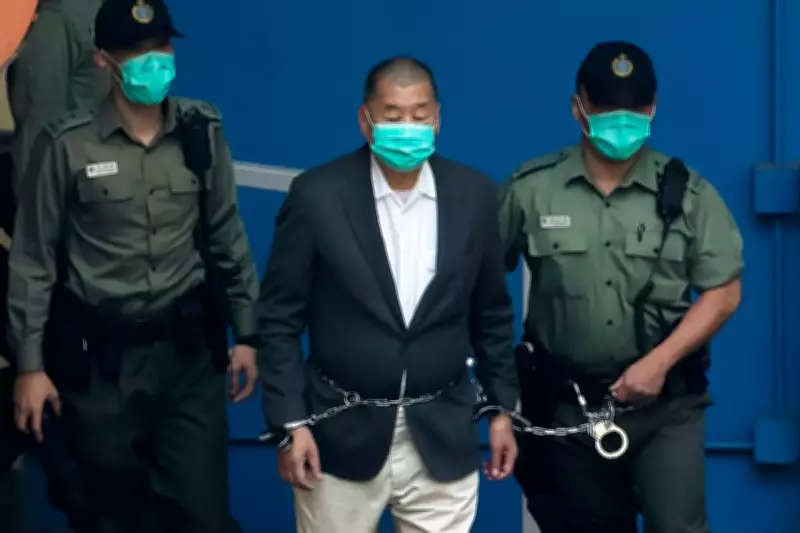
The sentencing of Hong Kong's former media magnate Jimmy Lai on Monday has triggered widespread concern from foreign governments and human rights organizations, while Chinese and Hong Kong officials have staunchly defended the verdict as a reflection of the rule of law. Lai, a 78-year-old prominent democracy advocate and British citizen, was handed a 20-year prison term after being found guilty in December of conspiracy to collude with foreign forces and conspiring to publish seditious articles.
International Reactions and Calls for Release
Foreign governments and rights groups have vehemently criticized the sentencing, calling for Lai's immediate release. His co-defendants, who pleaded guilty to collusion-related charges, received prison sentences ranging from six years and three months to ten years, further intensifying the global scrutiny.
Australia's Foreign Minister Penny Wong expressed grave concern over the sentences, stating that the prosecutions have had a chilling effect on free speech in Hong Kong. She urged China to cease suppression of freedom of expression, media, and civil society, and to repeal the security law under which Lai was convicted.

UK Foreign Secretary Yvette Cooper condemned the sentence as politically motivated, emphasizing that Lai was punished for exercising his right to freedom of expression. She highlighted concerns for his health and called for his release on humanitarian grounds, noting that the sentence is tantamount to a life sentence for the elderly defendant.
China and Hong Kong's Defense of the Verdict
In response, Chinese authorities have firmly rejected international criticism. Foreign Ministry spokesperson Lin Jian asserted that Lai is a Chinese citizen and a major planner in anti-China destabilizing activities in Hong Kong. He stressed that the judicial cases are purely Hong Kong's internal affairs and urged other countries to avoid interference.
Hong Kong leader John Lee defended the sentence, describing Lai's crimes as heinous and accusing him of using his newspaper, Apple Daily, to poison residents and incite hatred. Lee argued that Lai deserved the heavy sentence for openly seeking foreign sanctions against China and Hong Kong, harming their interests.
Rights Groups and Regional Condemnation
Rights organizations have echoed the international outcry. Amnesty International labeled the sentence a grim milestone for Hong Kong, criticizing it as a disregard for human dignity. Reporters Without Borders warned that the decision underscores the collapse of press freedom in Hong Kong, drawing parallels to the case of Liu Xiaobo.
Taiwan's mainland affairs council condemned the Chinese and Hong Kong governments for suppressing human rights under the guise of national security, urging Lai's release and cautioning Taiwanese people to learn from Hong Kong's experience.
The case continues to highlight deep divisions over Hong Kong's legal framework and its implications for freedoms in the region.