End of an Era: Khamenei's Death Marks Iran's Berlin Wall Moment
The sudden death of Ayatollah Ali Khamenei, Iran's supreme leader for 37 years, has ignited widespread speculation that the country is on the brink of profound transformation. Many analysts are drawing parallels to the fall of the Berlin Wall in 1989, viewing this event as a symbolic rupture that could reshape Iran's political landscape.
A Symbolic Power Vacuum
Khamenei, aged 86, was killed alongside his wife in an Israeli missile strike on his secure compound in Tehran last Saturday. As the senior religious authority under Iran's system of velayat-e faqih (rule by Islamic jurisprudence), he held ultimate power over state matters, from nuclear negotiations with the US to domestic social policies. His removal creates a significant power vacuum that the regime may struggle to fill, despite existing succession plans.
Abbas Milani, director of Iranian studies at Stanford University, emphasised the psychological impact: "I think the death of Khamenei is close to a Berlin Wall moment, in the sense that it marks the end of an era. The psychological effect is profound." He argued that Khamenei's leadership was highly personalised, contradicting claims that the Islamic Republic could easily survive a change at the top.

Regime Under Strain
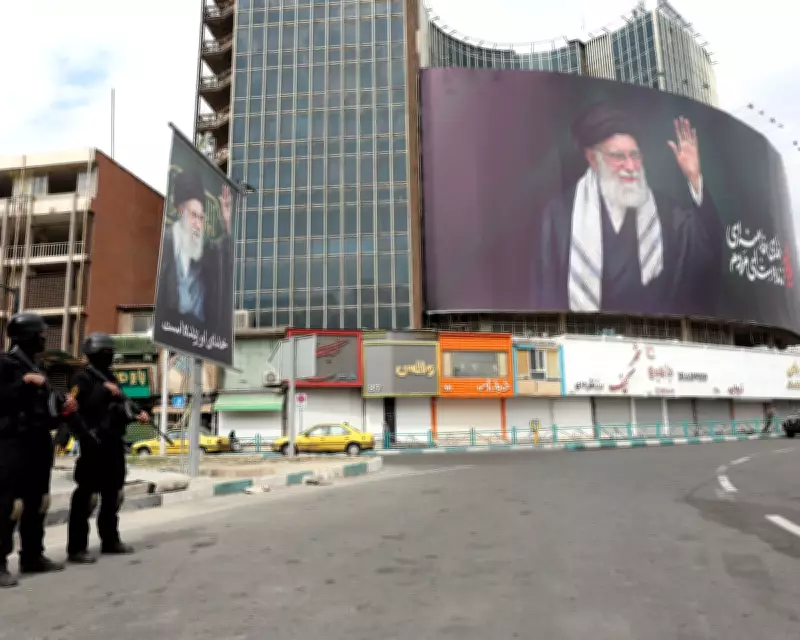
The regime is showing signs of strain under the pressure of ongoing conflict and internal dissent. Khamenei's funeral has been postponed to avoid targeting by US and Israeli forces, while the Assembly of Experts met remotely this week after its headquarters in Qom was bombed. In the penal system, political prisoners face intensified pressure, and some jails have reportedly been struck in bombardments.
Security forces have responded to celebrations of Khamenei's death by firing live rounds at homes where anti-regime slogans were shouted. Meanwhile, hardline Basij militia members are cruising neighbourhoods, blaring pro-regime slogans in an attempt to maintain morale and intimidate opponents.
Succession Challenges and Future Scenarios
Khamenei's son, Mojtaba, has emerged as a frontrunner to succeed him, but analysts question whether any successor can maintain the regime's diehard principles without Khamenei's unyielding presence. Naysan Rafati, senior Iran analyst with the International Crisis Group, noted: "His death and replacement would have been a challenging moment for the system under any circumstances. But it's happening in the most violent conditions."
Some experts believe the Islamic Revolutionary Guard Corps (IRGC) could seek redemption by easing domestic repression to placate a population angered by recent protests, while invoking nationalist sentiments to defend against US and Israeli attacks. However, Milani argues that the regime lacks the apparatus of oppression and public fear needed to retain power, stating: "Fear has dissipated. In Iran, when fear dissipates, authoritarian and pseudo-totalitarian regimes can't survive."
Historical Context and Broader Implications
Khamenei's tenure lasted nearly a decade longer than the Berlin Wall, and his death follows mass nationwide demonstrations in January that were brutally repressed, resulting in tens of thousands of deaths. These events were seen as portents of a reckoning for Iran's ruling theocrats, much like the popular breaching of the Berlin Wall foreshadowed the collapse of East Germany's communist regime.
The regime's ability to navigate this crisis will depend on its capacity to adapt without Khamenei's guiding hand. As Vatanka of the Middle East Institute pointed out, the current conflict offers hardliners a chance to shift narrative from domestic repression to national defence, potentially rallying support. Yet, the underlying structural weaknesses exposed by Khamenei's death suggest that Iran may be entering a period of unprecedented change, with implications for regional stability and global geopolitics.