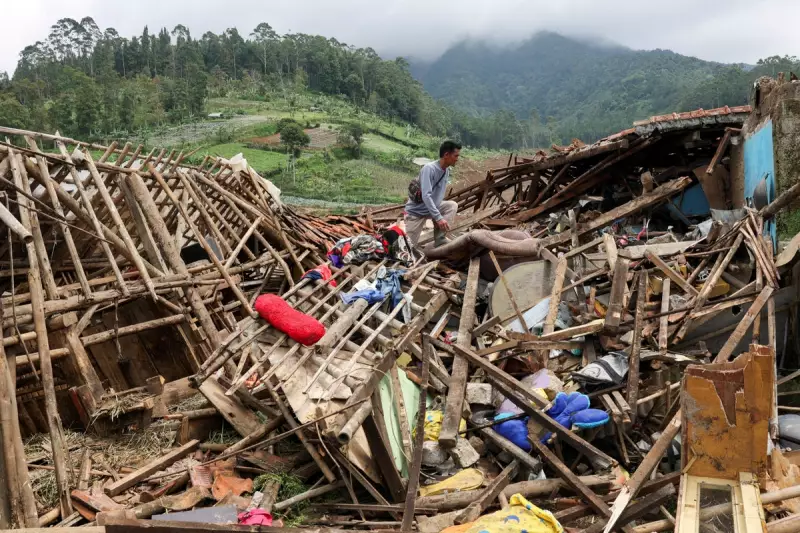
Indonesian Landslide Tragedy Claims Lives of 23 Marines During Training Exercise
A catastrophic landslide has struck a military training camp in West Java, Indonesia, resulting in the deaths of twenty-three marines who were preparing for border patrol deployment. The disaster occurred in the early hours of Saturday morning in Pasir Langu village, located within the Bandung Barat region, following several days of intense and continuous rainfall that saturated the steep hillsides.
Chaotic Rescue Efforts Amid Unstable Conditions
Rescue teams described scenes of chaos and devastation as mud, rocks, and fallen trees completely buried the training area, trapping the soldiers with virtually no opportunity for escape. Photographs from the site showed emergency workers and military personnel digging through thick, brown sludge while excavators operated in rain-soaked, treacherous conditions. The Indonesian navy confirmed that all twenty-three marines caught in the landslide had perished.
First Admiral Tunggul, a navy spokesperson, stated: "The incident occurred due to extreme weather conditions with heavy rainfall, which caused a landslide at the training site." Local officials reported that the landslide struck without any warning during the early morning, leaving those at the training facility with little time to react or seek safety.

Broader Disaster Impact Across West Java Communities
The military fatalities form part of a larger disaster that has affected multiple communities across West Java. According to the National Disaster Management Agency, landslides triggered by prolonged rainfall have killed at least thirty-eight people in the region, with dozens more still reported as missing. Identification efforts are ongoing, with twenty victims having been identified and returned to their families as of Tuesday evening.
Abdul Muhari, a spokesperson for the agency, indicated that it was not immediately clear whether all the marines were included within the overall death toll. At least eight hundred rescuers—including emergency workers, military personnel, and police—have been deployed across the affected areas, supported by nine excavators to clear debris and expand the search zone.
Geographical Vulnerabilities and Seasonal Risks
The landslides occurred in a hilly, mountainous part of West Java, approximately one hundred kilometres southeast of Jakarta, where steep terrain and deforested slopes are particularly vulnerable during the wet season. Heavy rain had fallen for two consecutive nights prior to the collapse, saturating the ground and destabilising the hillside. Rescue workers initially feared further collapses as rain continued to fall, forcing teams to repeatedly halt operations for safety reasons.
Muhari confirmed that six hundred and eighty-five residents from the stricken village had been evacuated to government buildings and temporary shelters. Families of both civilians and soldiers gathered near the site on Tuesday, awaiting news as heavy machinery continued to dig through the debris. Authorities warned that unstable ground and additional rainfall could slow operations and increase dangers for rescuers.
Context of Seasonal Disasters in Indonesia
This disaster comes during the peak of Indonesia's rainy season, which typically runs from October to March and regularly brings floods and landslides to densely populated areas of Java. Flooding has impacted several parts of the country in recent weeks, including Jakarta and cities across West Java and Central Java. The West Java landslides follow a series of deadly weather-related disasters across Indonesia.
Just two months ago, cyclone-triggered floods and landslides on the island of Sumatra killed approximately 1,200 people, destroyed thousands of homes, and displaced more than a million residents. Indonesia's geography and climate make it particularly prone to such disasters, with intense seasonal rainfall—combined with rapid development, hillside construction, and deforestation—increasing the risk of landslides in many regions.