Mojtaba Khamenei Appointed as Iran's New Supreme Leader in Historic Dynastic Shift
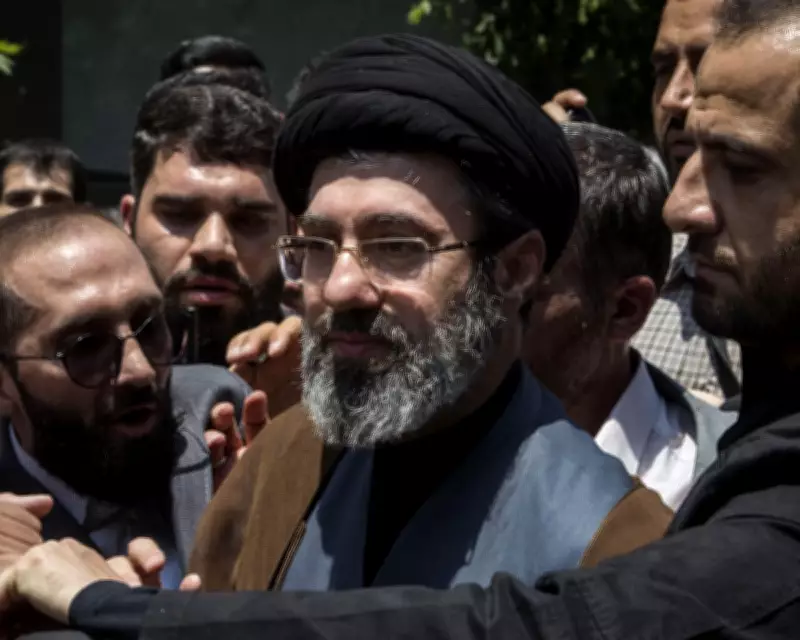
Mojtaba Khamenei, the second son of the late Iranian supreme leader Ayatollah Ali Khamenei, has been officially selected as his successor, according to announcements from Iranian state media. This decision, confirmed on Sunday by the clerical body responsible for appointing Iran's highest authority, represents a monumental development in the nation's political landscape.
First Father-to-Son Succession Since 1979 Revolution
The elevation of Mojtaba Khamenei marks the very first instance since the 1979 Islamic Revolution that Iran's supreme leadership has passed directly from father to son. This unprecedented move is poised to ignite intense internal debate within Iran regarding the emergence of a dynastic system in a state that was explicitly founded to overthrow hereditary rule following the Shah's regime.
Ayatollah Ali Khamenei, who governed Iran for 37 years, was killed in a US-Israeli strike on Tehran on February 28, which coincided with the first day of the ongoing war with Iran. His death created a significant power vacuum, with the appointment of a new leader being just one of many challenges facing the nation.

International Reactions and Escalation Risks
The succession has drawn sharp criticism from international figures, most notably former US President Donald Trump. On Sunday, Trump declared that Iran's next supreme leader would "not going to last long" if Tehran failed to secure his approval beforehand. He has explicitly labeled Mojtaba Khamenei as an "unacceptable" choice, dismissing the prospect of his leadership and insisting that Washington should have a say in Iran's future political direction.
Earlier in the day, the Israeli military issued a statement in Farsi on X, vowing to continue pursuing every successor of Ali Khamenei and anyone involved in appointing a successor. This stance underscores the heightened tensions in the region.
Analysts View Appointment as Symbolic Gesture
For many analysts, Mojtaba Khamenei's appointment is perceived as a symbolic maneuver designed to project an image of strength and determination within the regime, signaling a refusal to bow to Western pressure. The 56-year-old cleric has never held elected office nor formally occupied a senior governmental position. Instead, he has spent much of his life operating at the core of Iran's power structures while maintaining a relatively low public profile.
Born in 1969 in Mashhad, Khamenei was immersed in the political and clerical world that emerged post-revolution. He studied theology in Qom's seminaries and reportedly participated in the final stages of the Iran-Iraq war. Unlike many Iranian leaders, he avoided elected roles, gradually becoming an influential figure within his father's office, where he was seen as part of a small circle managing political access to the supreme leader.
Over the years, he has cultivated close ties with conservative clerics and elements of the Islamic Revolutionary Guards Corps (IRGC), connections that analysts believe have bolstered his standing within the system. His name first gained public attention during the disputed 2009 presidential election, when reformist figures accused him of supporting the security crackdown that followed mass protests.
Continuity Versus Criticism
To his supporters, Mojtaba Khamenei embodies continuity with the ideological line established by Ayatollah Ruhollah Khomeini and upheld by his father. However, critics argue that his rise raises troubling questions about the concentration of power and the potential for hereditary leadership in a state founded in revolt against monarchy.
Regional Tensions and Economic Implications
The appointment comes amid escalating regional tensions. Iran has threatened to attack oil facilities in neighboring countries following Israeli strikes on at least five energy sites in and around Tehran, which blanketed the city in black smoke and heightened fears of significant disruption to the global economy.
A spokesperson for the IRGC warned on Sunday, "If you can tolerate oil at more than $200 per barrel, continue this game." In response, the US sought to calm markets as oil prices surged by pledging not to target Iran's energy infrastructure.

A fresh wave of Iranian strikes hit the Gulf on Sunday, with Saudi Arabia, the United Arab Emirates, Qatar, Bahrain, and Kuwait all reporting attacks. Saudi Arabia intercepted 15 drones, while strikes in Bahrain caused "material damage" to a critical desalination plant. Additionally, two people were killed and 12 injured after a projectile fell on a residential area in Al-Kharj, Saudi Arabia, according to the Saudi Civil Defense.
This complex scenario underscores the profound implications of Mojtaba Khamenei's appointment, blending internal political shifts with volatile international dynamics.