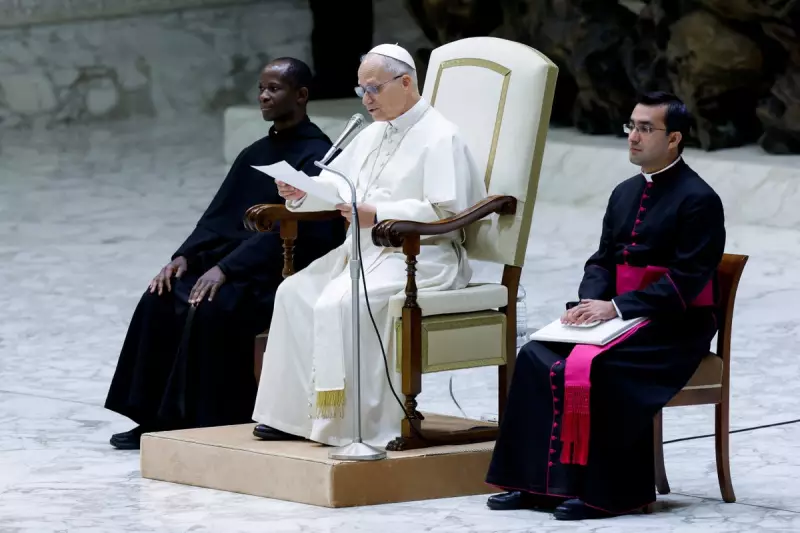
In a significant annual address, Pope Leo XIV has clearly signalled his intention to maintain the reformist path charted by his predecessor, the late Pope Francis. The first American pontiff used his Christmas speech to the College of Cardinals to praise Francis's legacy and pledge continuity.
A Measured Tribute to a 'Prophetic Voice'
Addressing the Church's most senior officials on Monday 22 December 2025, Pope Leo described Francis, who passed away in April after suffering from double pneumonia, as a "prophetic voice". He lauded the late pope's dedication to building "a joyful Church, welcoming to all and attentive to the poorest".
This diplomatic approach marked a distinct shift in tone from Francis's own tradition. Over his 12-year papacy, Francis was known for using the Christmas address to deliver pointed critiques of the Vatican's central bureaucracy, the Roman Curia, often cataloguing its perceived "illnesses" and "diseases" in lengthy discourses.

Continuity with a Different Style
In contrast, Pope Leo, whose style is widely regarded as more measured, spoke for approximately 15 minutes. While refraining from direct personal rebukes, he firmly reiterated the core principles of his predecessor's agenda for the Church.
The Pope cautioned officials against "falling into rigidity or ideology" when applying Church doctrine. He emphasised that the Vatican's complex administrative structures "must not weigh down or slow the progress" of their mission. Pope Leo also expressed regret over enduring interpersonal conflicts within the institution's walls.
"We observe with disappointment that certain dynamics - linked to the exercise of power, the desire to prevail, or the pursuit of personal interests – are slow to change," he stated candidly.
A Call for Collegiality and Mission
Pope Leo then posed a poignant question to the assembled cardinals and curial leaders: "We then ask ourselves: is it possible to be friends in the Roman Curia?"
He concluded his address by advocating for "an ever more missionary Roman Curia". He argued that its institutions and offices should be conceived in light of contemporary pastoral and social challenges, rather than existing merely for routine administration.
The pontiff's schedule will see him lead a midnight mass on Christmas Eve at St Peter’s Basilica, followed by delivering the traditional Urbi et Orbi blessing and a mass on Christmas Day itself.