In the vast, sun-scorched deserts of Mauritania, a unique brigade of volunteers stands as the first line of defence against a relentless and deadly threat: bushfires. These are not ordinary firefighters. They are refugees from Mali, repaying the generosity of the communities that took them in by protecting lives, livestock, and the fragile environment they now share.
A Desert Brigade Forged from Necessity
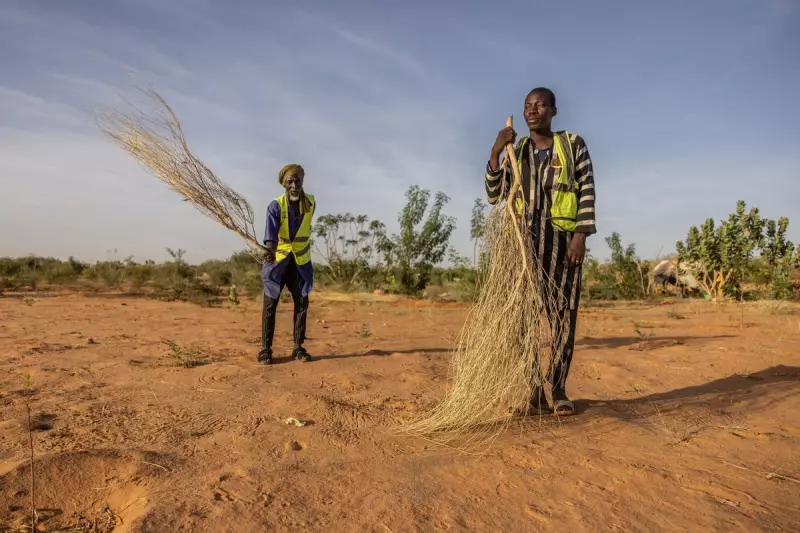
The scene is stark. As the sun dips below the horizon, a line of men moves in unison across the barren landscape, rhythmically beating the dry earth with acacia branches. This is a training drill for the volunteer firefighters of the Mbera refugee camp, a technique honed over more than a decade. Bushfires in this impoverished West African region are a constant danger, capable of erupting without warning and raging for days across the enormous territory. The land, shared by Mauritanians and over 250,000 refugees from neighbouring Mali, sustains scarce vegetation critical for feeding livestock.
For refugees like Hantam Ag Ahmedou, now 24, fighting fires is a profound act of gratitude. His family fled violence in Mali in 2012, settling in the Mbera camp just 48 kilometres from the border. Witnessing the devastating speed of the blazes, his father began organising volunteers. "We said to ourselves: There is this amazing generosity of the host community. These people share with us everything they have," Ag Ahmedou told The Associated Press. "We needed to do something to lessen the burden."

Ancient Techniques Meet Modern Support
The Malian refugees brought vital expertise to a long-standing local challenge. "You cannot stop bushfires with water," explained Ag Ahmedou. "That’s impossible, fires sometimes break out a hundred kilometres from the nearest water source." Instead, their method is one of smothering flames with branches from the heat-resistant acacia tree.
Since 2018, this volunteer force has operated under the patronage of the UN refugee agency (UNHCR), with the European Union funding training, equipment, and the crucial clearing of firebreak strips. The brigade now numbers over 360 refugees, who coordinate closely with regional authorities. When an alert sounds, teams leap into pickup trucks. At the fire's edge, a 20-member team fans out, pounding the flames with their branches, while others stand ready to relieve them.
Ag Ahmedou, who began by carrying supplies at age 13 and fought his first fire at 18, understands the peril. "Someone has to do it," he stated. "If the fire is not stopped, it can penetrate the refugee camp and the villages, kill animals, kill humans, and devastate the economy of the whole region."
Fighting Fires in a Climate-Vulnerable Nation
The work takes place against a backdrop of severe environmental strain. Approximately 90% of Mauritania is covered by the Sahara Desert, and climate change is accelerating desertification, intensifying pressure on water and grazing land. Tayyar Sukru Cansizoglu, the UNHCR chief in Mauritania, noted that even host communities struggle to find pasture, making a "single bushfire" life-threatening for all.
This scarcity fuels tension. Chejna Abdallah, mayor of the border town of Fassala, cited "high pressure on natural resources, especially access to water" as a source of rising friction between locals and Malians. The refugee population is significant; the Mbera camp houses over 150,000, with another 150,000 living in surrounding villages, sometimes outnumbering locals ten to one.
In response, the firefighters' mission has expanded beyond firefighting. To counteract vegetation loss, they have established tree nurseries across the desert, planting acacias and, this year, their first lemon and mango trees. Abderrahmane Maiga, 52, a brigade member, tends to these seedlings, a symbol of regrowth and reciprocity. He recalls a brutal 48-hour battle against a blaze in 2014 where men collapsed from exhaustion.
For Ag Ahmedou, returning to a still-unstable Mali is not an option. This harsh desert life, with its food scarcity and degraded land, is his reality. "We cannot go to Europe and abandon our home," he said. "So we have to resist. We have to fight." Their fight is not just against flames, but for survival, community, and a sustainable future in a land that offers refuge, yet demands resilience in return.