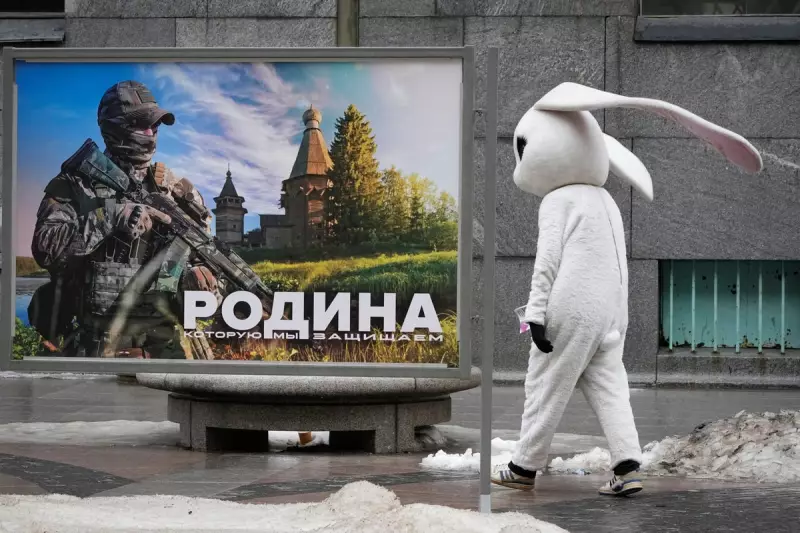
Russia's Desperate Recruitment Drive in Ukraine Conflict
As the conflict in Ukraine approaches its fourth year, Russia has implemented increasingly desperate measures to replenish its military forces while avoiding another politically sensitive nationwide mobilisation. The Kremlin's strategy involves targeting multiple vulnerable populations through what it describes as voluntary enlistment programmes.
Targeting Prisoners and Domestic Populations
For average Russian wage earners, military service offers substantial financial incentives that dwarf typical earnings. Regional authorities provide enlistment bonuses sometimes reaching tens of thousands of dollars, with the Khanty-Mansi region offering approximately $50,000 in various payments - more than double the average annual income in that area.
For prisoners seeking to escape harsh conditions and abuse within the penal system, military contracts provide a pathway to freedom. This practice, initially pioneered by the late mercenary chief Yevgeny Prigozhin, has been formally adopted by the Russian Defence Ministry. Current legislation now permits recruitment from both convicted individuals and those facing criminal charges in pretrial detention centres.

Foreign Recruitment and Deception Tactics
Russia has expanded its recruitment efforts internationally, targeting foreign nationals through various means. Laws offering accelerated Russian citizenship for military enlistees have attracted immigrants hoping for improved living conditions. However, numerous reports indicate widespread deception in these recruitment practices.
Men from South Asian nations including India, Nepal and Bangladesh have reported being misled by recruiters promising legitimate employment opportunities, only to find themselves conscripted for combat duties. Officials in Kenya, South Africa and Iraq have confirmed similar patterns of their citizens being deceived into military service.
Following a mutual defence treaty established in 2024, North Korea reportedly dispatched thousands of soldiers to assist Russian forces defending the Kursk region against Ukrainian advances. This represents a significant development in international involvement in the conflict.
Questionable Recruitment Practices and Casualty Figures
Despite Kremlin assertions of relying on voluntary enlistment, media investigations and human rights organisations report widespread coercion. Conscripts performing mandatory military service, who are technically exempt from deployment to Ukraine, frequently face pressure from superiors to sign contracts committing them to combat roles.
President Vladimir Putin stated last month that 700,000 Russian troops are currently engaged in Ukraine, repeating a figure previously cited in 2024. However, the accuracy of these numbers remains uncertain, as does the true extent of military casualties. The British Defence Ministry estimated last summer that over one million Russian personnel may have been killed or wounded.
Independent verification efforts by Russian news outlet Mediazona, in collaboration with the BBC and volunteer networks, have documented over 160,000 confirmed troop fatalities through analysis of news reports, social media and government sources. Among these, more than 550 were foreign nationals from two dozen different countries.
Contractual Ambiguity and Legal Changes
Recruitment contracts often present misleading terms, according to activist groups. While documents may stipulate fixed service periods such as one year, leading potential enlistees to believe their commitment is temporary, these contracts automatically extend indefinitely under current regulations.
A presidential decree has rendered all military contracts effectively open-ended, prohibiting soldiers from quitting service or receiving discharge except under specific circumstances including reaching age limits or suffering incapacitating injuries. This policy change followed a limited mobilisation attempt in 2022 that prompted tens of thousands of Russians to flee abroad.

International Response and Humanitarian Concerns
Several nations have taken action against Russian recruitment networks operating within their borders. Nepal has prohibited citizens from travelling to Russia or Ukraine for employment, citing recruitment concerns, while India's federal investigation agency dismantled a network that lured at least 35 citizens to Russia under false employment pretenses.
Foreign nationals deceived into military service face particular vulnerability due to language barriers, lack of military experience and what activists describe as being considered "dispensable" by military commanders. A Ukrainian agency for prisoner of war treatment reports over 18,000 foreign nationals have fought or are currently fighting on the Russian side, with nearly 3,400 fatalities and hundreds from 40 countries held as prisoners of war.
As recruitment efforts continue, analysts note the increasing financial burden on Russia's slowing economy while the Kremlin employs ever more creative methods to sustain its military personnel numbers in the prolonged conflict.