Syrian Women Confront Violence and Funding Crisis Amid Global Aid Reductions
As global humanitarian aid faces severe reductions under Donald Trump's administration, essential services for women in Syria are being forced to close their doors. This development arrives at a pivotal moment for the war-scarred nation, which has endured fourteen years of civil conflict. The consequences are devastating, with women across Syria finding themselves increasingly vulnerable to violence and deprivation.
Personal Stories of Resilience Amid Adversity
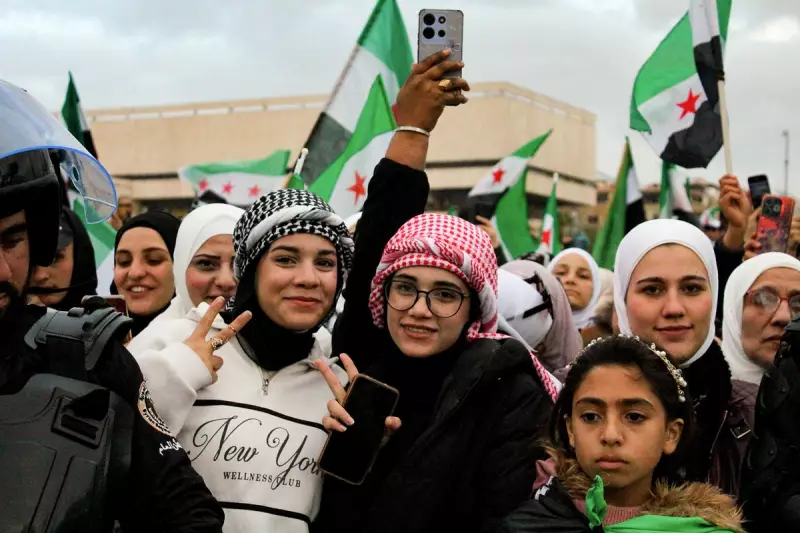
Noor, a twenty-one-year-old woman from Madaya, represents countless Syrian women facing impossible circumstances. Her hometown gained international notoriety in 2016 when it endured a brutal siege by Bashar al-Assad's forces, leaving residents to survive on leaves and grass. Following the regime's ousting in December 2024, celebrations were short-lived as the only women's center in Madaya closed just weeks later.
"The center was my only safe space to escape a violent family home," Noor explains. Her situation deteriorated further after a brief marriage in summer 2025 ended in divorce after just twenty days due to her husband's alcoholism and physical abuse. "He broke everything from the second day," she recalls. "The dishes, the cupboards - he threw everything on the ground."

Her father's reaction to the divorce proved equally dangerous. "My dad held a knife in front of me and told me, 'if you do not get back to your husband I will kill you,'" Noor reveals. She continues to endure his violence to protect her mother and sister. "If he didn't beat me, he would beat my mum or my sister," she says, highlighting the impossible choices facing Syrian women.
Systematic Closure of Vital Support Services
The Madaya center was operated by the Syrian Family Planning Association (SFPA), a non-profit organisation focusing on sexual and reproductive health while combating gender-based violence. SFPA runs fourteen women's centers across Syria's governorates alongside eleven clinics. Noor relied on the center for psychosocial support, where counselors helped her develop strategies to face her family and respond to physical violence.
Ruba Lakmssha, SFPA's director of gender-based violence, confirms the organisation has been forced to close three women's centers in the Damascus governorate over the past year. "The reason we cannot open another women's center in Madaya or nearby areas is because of aid cuts, particularly those by Donald Trump in the US," she explains. The group has lost fifteen staff members due to salary payment delays.
Before Trump restructured the US Agency for International Development (USAID), the United States was Syria's largest humanitarian donor, contributing nearly $400 million in 2024 - approximately a quarter of the country's humanitarian funding. This watershed moment for Syria, emerging from prolonged conflict, is being undermined by a severe funding crisis.
Grassroots Responses and Community Initiatives
Noor has developed alternative coping mechanisms in the absence of formal support structures. Unable to report her father to police, she has taken up smoking to manage stress while receiving support from friends. She has also established a volunteer group in Madaya to share knowledge with other women.
"Our team includes doctors, engineers, service providers and specialists," Noor explains. "We work on spreading awareness about rights, social skills, life skills, and psychosocial support." The group faces significant challenges, lacking a dedicated meeting space with the nearest youth center requiring an expensive hour-long journey. "We need a safe space," she emphasises.
Broader Humanitarian Funding Crisis
By the end of 2025, only thirty-two percent of Syria's Humanitarian Response Plan had been funded, leaving a $2.15 billion shortfall. With over three million displaced Syrians returning home in the previous twelve months, already limited public services are completely overstretched.

Non-governmental organisations face difficult decisions about where to focus diminishing resources, with essential programmes for women and girls - including gender-based violence support and maternity care - being slashed. "Unfortunately any activity related to gender is cancelled, because it's treated not as a life-saving kind of situation. But it is life-saving," says Yasmin Al-Syed, protection specialist at Syrian non-profit Hand in Hand for Aid and Development.
Enshrah Ahmed, UNFPA's representative in Syria, anticipates "more than 40 per cent cut on our budget" comparing 2025 to 2026. The agency supports one hundred facilities working on sexual and reproductive health and rights while partially supporting seven hundred more. They will need to close one third of these facilities alongside thirty of seventy-eight safe spaces for women and girls supporting gender-based violence survivors.
"The impact is going to be huge," Ahmed warns. "We're basically working on one of the essential human rights, which is the right to life. Imagine how many women will lose their lives."
International Funding Reductions and Their Consequences
Following the United States' lead, other major donor governments including the United Kingdom, France, and Germany have announced their own cuts. Juan Gabriel Wells, country director in Syria for the International Rescue Committee (IRC), describes this as a "race to the bottom." The IRC, working in Syria since 2012, faces a thirty percent funding reduction and has already closed four safe spaces for women and girls over the past year.
Despite these challenges, the IRC opened a new women's center in Homs during October. The Shams Center for Women and Girls serves more than one hundred fifty women, including twenty receiving gender-based violence support. "Women have been flooding in," Wells observes. "That just gives you a sense of the demand for it."
Before Assad's fall, regime-controlled areas like Homs and Damascus were inaccessible to many NGOs, resulting in limited services tailored to women. Now, with returning populations and economic pressures from war and sanctions, these programmes are needed more than ever.
Increasing Violence and Limited Alternatives
Waed Tannoura, manager of the Shams Center for Women and Girls, reports increased gender-based violence and child marriage over the past year. Approximately 8.5 million people in Syria require gender-based violence assistance, predominantly women and girls. Tannoura estimates roughly three out of four women in Homs experience some form of violence, though many fear reporting it.
"We really need to work on consistent trust, and it takes time to build this," the forty-seven-year-old explains over Arabic coffee in her office. Like Noor's experience, the most common cases involve physical violence from husbands or fathers, exacerbated by increasing economic pressures.
Homs lacks women's shelters where victims can seek safety - the closest is in Damascus, a two-hour drive away. Instead, the center provides psychosocial support sessions and teaches violence-minimisation techniques.
Women's Experiences and Economic Struggles
At the Shams Center, women gather sharing fresh bread and sweet tea while discussing their experiences. Samar, forty-eight, details wartime trauma in Homs, a key battleground during the 2011 uprising that earned the city its "capital of the revolution" designation. She lost two brothers who disappeared during heavy bombing in her neighbourhood.
"I came to the center to get help to find them," Samar explains. "The women here were nice, they offered me legal advice so I could find out their fate after fourteen years."
All women speak of rising living costs and struggles accessing basic services like electricity. Some returned to find homes destroyed or looted, while others have become main breadwinners despite scarce job opportunities. The United Nations estimates over ninety percent of Syrians live below the poverty line.
"People can't afford so many things," says Raja, thirty-three. "I am worried about providing diapers for my children because everything is very expensive." While some express hope - "After the fall of the Assad regime, now is our time to thrive and build our country" - others voice practical concerns. "How can we create a society if we don't have a home?" asks Naima, a forty-three-year-old teacher.
Healthcare System Collapse and Maternal Mortality
The World Health Organisation reports half of Syria's hospitals are non-functional, with over four hundred health facilities affected by funding cuts since mid-2025 and three hundred sixty-six suspending or reducing services. Dr Dijla Mahmod works in Raqqa governorate's only maternity hospital, where she gave birth five months ago.
The hospital faces intense pressure serving patients across northeast Syria. "Last week, a woman who had given birth at home arrived in a very bad condition as the placenta had remained in her uterus," Dr Mahmod explains. The patient waited three days at home with the retained placenta, risking sepsis, heavy bleeding, and death.
Doctors saved her life, but approximately two women die monthly at the hospital due to service access difficulties, often arriving only in critical condition. Dr Mahmod anticipates increased cases as aid cuts reduce resources and staff next year.
"I don't feel good about the future of women in Syria," adds Dr Mahmod, particularly as a Kurdish minority woman. "We are fearful of the Damascus government," she says, referencing sectarian violence targeting minorities in Latakia and Suwayda. Recent fighting between Kurdish-led Syrian Democratic Forces and government forces in northeast Syria exacerbates fears among Kurds and other minorities.
Mobile Services and Diminishing Resources
When SFPA's Madaya women's center closed in 2024, Rehab, thirty-five, lost her counseling position. She now works with mobile medical teams traveling to rural communities alongside doctors, gynecologists, and midwives. These teams are essential where health centers no longer function, though they cannot replace previous services.
"At the clinic where I used to work we distributed medicine for forty-five women per day," Rehab explains. "Now we don't have any medicines after the closure. We also provided reproductive health services, family planning services, and IUDs free of charge. Outside the clinic each woman would pay approximately 800,000 Syrian pounds for an IUD."
Glimmers of Hope and Determined Futures
Some hope emerged in late 2025 when the United States pledged $2 billion to the United Nations for 2026 to address urgent humanitarian crises in seventeen countries including Syria. However, this represents a tiny portion of the estimated $33 billion needed globally this year, and uncertainty remains about whether funds will support women's sexual and reproductive health services given previous implementation of the "global gag rule."
Despite overwhelming difficulties, Syrian women demonstrate remarkable determination to rebuild a safer country. Noor remains optimistic, currently in her third year of a law degree inspired by her experiences. "When I finish my studies, I want to raise a case against my dad," she declares. "I want to be sure that if anybody hurts me, I know how to confront it. My dad has no authority to beat me or to harm me. I want to protect myself, my mum, my sisters, my family, from my dad."
As Waed Tannoura summarises: "The future for women and girls in Syria is challenging. Everyone thinks that after the fall of the regime, Syria became heaven, but a lot of work is needed. The response from the international community should be larger, not smaller." The fear remains that aid cuts will force centers to close, leaving vulnerable women without essential support systems.