Tehran Residents Endure Israeli Strikes as 'Don't Die' Becomes Mantra
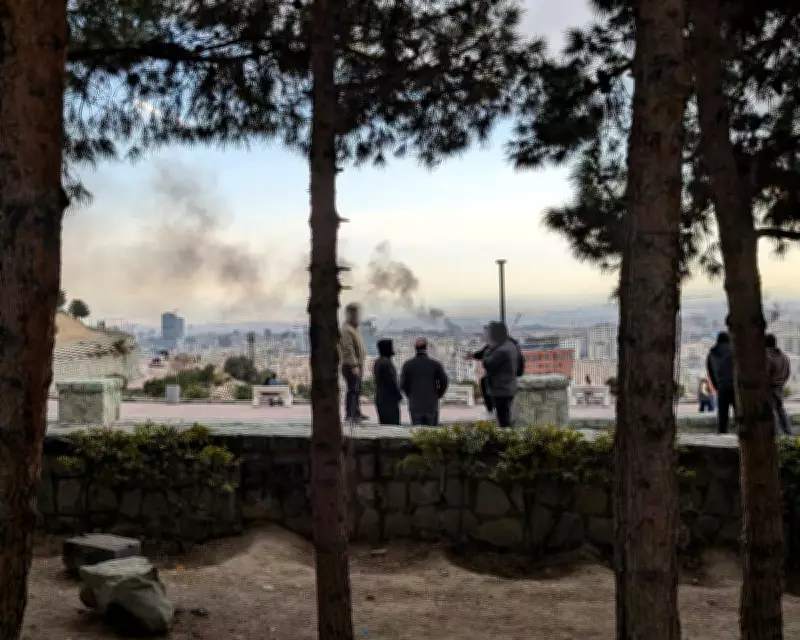
In a park overlooking the sprawling metropolis of Tehran, a group of young people recently gathered to chat and share jokes. This ordinary scene unfolded against an extraordinary backdrop: the distant rumble of explosions and the palpable anxiety of a city under attack. Since last Saturday, when the first blast reverberated through the capital, life for Tehran's residents has been irrevocably altered, with the world seemingly turned on its head.
The immediate aftermath saw frantic calls from schools urging parents to collect their children. The metro carriages filled with anxious commuters, their faces etched with melancholy as they phoned loved ones to confirm safety and scrolled through grim news updates on their mobile devices. This marks the second instance within a year that Israel has opted for a war of choice with Iran, a development that many are reluctantly accepting as the new normal.
The Erosion of Precision and the Rise of Indiscriminate Force
Historically, Israel has operated with near-total impunity in its conflicts, particularly concerning Palestinian territories. Now, that perceived licence for aggression appears to be extending across the region, with Tehran experiencing a stark escalation. The pretence of precision in military strikes has utterly vanished. Instead, the attacks seem indiscriminate, targeting a broad spectrum of civilian infrastructure.

Schools, hospitals, police stations, and essential urban amenities have all been hit with a devastating level of force that suggests an intent beyond military objectives—aiming instead for demolition, total destruction, and the literal flattening of urban landscapes. This brutal strategy evokes a terrifying new lexicon for urban warfare.
'Beirutification'—a term coined to describe the slow, grim normalisation of periodic assaults on a city by a capricious and violent state—now feels chillingly applicable. It represents urban death by a thousand cuts: the suffocation of imagination, the thwarting of civil progress, and the gradual dilapidation of a nation to a point of exhausted silence. This is the legacy years of war bestowed upon Beirut, and a similar fate now threatens Tehran.
A City Thinning Under the Shadow of War
In the days following the initial strikes, Tehran has begun to empty. Many residents find themselves trapped within their homes, while others have fled the capital entirely. The sounds of loud explosions and distant rumblings are becoming a grimly routine part of daily life. For Iranians, Middle Eastern conflicts have long been framed as distant tragedies—'Arabic' phenomena watched on television but never expected to reach their doorstep.
Now, the war is undeniably here. It is real, visceral, and utterly terrifying. Yet, amidst this thinning city, fragments of life stubbornly persist. In parks, shopping centres, and other small gathering spaces, people continue to connect. The author recounts meeting a group of youngsters in a Tehran park who had assembled to ease their collective burden through conversation and dark humour.
Perhaps it is a national trait to find humour in suffering, to transform misery into something laughable as a coping mechanism. Their company provided a temporary respite from the pervasive anxiety. As they parted, one young person offered a farewell that has since resonated deeply: 'Don't die.'
The Brutal Honesty of Survival
This stark, two-word phrase encapsulates the fundamental conundrum of existence in a war zone. Its brutal nakedness and immediacy speak volumes about the primal focus on survival itself—don't expire, stay alive. The author shares this anecdote not to solicit pity or cater to European sympathies, but to highlight a weariness with perpetual victimhood and the hollow rhetoric of 'humanitarian wars' supposedly waged to implant democracy.
The justifications are painfully familiar: a country allegedly 'days away' from a nuclear bomb; the need to rescue people from a 'tyrannical state'; the spectre of an 'imminent threat.' These narratives have been deployed before, from Iraq to Afghanistan to Libya, each time paid for with the blood of ordinary men, women, and children.

Furthermore, criticism of such military interventions must not be dismissed with reductive labels. Those who question Western military actions are often hastily branded as 'regime supporters' or 'terrorist sympathisers'—a tired script rehearsed anew for each conflict.
A Plea for a Different Future
The author writes as a long-time critic of the Iranian state, emphasising that disapproval of one's own government does not equate to welcoming societal destruction. Across borders, many envision a different global order—one free from imperialism and domination, grounded instead in genuine peace.
We may have entered a darker era where diplomacy recedes and bullets replace words. Yet, there remains a glimmer of possibility. Increasingly, people are seeing through the machinery of war and the accompanying industry of democracy-making. If hope exists, it lies with those who refuse to accept endless war as an immutable fact of world affairs.