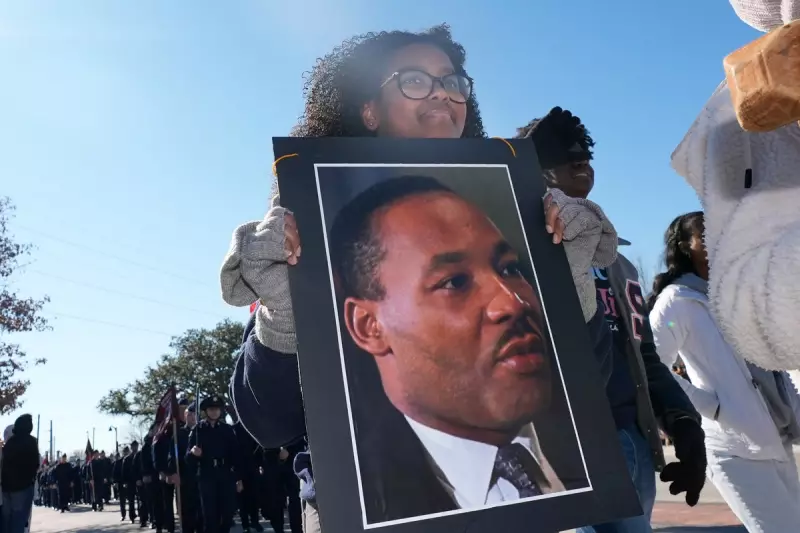
The third Monday of January is now a familiar fixture in the American calendar, a day dedicated to honouring the life and legacy of civil rights icon Martin Luther King Jr. However, the journey to establish this federal holiday was a protracted and fiercely contested political battle that spanned over fifteen years.
A Proposal Born from Tragedy
The push for a national holiday began with startling speed following profound loss. Merely four days after Dr. King's assassination in 1968, US Representative John Conyers introduced legislation to create a holiday in his name. The move aimed to cement King's legacy as a foundational figure in the nation's history, but it immediately encountered significant headwinds.
For years, the bill languished in Congress, facing substantial opposition. Critics argued against creating a holiday for a private citizen, while others, reflecting the deep divisions of the era, saw King as a polarising figure. The economic cost of a new federal holiday was also a point of contention, stalling progress through the 1970s.

Legislative Breakthrough and State-Level Resistance
The political tide finally began to turn in the early 1980s, bolstered by relentless campaigning from King's widow, Coretta Scott King, and widespread public support. The crucial moment came in 1983 when President Ronald Reagan signed the bill into law, establishing the third Monday of January as Martin Luther King Jr. Day.
Yet, the signing of the federal law was not the end of the story. Adoption by all 50 states was a gradual and, in some cases, reluctant process. Several states initially combined the holiday with celebrations of Confederate figures, diluting its intent. It took a full 17 more years, until the year 2000, for every state to officially observe the holiday. South Carolina was the final state to recognise it as a paid holiday for all state employees.
Evolving into a Day of Action
Since 1994, the holiday has been designated as a National Day of Service, transforming it from a passive day off into a "day on." This initiative, championed by the King Centre and supported by federal legislation, encourages all Americans to volunteer and engage in community improvement projects. This ethos aims to honour Dr. King's commitment to social justice through direct action and collective effort.
The reach and significance of the day continue to expand, serving as an annual moment for national reflection on civil rights, racial equality, and the power of non-violent protest. The decades-long struggle to establish the holiday itself stands as a testament to the very principles of perseverance and justice that Martin Luther King Jr. championed throughout his life.