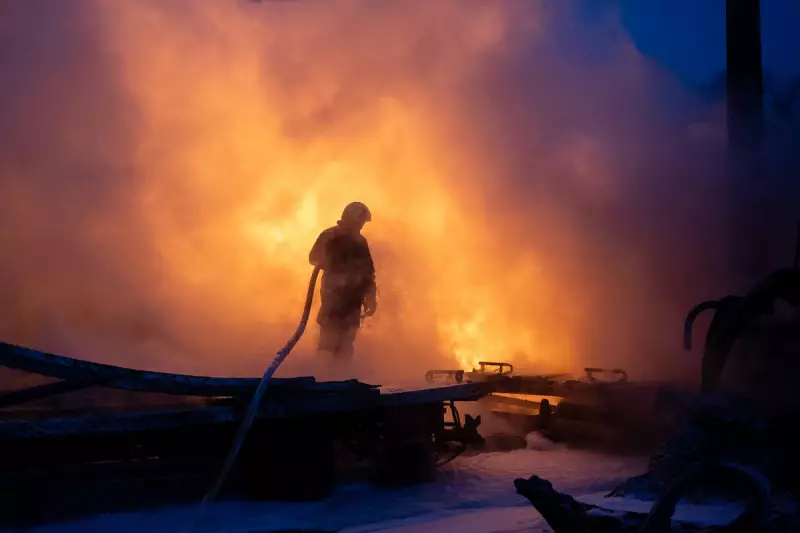
In a stark escalation of hostilities, two of Ukraine's largest cities, Kyiv and Kharkiv, were subjected to a major barrage of missile and drone attacks overnight, resulting in dozens of injuries and at least one confirmed fatality in the capital. The assault occurred mere hours after the conclusion of the first day of high-stakes, three-way peace negotiations held in Abu Dhabi, marking the first such diplomatic engagement since the full-scale invasion began in February 2022.
Attacks Follow Diplomatic Overture
The timing of the military strikes has cast a long shadow over the nascent peace process. Ukrainian President Volodymyr Zelensky responded forcefully, declaring that Russia must demonstrate a genuine readiness to end the war it initiated. He emphasised that the path to peace requires concrete actions, not just words, from the Kremlin.
Focus on Donbas in Abu Dhabi Talks
The two-day negotiations, which aim to explore political solutions to the protracted conflict, are reportedly set to concentrate on the status of the eastern Donbas region. This industrial heartland remains largely under Russian occupation, and Moscow has repeatedly signalled that retaining control over Donbas is a non-negotiable and "very important condition" for any potential settlement.

The juxtaposition of intense diplomacy and renewed aerial bombardment underscores the fragile and volatile nature of the current situation. Analysts suggest the attacks may represent a deliberate show of force by Russia, intended to strengthen its bargaining position as talks enter a critical phase focused on territorial disputes.
Civilian Impact in Kharkiv and Kyiv
Ukrainian authorities reported that the attacks on Kharkiv, a city close to the Russian border, resulted in the death of a woman in a residential area. Emergency services across both metropolitan regions worked through the night to address the aftermath, dealing with damaged infrastructure and providing medical aid to the wounded. The incidents serve as a grim reminder of the ongoing human cost of the war, even as diplomatic channels are cautiously reopened.