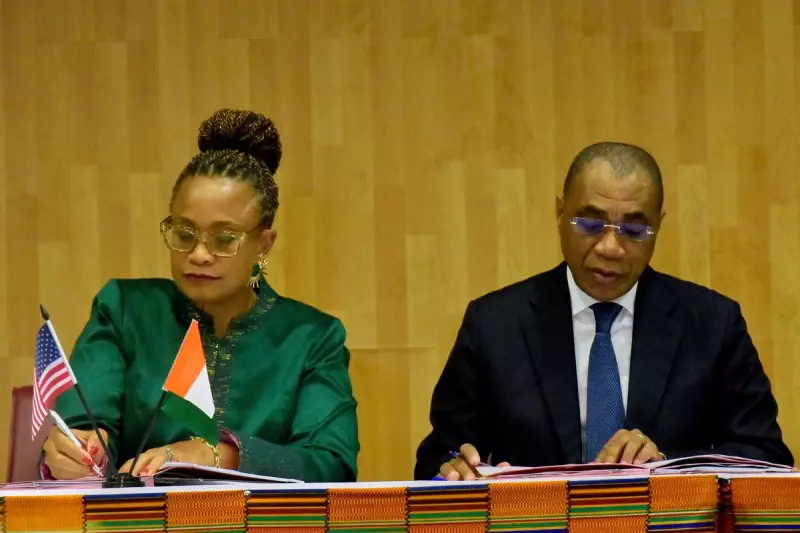
The United States has formalised a major new health agreement with Ivory Coast, committing $480 million to bolster the West African nation's health sector. The deal, signed on Tuesday 30 December 2025 in Abidjan, represents the latest in a series of 'America First' global health funding pacts initiated by the Trump administration.
A New Model for US Global Health Engagement
The signing ceremony in Ivorian capital Abidjan marks a strategic shift in American foreign health policy. U.S. Ambassador to Ivory Coast, Jessica Davis Ba, stated the agreement moves "beyond the traditional aid approach toward a model focused on trade, innovation, and shared prosperity." She confirmed the bilateral cooperation is entering a new phase with the implementation of the America First global health strategy.
This new approach, as outlined by the administration, aims to foster greater self-sufficiency in partner nations and intends to strip away what it labels ideology and waste from international assistance programmes. The deals systematically replace a network of previous health agreements managed by the now-dismantled United States Agency for International Development (USAID).

Details of the Ivorian Health Pact
The substantial funding will target several critical health areas in Ivory Coast, including:
- HIV prevention and treatment
- Malaria control programmes
- Maternal and child health services
- Global health security initiatives
Crucially, the pact is founded on a principle of shared financial responsibility. Ivorian Prime Minister Robert Beugré Mambé confirmed that his government has committed to providing up to 163 billion CFA francs (approximately $292 million) by 2030. This significant Ivorian contribution represents 60% of the overall financial commitment outlined in the agreement.
Context and Regional Impact
Ivory Coast is one of more than a dozen African nations to sign such an agreement with the United States. Many of these countries, including Ivory Coast itself, had previously been affected by sweeping cuts to U.S. foreign aid. These reductions have strained health systems across the developing world, particularly in Africa where many crucial disease response and public health programmes relied heavily on American funding.
Under the previous USAID structure, the United States had invested $115 million in Ivory Coast, supporting not only health but also education and aid for refugees fleeing violence in neighbouring Sahel states. Political analysts observe that this transactional new framework for global health aligns with President Donald Trump's broader pattern of conducting foreign policy, using direct bilateral negotiations to advance specific national agendas abroad.