Nonprofit Initiative Champions Small Steps to Boost Gen Z Civic Participation
A well-connected, privately-funded nonprofit organisation is emphasising small, approachable actions as the cornerstone of its strategy to dramatically improve civic engagement among Generation Z. The initiative, led by the nonprofit C&S – formerly known as the Institute for Citizens & Scholars – aims to empower 20 million individuals aged 14 to 24 to undertake public-spirited activities over the coming three years.
Building Civic Muscle Through Low-Barrier Actions
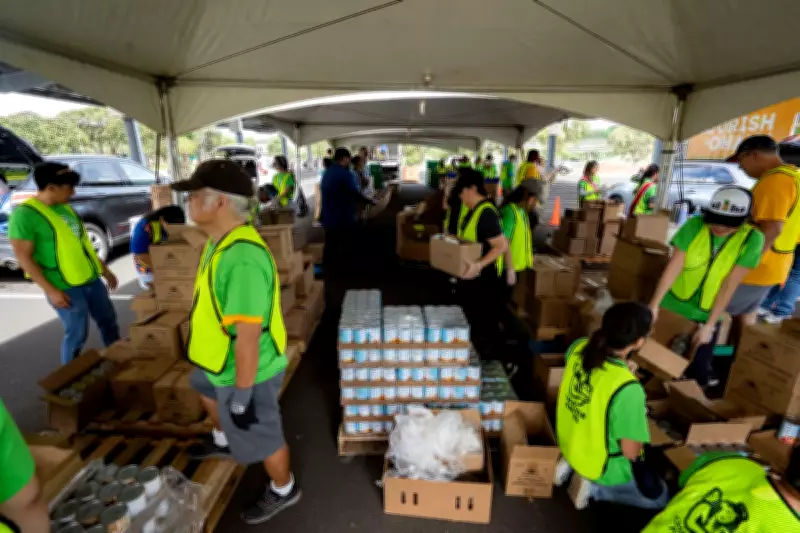
C&S President Rajiv Vinnakota articulated the philosophy behind the campaign using a fitness analogy. "You’re not going to immediately go to a gym and try to bench press 325 pounds. You’re gonna start easy, simple, something you can do — both to affirm and start to build your muscle," Vinnakota explained. "That’s what these civic actions are all about." The organisation is actively inviting schools, employers, and various partners to encourage young people to lead activities such as calling elected representatives, volunteering locally, or hosting public conversations with neighbours from diverse backgrounds.
Countering Narratives of Disengagement
This substantial effort directly challenges prevailing narratives that members of Generation Z – typically defined as those born roughly between 1997 and 2012 – are disengaged or resigned. It forms part of a broader constellation of initiatives tied to the upcoming 250th anniversary of the signing of the Declaration of Independence, all aimed at uniting Americans to confront shared societal challenges.

The civil society sector has concurrently witnessed a growing emphasis on promoting "informal volunteering" among Gen Zers. Jennifer Sirangelo, President and CEO of Points of Light – a nonprofit with an ambitious goal to double American volunteerism by 2035 – observes that younger demographics increasingly favour service opportunities that operate outside traditional institutional frameworks. "Gen Z wants to do it fast, they want to do it authentic, they want to do it right now," Sirangelo noted in a recent interview. "They don’t have time -- no patience for institutions or signing up." Instead, she finds they are more likely to help neighbours directly or request charitable donations in lieu of birthday gifts.
Research-Informed Strategy and Removing Barriers
The C&S approach is informed by internal research indicating that young people are more likely to participate civically if they believe their involvement will yield a meaningful impact and if they are granted the autonomy to develop solutions themselves. According to the organisation, the primary barriers to youth civic participation are a lack of knowledge about where to begin and a pervasive disbelief in their ability to effect change.
"This is a generation that actually sees the problems and actually wants to try to solve them," Vinnakota asserted. "And we need to create the means, the tools and provide the capacity for them to do it." A significant component of achieving the 20-million-person goal will be a dedicated participation platform scheduled to launch this summer, coinciding with recognition of the U.S. semiquincentennial. Inspired by successful movements like GivingTuesday, Vinnakota aspires to reach 15 million young people through an online campaign that illustrates how collective, small-scale actions can catalyse substantial national impact.
Partnerships and a 'Bottom-Up' Philosophy
Current partners, including YPulse – a market research firm specialising in young consumers – and DoSomething, a prominent youth social change platform, will promote these civic actions to their extensive audiences. However, Vinnakota stressed that the initiative's success hinges on avoiding a "top down" approach. He emphasised the necessity for older leaders to allow ideas from younger counterparts to flourish organically.
"Some of them will work. Some of them won’t. That’s fine," he said. "By bringing all those ideas into the common arena, seeing what happens, I think we’re actually going to be a richer society. We’re probably gonna have a greater chance of binding our democracy together."

Specialised Support and Institutional Pathways
A select group of young people are receiving more specialised support through an existing leadership programme funded by the Carnegie Corporation of New York. C&S has recently provided stipends and coaching to 500 young changemakers working on diverse projects, from removing non-biodegradable glitter from a river to improving ballot access for hospitalised voters.
The nonprofit is also leveraging its network within higher education. A consortium of 135 member colleges is working to instil in students what they deem three essential skills for a healthy democracy:
- Engaging in productive conversations
- Identifying agreed-upon sources of credible information
- Collaborating to solve problems despite differences of opinion
Another strategic avenue involves a new, workplace-based initiative developed in partnership with the U.S. Chamber of Commerce Foundation. They are currently recruiting 25 companies for a pilot programme designed to teach young professionals how to become more effective teammates and engaged citizens. Whether in the classroom or the workplace, the core intent is to bring interested young people together in person – not remotely – and demonstrate that their peers share a genuine desire to deepen their community commitments.
"Civic actions that don’t take a lot of effort initially but start to build something that we call agency," Vinnakota concluded, "and start to get the flywheel moving. That’s what this is about. How can you create the spark?"