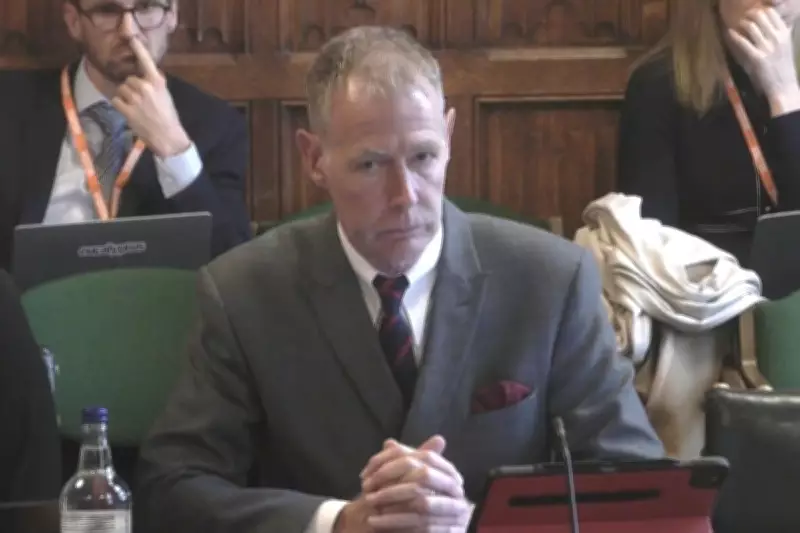
Black Market Weight Loss Jabs Pose Serious Public Health Risk, MPs Told
Profit margins from illegal medicine sales can rival those of cocaine and heroin, Members of Parliament were warned during a concerning session about the growing black market for weight loss injections. Andy Morling, head of the criminal enforcement unit at the Medicines and Healthcare products Regulatory Agency (MHRA), revealed that many people purchasing these treatments through social media or unregistered sellers may not even realize they are buying from illegal sources.
Blurring Lines Between Medicine and Cosmetics
Mr Morling told the Health and Social Care Committee that there has been an "extraordinarily unhelpful" blurring of boundaries between legitimate medical treatments and cosmetic procedures over the past two years. This confusion makes it increasingly difficult for consumers to distinguish between safe, regulated products and dangerous black market alternatives.
"I honestly believe that a lot of people that are buying these products from the black market don't know they're buying from the black market," Morling stated during Wednesday's committee session, which focused on GLP-1 weight loss medications. "There's been a blurring of the edges between a medicine and a cosmetic that is extraordinarily unhelpful."

Massive Seizures and Questionable Safety
The MHRA has seized approximately 81,000 doses of GLP-1 drugs over the last three years, with Morling noting that "99 times out of 100" the products are genuine medications rather than counterfeits. However, he emphasized that this does not make them safe for consumption.
"That doesn't make it safe, it hasn't been produced in accordance with manufacturing processes," Morling explained. "The sterility is questionable, the dosage is questionable. The side effects that we're seeing from the fake products are broadly comparable with the side-effects of the genuine product."
Despite these concerns, Morling acknowledged that from a purely public safety perspective, these particular medications are not keeping him awake at night "in quite the same way as other aspects of medicines trafficking."
Tragic Case Highlights Dangers
Committee chair Layla Moran highlighted the case of 53-year-old Karen McGonigal, whose daughters claim she died in May last year just days after being illegally administered a dose of semaglutide. "It was a local Botox provider, I believe, who gave her this jab illegally, and I understand there is an ongoing investigation with Greater Manchester Police," Moran revealed.
Morling praised the women for speaking publicly about their mother's death, stating: "One death associated with these products is one too many."
Profit Margins Rival Hard Drugs
The committee heard that former National Crime Agency head Tony Saggers had described the supply of these drugs as "as bad as the illicit drugs like cocaine and heroin." While Morling said "that's not my experience," he acknowledged the financial comparison, noting: "I understand the point he's making... the profits I think are equivalent, if not in excess of, in some situations with medicines generally."
Regulatory Challenges and Online Enforcement
Currently, 55 MHRA officers "proactively patrol" the internet searching for illegal sellers, with approximately half a dozen staff specifically dedicated to monitoring offending social media posts. However, Morling admitted the limitations of their authority.
"I think ultimately it's a social media company to determine whether to take these things down or not," he said. "We can ask them to, we can't compel them to."
Morling described a "spectrum" of providers that regulators are observing, with illegal online sellers at one extreme and genuine prescribers at the other. "What we see is a bit of the blurring of the lines between the two, where there are illegal medicine sellers purporting to be prescribing when in fact, it's just a front for an illegal online pharmacy," he explained. "It's difficult for the public to tell the difference sometimes between the two."

Private Sector Role in Obesity Management
During an earlier panel discussion, representatives from online private providers informed MPs that approximately one in five people purchasing weight loss jabs through their platforms would actually qualify for these medications through the National Health Service. The National Institute for Health and Care Excellence recommends tirzepatide (Mounjaro) and semaglutide (Wegovy) for weight management on the NHS, but only with strict body mass index criteria.
Dr Simon Doyle, public policy and partnerships lead at Eucalyptus (Juniper) and part of the Responsible Digital Health coalition, stated: "Up to around 20% of our patients actually meet that criteria. So having a BMI more than 35 and an associated condition, or a BMI over 40. I think that really shows that the digital providers, or the private sector providers are working alongside the NHS to actually manage the obesity crisis."
Morling emphasized the critical distinction between different types of access to these medications, noting that while "inappropriate prescribing" where drugs are given to patients with lower BMIs who may not need them represents "its own evil," it at least results in patients receiving genuine products. "Accessing through the black market is by far the bigger evil," he concluded.