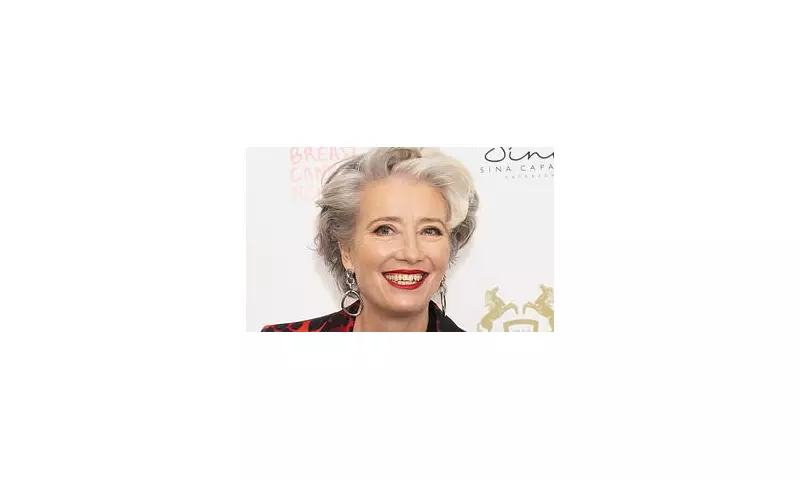
Dame Emma Thompson has ignited a fierce debate after launching a new campaign targeting what she describes as 'unhealthy' school dinners across the United Kingdom. The acclaimed actress, best known for her role in Love Actually, has narrated a compelling video for the Food Foundation charity that sharply criticises both school heads and government officials for allowing 'ultra-processed food' (UPF) to dominate lunch menus.
A Controversial Intervention
This high-profile intervention arrives exactly two decades after celebrity chef Jamie Oliver first campaigned against notorious items like 'Turkey Twizzlers', which ultimately led to the establishment of new governmental standards for school lunches. The newly released film urgently calls upon ministers to implement more rigorous monitoring systems to ensure that school meals meet proper nutritional guidelines.
Immediate Social Media Backlash
However, the campaign has provoked an immediate and substantial backlash across various social media platforms. Many critics have pointed out the practical challenges of encouraging children to embrace diverse and healthy food options. One sceptical commentator remarked, 'Good luck with that! You cannot get them to eat it, they go packed lunch instead or don’t eat it, then go hungry.'

Another detractor invoked a classic proverb, stating, 'You can’t make kids eat healthy, that old saying comes to mind… you can lead a horse to water, but you can’t make them drink it.' A third critic dismissed the effort entirely, labelling Dame Emma as 'Another celebrity who hasn’t got a clue.'
The Campaign's Core Message
The campaign video employs striking cartoon illustrations to contrast healthy and unhealthy options. One image depicts a vibrant plate filled with red cabbage, lettuce, cucumber, aubergine, potatoes, and cherry tomatoes. Conversely, another cartoon shows a boy eating cereal directly from a packet, symbolising the prevalence of processed foods.
In her narration, Dame Emma Thompson delivers a powerful message: 'Four and a half million children in the UK are growing up in poverty. For many, a healthy diet is unaffordable. Fewer than 10 per cent of teenagers eat enough fruit and veg.' She further highlights concerning health disparities, noting, 'They’re growing up shorter than other kids.'
The actress argues that while some schools successfully provide nutritious meals, too many are serving food that is 'unhealthy and lacking in essential nutrition' and classifies it as ultra-processed. A young voice in the video reinforces this, explaining, 'Ultra processed food, UPF. It’s cheap, it’s high in calories but it’s very low in goodness.'
Call for Government Action
Dame Emma specifically criticises the government for failing to adequately 'monitor what’s happening in the school food system'. The film concludes with a poignant vision, suggesting that proper nutrition would lead to 'classrooms would be calmer, children with full tummies ready to learn', and asserts that 'Every child has the right to healthy food.'
Mixed Reactions from the Public
The campaign has elicited a wide spectrum of reactions from parents, school staff, and the general public. One critic, who appears to have experience in education, commented, 'You can cook all the nutritious food you like, and schools do, including salad and fruit, but you cannot force a child to eat it. The amount of nutritious good thrown away in primary [schools] is criminal.'
Another concerned individual questioned, 'I’d like to know the take-up because I hear kids don’t take it up because they don’t like the food.' A school worker added a practical perspective, stating, 'I work in a school and we provide salad pots, hot meals, vegetables, pudding and fruit. A lot of children don’t want to eat the salad pots or the vegetables… We can supply everything but we cannot force a child to eat anything.'

Despite the criticism, some voices have expressed support for Dame Emma's stance. One parent shared, 'I would never put my kids on school dinners the food is beige central with very little variety, even more so if your kids don’t eat meat.' Another pointed out peculiar menu choices, noting, 'Our school has some “interesting” food choices for a primary school that are more fitting for a working men’s club like a cheese and onion roll.'
Historical Context and Broader Campaign
Dame Emma Thompson, an alumna of the elite Camden School for Girls in London, is no stranger to activism, having previously championed causes related to food poverty and climate change. In 2019, she faced ridicule during another nutrition campaign after claiming on television that pupils were being denied access to tap water in schools, an assertion the then Conservative government strongly disputed.
The current film is a central component of the Food Foundation's broader campaign to update school food standards, ensuring that pupils living in poverty have consistent access to healthy, hot meals. The charity argues that current standards fail to incorporate recent nutritional science and that compliance is not systematically monitored.
Endorsement from Jamie Oliver
Jamie Oliver, whose own campaign two decades ago paved the way for change, has voiced his support. He stated, 'Good school food transforms children’s health, learning, attendance and wellbeing. Yet we still have a system where some children eat well at school and others don’t. That’s outrageous.' He further emphasised, 'School meals are the UK’s biggest and most important restaurant chain, and it’s failing too many of its customers.'
Government Response and Future Directions
In response to growing concerns, the Government announced last year an expansion of free school meal eligibility to include all pupils in England whose families claim Universal Credit, a move projected to benefit over half a million additional children.
Anna Taylor, Executive Director of the Food Foundation, stressed the importance of oversight, saying, 'Monitoring has to go hand in hand with new standards so that schools which aren’t meeting standards can be given adequate support to improve.' She highlighted the postcode lottery in food quality, advocating for a system where 'all children can benefit from' excellent school meals.
A Government spokesperson reaffirmed their commitment, stating, 'Through our Plan for Change, we’ve taken the historic step to offer free school meals to every child from a household in receipt of universal credit... The Government is working with experts to revise the School Food Standards as part of our mission to create the healthiest ever generation of children.'
This controversy underscores the complex and enduring challenge of providing nutritious, appealing, and universally accessible school meals, balancing idealistic campaigns with the practical realities of children's eating habits and systemic constraints.