Holocaust Memorial Day Fades from School Calendars as Controversy Grows
In a deeply concerning trend, schools across the United Kingdom are increasingly opting out of marking Holocaust Memorial Day, with many educators now labelling the Holocaust as 'controversial' in the current political climate. This shift comes amidst heightened public concern over the war in Gaza and widespread anger directed at the Israeli government's actions. Lauren Libbert argues powerfully that a day fundamentally about humanity and remembrance should never be transformed into a political battleground.
The Enduring Legacy of Survivors Like Harry Olmer
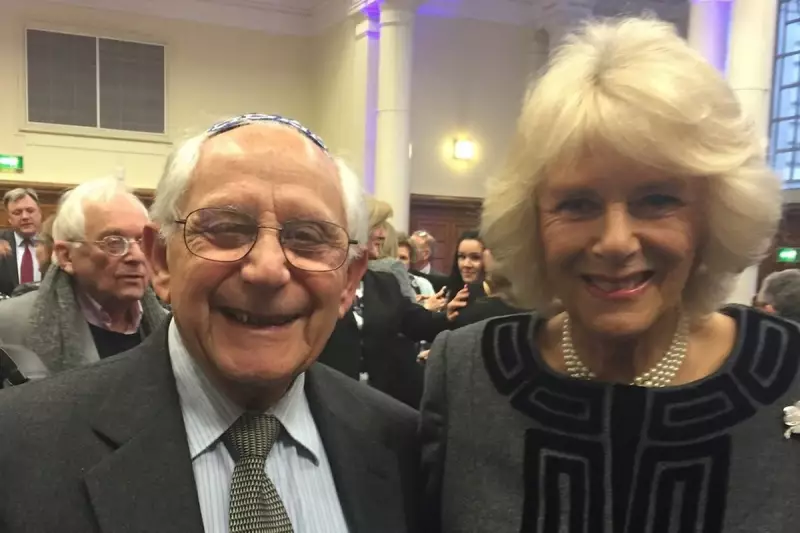
Holocaust survivor Harry Olmer MBE, who passed away just two weeks ago at the age of 98, exemplified the vital importance of sharing these harrowing stories. Arriving in Britain in 1945 as a traumatised 17-year-old orphan—his parents and three siblings murdered by the Nazis—Olmer survived three years of brutal internment in concentration camps across Poland and Germany. He endured 12-hour shifts of hard manual labour on a starvation diet, witnessing unspeakable cruelty firsthand.
Remarkably, he rebuilt his life, studying dentistry at the University of Glasgow, marrying, raising four children, and becoming the UK's longest-serving dentist before retiring at 86. For the last three decades of his life, Olmer dedicated himself to visiting schools nationwide, delivering a simple, profound message: 'Be human.' He warned tirelessly against the rise of hate and prejudice, sharing his experiences as a proud Jewish man who had suffered the worst of humankind simply for his identity.

A Stark Decline in Commemoration and Knowledge
Alarmingly, interest in heeding such warnings appears to be waning. Today marks Holocaust Memorial Day, yet in countless schools, the day will pass unmarked—no special assemblies, minutes of silence, or candle-lighting ceremonies. Pupils will leave school gates oblivious to its significance, having received no lessons on the dangers of hatred, bigotry, and antisemitism.
Established following a 1999 government commitment, the first official UK Holocaust Memorial Day was held on 27 January 2001. It serves as a national day to commemorate the six million Jewish victims of the Holocaust and the millions of others murdered under Nazi persecution. However, new figures from the Holocaust Memorial Day Trust reveal a precipitous drop in participation. The number of secondary schools marking the day has more than halved since 7th October 2023, plummeting from over 2,000 in 2023 to just 854 in 2025.
This retreat from remembrance coincides with a serious decline in young people's knowledge of the Holocaust. A recent survey by the Conference on Jewish Material Claims Against Germany found that a third of UK young adults could not name Auschwitz or any death camps, while 23 per cent admitted encountering Holocaust denial or distortion on social media.
The Broader Context of Genocide Remembrance
Holocaust Memorial Day is not solely about the Nazi genocide. It also commemorates victims of other atrocities, including:
- The Khmer Rouge regime in Cambodia (1975–1979)
- The genocide against the Tutsi in Rwanda (1994), where approximately 800,000 people were murdered in 100 days
- The Srebrenica genocide (1994-1995), which saw over 8,000 Bosniak Muslim men and boys killed
- The mass killings in Darfur beginning in 2003
- The genocide against the Yazidi people from 2014
Against a backdrop of increasing societal polarisation, rising white supremacist rhetoric, and tragic attacks on Jewish families abroad, the day's lessons in compassion, tolerance, and the mechanisms by which humane societies can turn towards prejudice feel more urgent than ever.
The Fading Voices of Survivors
Holocaust survivors like Harry Olmer have carried the torch of HMD's central message: to actively challenge hatred, racism, and antisemitism. They have acted as living oracles, visiting schools, community centres, businesses, and even football clubs. Their firsthand accounts serve as stark warnings of what transpires when hate becomes a society's overriding force.

Yet, as these survivors age and pass away, their vital testimonies risk being lost forever. We stand at a perilous crossroads: facing rising antisemitism and intolerance with fewer surviving witnesses to articulate the consequences of unheeded warnings.
Ike Alterman BEM, an Auschwitz survivor who died two months ago aged 97, spent years warning young footballers in Manchester and the northwest against prejudice. His motto, 'Hate is a disease,' reflected his remarkable refusal to hate all Germans despite the murder of many family members. Professional footballer Joe Westley, 21, recalled being 'blown away' by Alterman's mental strength and the valuable lessons he imparted.
Preserving Testimonies for Future Generations
These survivors' words are pieces of gold—a rare, first-person treasure trove of history and an armoury against denial and hate. However, time is against us. The youngest survivors are now in their late eighties, with the eldest approaching 102.
Stories like that of Lydia Tischler MBE, 97, whose mother was murdered in the Auschwitz gas chambers, are crucial. A refugee who trained as a child psychotherapist under Anna Freud, Tischler believes the only way to prevent another Holocaust is to avoid projecting hostility onto the 'other.' Similarly, Rachel Levy BEM, who endured the horrors of Auschwitz-Birkenau, insists we must confront history, warning that 'it can happen anywhere.'
Initiatives like the My Voice project are now in a race against time, transforming survivors' unflinching memories into books and films for schools, libraries, and museums. Researchers spend months with each survivor, documenting their pre-war lives, wartime atrocities, and post-war rebuilding in Britain.
A Call for Humanity Over Politics
Holocaust Memorial Day was conceived as an annual reminder to young people: to remember, to practise tolerance and kindness, to stand up for difference, and to build resilience against hate. Remembering the Holocaust is not, and should never be, a political act. It is, at its core, a profoundly human one—a necessary reckoning with our past to safeguard our collective future.