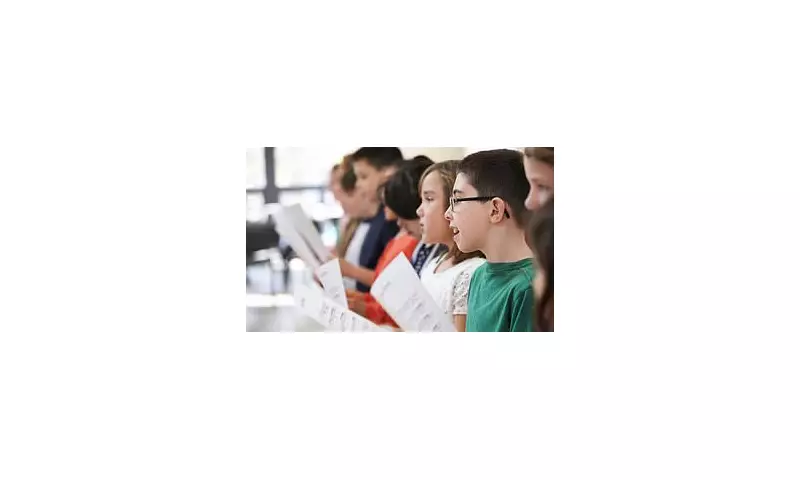
Fresh research has uncovered a dramatic decline in communal singing within state secondary schools, with more than half now reporting that pupils no longer sing together during assembly.
The Stark Divide in School Music
A major survey of 10,000 teachers, conducted by the app Teacher Tapp, found that 57 per cent of staff in state secondaries said their pupils never sing as a group in assembly. The data highlights a significant gap with the private education sector, where only 13 per cent of teachers gave the same answer.
The trend extends to school choirs. Just over a third (36 per cent) of state secondary teachers reported having no choir at all, compared to a mere 8 per cent in private schools. Furthermore, the research shows private schools are far more likely to nurture multiple singing groups; 77 per cent of private secondary teachers said their school had more than one choir, against 27 per cent in state schools.

Embarrassment and a Shifting Curriculum
Educators point to pupil self-consciousness as a key factor. Jackie Bowen, head teacher at The East Manchester Academy, told the BBC that while her school maintains a choir, many students feel "embarrassed" and believe "it's not cool to sing." This social pressure appears largely confined to secondary level, with an overwhelming 96 per cent of primary teachers confirming that singing in assembly continues.
Beyond pupil attitudes, experts warn of a broader de-prioritisation of music in schools. There has been a 25 per cent drop in pupils studying GCSE music over the past 15 years. James Manwaring, president of the Music Teachers Association, argues every school should have a choir, stating: "All you need is a room and you need someone to lead it."
Broader Debates and Government Response
The findings emerge amid a longstanding debate over the nature of school assemblies. Since the 1980s, when Christian hymns like "Lord of the Dance" were commonplace, the legal requirement for a daily "broadly Christian" act of collective worship has been increasingly ignored or opted out of by schools. In 2022, teaching leaders called the rule "archaic," a sentiment bolstered by the 2021 census which showed fewer than half in England and Wales identify as Christian.
Responding to the research, a Department for Education spokesman emphasised a commitment to ensuring arts are "no longer the preserve of a privileged few." The statement highlighted investment in Music Hubs and a pilot programme to support disadvantaged pupils in learning an instrument or singing, alongside a renewed curriculum aimed at promoting creative subjects.