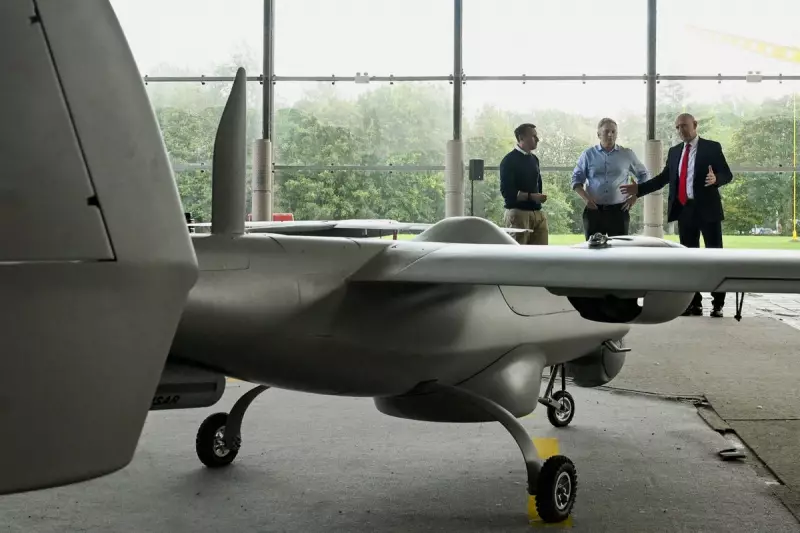
A pioneering new undergraduate degree programme focused entirely on drone technology, directly informed by battlefield experiences from the ongoing conflict in Ukraine, is set to launch at a British university in 2026. The course represents a significant collaboration between academia and the military, funded by a substantial investment from the Ministry of Defence.
Military Investment and Course Structure
The innovative programme, often dubbed a 'drone degree', has been made possible through a £240,000 investment from the Ministry of Defence. It will be hosted at the New Model Institute for Technology and Engineering (NMITE) in Hereford, with the first intake of students scheduled for September 2026.
The curriculum is designed to produce highly skilled specialists in unmanned aerial systems. Each year, the course will train a cohort of 15 civilian students alongside up to five serving soldiers, creating a unique blend of academic and practical military expertise. The comprehensive syllabus will cover the entire lifecycle of drone systems, including their design, construction, and rigorous testing protocols.

Lessons from the Ukrainian Battlefield
The development of this degree has been heavily influenced by the pivotal role drones have played in the war in Ukraine. Both Ukrainian and Russian forces have deployed unmanned aerial vehicles with devastating tactical impact, altering modern warfare strategies.
"In Ukraine, drones are causing more casualties than artillery – that’s the reality of modern warfare," stated Minister for the Armed Forces, Al Carns, highlighting the urgent need for advanced expertise in this domain. Russian forces have conducted extensive campaigns using drones and missiles to target civilian infrastructure, while Ukraine has utilised them for defence and reconnaissance.
In a related development, Defence Secretary John Healey recently announced the start of production for a new UK-designed drone named the 'Octopus', intended for Ukrainian forces. This interceptor drone is specifically engineered to neutralise the Russian drones used in attacks on civilian areas. The UK aims to manufacture thousands of these cost-effective Octopus drones monthly, with each unit costing roughly a tenth of the enemy drones it is designed to counter.
Strategic Aims and Future Impact
The launch of this degree programme is seen as a strategic move to bolster national security and technological sovereignty. "This degree gives young engineers a fast track to careers at the cutting edge, protecting Britain and powering growth in places like Hereford," Minister Carns added.
The initiative aims to cultivate homegrown talent and build robust British capabilities in a critical field. Graduates are expected to strengthen the UK's Armed Forces with cutting-edge knowledge while also driving innovation in the burgeoning civilian and commercial drone sectors. The programme underscores a dual-purpose approach: enhancing military defence capabilities directly informed by contemporary conflict, while simultaneously fostering economic growth and technological advancement in the UK's domestic industry.