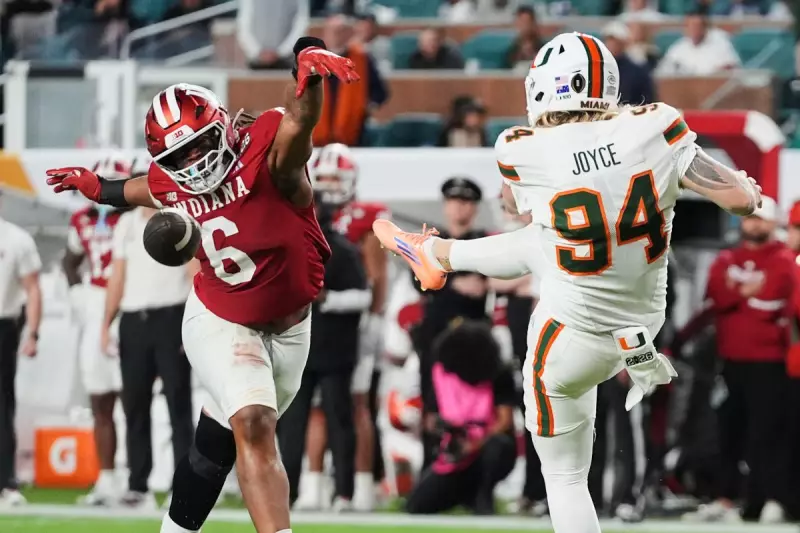
A bipartisan coalition of United States lawmakers is intensifying pressure for comprehensive federal regulation of college sports, warning that the current financial landscape surrounding student athletes has become dangerously unregulated. This renewed legislative push follows Monday night's dramatic championship final where the Indiana Hoosiers secured a remarkable victory against the Miami Hurricanes, a game that highlighted the enormous financial stakes now involved in collegiate athletics.
Mounting Concerns Over Commercialisation
Members of Congress from both major political parties have expressed growing alarm about what they describe as the "over-commercialisation" of college sports programmes. Critics argue that the system has transformed into a financial free-for-all, with championship teams reportedly spending millions on "name, image, likeness" (NIL) agreements for their star players. According to reports, both competing teams in the recent championship invested over $3 million each on NIL deals during this season alone.
Lawmakers Voice Strong Opinions
Alabama Senator Tommy Tuberville, who previously served as a college football coach, articulated the widespread frustration among legislators. "We have way too many gaps in the process. I'm all for the players making money, but there's got to be some rules that play into it," Senator Tuberville told The Hill. He further criticised the National Collegiate Athletic Association (NCAA), stating that the organisation "should have been running it the right way, giving money to players out of revenue sharing. So now we're in a spot where there's no rules and it's pretty much out of control."

Democratic Senator Elizabeth Warren offered a different perspective, expressing scepticism about granting additional authority to the NCAA. "I sure won't support any legislation that gives the NCAA even more authority, which is exactly what they've been looking for around here," she declared. Meanwhile, Republican Senator Ted Cruz emphasised the urgency of congressional action, stating, "We do have a crisis, and Congress needs to act. And we should protect students and their NIL rights, but we need to preserve college athletics for years to come."
Substantial Financial Valuations
The substantial financial investments in student athletes have become particularly evident through individual player valuations. Miami quarterback Carson Beck possesses an estimated NIL valuation of $3.1 million, while his Indiana counterpart Fernando Mendoza is valued at approximately $2.6 million, according to data from On3. These significant figures illustrate the lucrative opportunities now available to top collegiate athletes, but have also raised concerns about competitive balance and the educational mission of university sports programmes.
Legislative History and Current Challenges
This latest congressional initiative follows the previous failure of the SCORE Act, proposed legislation designed to regulate institutional spending on NIL agreements and establish standards for student athlete welfare. The bill faced opposition primarily from Republican lawmakers who argued it would disproportionately benefit elite universities and their financial backers. Under the proposed SCORE Act framework, student athletes would not be classified as employees of their educational institutions, athletic conferences, or interstate collegiate associations.
The NCAA has responded to mounting criticism by highlighting recent modifications to their existing regulations. A spokesperson for the association informed The Hill that current rules have been adjusted to address concerns raised by both legislators and activist groups, claiming the revised system offers greater benefits for athletes and coaches alike. However, many in Congress remain unconvinced that these changes sufficiently address the fundamental issues surrounding commercialisation and athlete compensation.
As the debate continues, lawmakers appear increasingly determined to establish federal oversight mechanisms for collegiate athletics. The absence of uniform regulations has been blamed for creating an environment where athletes frequently transfer to institutions offering superior NIL opportunities, potentially undermining team stability and competitive integrity across college sports.