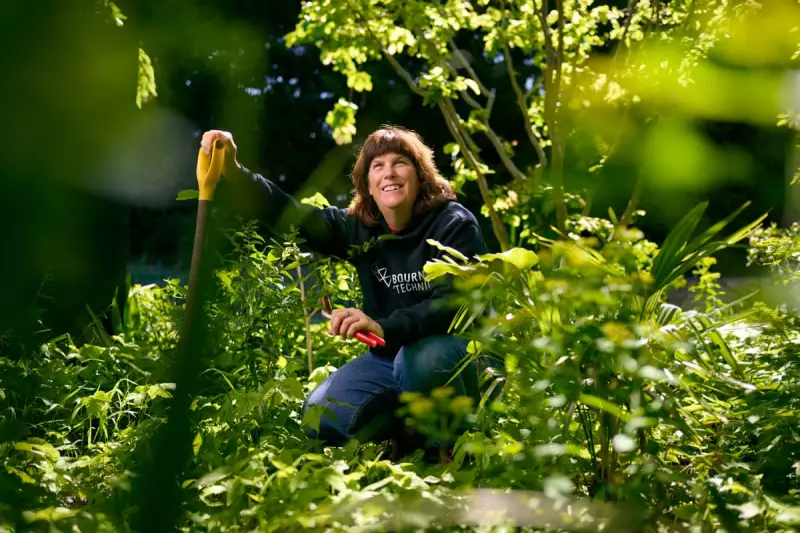
Seeking a positive focus away from the daily grind of her job, Ellen Smith discovered an unexpected source of joy and intellectual stimulation: a free gardening qualification. Her journey into formal horticultural study began as a deliberate choice to engage with something life-affirming.
Finding Growth in Accessible Education
With a long-standing interest in growing fruit, vegetables, and flowers, nurtured from a family veggie patch to adult share houses, Ellen had considered deepening her knowledge for some time. Her initial research into short permaculture courses revealed them to be prohibitively expensive, while university study carried an even higher cost. Gardening blogs, she found, could only teach so much.
The breakthrough came when she discovered she could pursue a Certificate III in Horticulture for free through TAFE (Technical and Further Education). Despite holding a prior diploma in writing and editing, she was eligible for the scheme, which is offered to anyone willing to invest the time. "I was really excited," she recalls.

The Adult Learning Curve and Classroom Community
This year, Ellen committed to the part-time course, attending classes one evening a week after work and every Saturday. Re-entering formal education as an adult required adjustment, treating it almost like a second job that demanded attention and homework.
Her classmates, she found, were a lively and supportive group from diverse backgrounds, each with slightly different horticultural passions. This created a rich environment for swapping advice and experiences. The curriculum started with practical skills like safely using garden power tools, before moving onto more theoretical aspects.
The 'Lightbulb Moment' of Plant Identification
For Ellen, the most revelatory module was plant identification. Learning the scientific ordering of genus and species provided a transformative new lens on the natural world. "Everyone in the class has had lightbulb moments, and for me it was plant ID," she says. This new knowledge allows her to share surprising connections, such as the fact that asparagus and palm trees belong to the same plant family.
While the time commitment has been intense, she notes that not a single classmate has dropped out, a testament to the value of the free course. She plans to continue her botanical explorations even after the term ends, visiting nurseries in far-flung suburbs on her Saturdays.
Cultivating a New Outlook
The benefits have already extended beyond the classroom. Ellen has begun helping friends and family with their gardens, using her newfound expertise to recommend plants like a prostrate grevillea spotted at Maranoa Botanic Gardens. At home, she's applied her learning by repotting blueberries, planting more thickly for mulch, and nurturing high hopes for this year's vegetable harvest.
Ultimately, the course has provided a perfect counterbalance to her demanding job. "It's something to put my mind to that's completely not grim. It's fun," she reflects, adding with a smile, "and who doesn't like free TAFE?" Her story highlights the profound personal and communal rewards accessible through vocational education.