Screen Time Crisis: UK Toddlers' Development at Risk as Digital Exposure Soars
In the United Kingdom, a startling 98% of two-year-olds are exposed to screens on a typical day, averaging over two hours of viewing time. Furthermore, nearly 40% of children aged three to five are actively using social media platforms. This pervasive digital immersion is raising urgent questions about its long-term impact on early childhood development.
Alarming Observations in the Classroom
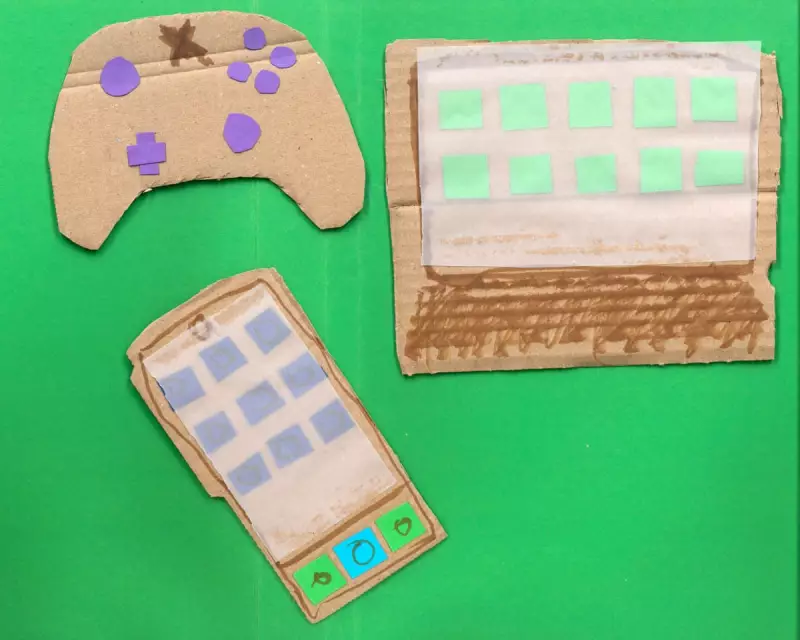
At Stoke Primary School in Coventry, assistant headteacher Lucy Fox has observed a troubling trend among four-year-olds entering reception class. Many struggle to sit still, hold a pencil, or construct sentences beyond four words. Fox attributes these delays directly to excessive early screen exposure. "We notice a lot of children will cut pieces of cardboard out and make a mobile phone or tablet, or an Xbox controller. That's what they know," she remarks, highlighting how digital devices dominate their imaginative play.
A reception teacher in Hampshire reports similar concerns, noting children's frustration with activities that aren't instant and seamless—a behaviour she links to tablet and phone gaming. This impatience is coupled with deficits in creativity and problem-solving skills, evident during Lego play or puzzle-solving sessions. "I find their hand-eye coordination isn't very good, and they find puzzles difficult. Doing a puzzle on an iPad, you just need to hold and move it on the screen. They get really frustrated and I feel like there are certain connections the brain is not making any more," she explains.

The Social and Cognitive Consequences
Educators are also witnessing a shift towards individualism among young children, likely stemming from solitary device use. "We are having to model to children how to be with others, how you work as a team, how you share things, because they're so used to having their own time, doing their own thing. We're losing a big part of being human, and if these young children don't get all those skills, they're not going to pick them up later on," the Hampshire teacher adds.
Recent government-commissioned research underscores these observations, revealing that two-year-olds who spend around five hours daily on screens exhibit limited vocabulary and are twice as likely to display emotional and behavioural difficulties compared to their peers with minimal screen time.
Escalating Screen Access Among the Youngest
Data from Ofcom indicates that 19% of three- to five-year-olds in the UK owned a mobile phone in 2024, with 37%—over 800,000 children—using at least one social media app. This marks a significant increase from 29% in 2023, despite most usage occurring under parental supervision.
Professor Pasco Fearon of University College London notes, "Look at studies getting all the way back to the turn of the century – you can see that screen time, on the whole, has been increasing." He emphasises that this trend affects all age groups, not just children, and suggests a societal reset may be necessary.
Research Highlights Developmental Risks
A 2025 New Zealand study found that young children watching more than 90 minutes of screens daily had below-average vocabulary, communication, and numeracy skills at ages four and eight, with increased screen time correlating to poorer outcomes.
Felicity Gillespie, CEO of Kindred Squared, points out that more than half of teachers believe excessive screen time—by both children and parents—is the primary factor hindering school readiness. "In cases of higher usage, there is a real negative impact on language acquisition," she states, explaining that critical brain development occurs through interactive serve-and-return exchanges with adults, which screens disrupt.

Government Response and Practical Challenges
The UK government plans to issue new screen use guidance for under-fives in April, following the concerning research findings. While the World Health Organization recommends no screen time for children under two and a maximum of one hour for those aged two to four, Gillespie acknowledges the reality that two-year-olds currently average two hours daily. "Then what we then need to do is give parents the information about why the WHO advises that, to inform people about the preciousness of these early years and the importance of brain development," she asserts.
The COVID-19 pandemic accelerated screen reliance, as Sandy Chappell, an early years speech and language therapist, observes. "During the lockdowns, it was not just that children were isolated from other children, but also that parents were relying more on screens to pacify young children," she notes, expressing sympathy for parents facing impossible balancing acts.
Educational Interventions and Future Directions
At Stoke Primary, the creation of a screen-free "roundhouse" classroom yielded remarkable results: 72% of children in this environment were developmentally on track by the end of autumn term, compared to 44% in traditional classrooms. This approach emphasises communication and language skills, proving particularly beneficial for the 60% of reception pupils with English as an additional language.
Fox is now focusing on training new teachers who have grown up with screens themselves. "How can we give them the confidence to know what's best, and to put the scheme down and just connect with their children?" she questions, advocating for a return to foundational teaching methods amidst the digital age.
As political parties consider social media bans for under-16s, inspired by Australia's approach, the conversation continues to evolve. However, experts stress that addressing screen time requires not only clear guidance but also support for families, especially those facing economic disadvantages, to foster healthier developmental environments for the UK's youngest citizens.