A major new exhibition in Montreal is radically rewriting the architectural history of communist China, demolishing the long-held perception of its early decades as a period of monotonous, state-produced drabness. How Modern: Biographies of Architecture in China 1949–1979 at the Canadian Centre for Architecture (CCA) unveils a surprisingly dynamic era of innovation, secrecy, and intense ideological debate.
Beyond the Mao Jacket: A Nation Building Its Identity
The show, curated by Shirley Surya of Hong Kong's M+ museum and Professor Li Hua from Nanjing's Southeast University, draws on a rich trove of official archives and privately held materials. Some documents were smuggled out of China decades ago and are being displayed for the very first time. Together, they depict architecture as a central instrument in socialist nation-building, shaping not just cities but rural life, industry, and collective identity.
This historical re-examination also casts light on contemporary China. It provides crucial context for President Xi Jinping's current crackdown on "weird buildings" imported from the West and his push for distinctly Chinese architectural styles in new developments—an ideological thread that stretches back to the founding of the People's Republic.

The Ideological Pendulum: From 'Big Roofs' to Bare Walls
The exhibition opens with the monumental project of Tiananmen Square and Mao Zedong's campaign for the Ten Great Buildings. This unprecedented national effort, completed in under a year, mobilised over 1,000 architects and engineers. Structures like the Great Hall of the People fused Beaux-Arts classicism, Soviet monumentality, and modern functionalism, often crowned with traditional Chinese tiled roofs—a style mandated as "socialist in content, national in form."
Yet this dictate was not universally popular. Architect Zhang Kaiji, featured in an oral history, desired more creative freedom but was handed the "big roof" as a standard model. His Sanlihe government office complex in Beijing, begun in 1952, became a physical record of the Party's capricious design decrees. While most blocks received traditional roofs, the central block was left bare after a sudden ideological shift.
In 1955, following criticism from Soviet leader Nikita Khrushchev about waste, China's ministry denounced the "regressive cultural revivalism" of the big roof. The People's Daily attacked the style's "severe wastefulness and formalist tendencies." The new, austere slogan became: "Function, economy, and (when possible) beauty." The Sanlihe block was forever nicknamed "the big roof that lost its hat."
Secrecy, Scarcity, and Socialist Innovation
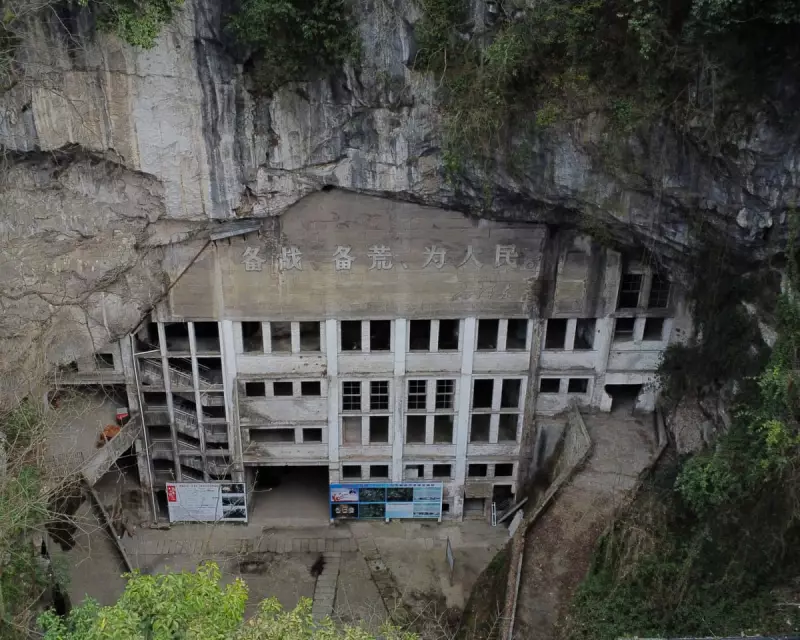
Perhaps the most astonishing revelations concern the Third Front campaign of the 1960s and 70s—a secretive military-industrial programme to develop facilities in China's remote interior. The exhibition showcases how Factory 544, which produced artillery fuses, was concealed inside a vast cave complex in Hunan, a setup described as "worthy of comrade Bruce Wayne."
Elsewhere, chronic shortages of steel, cement, and lumber sparked a wave of ingenious, low-carbon innovation. Architects experimented with industrial byproducts like soot, slag, and fly ash to create building blocks. Bamboo was employed as a steel substitute for long-span structures, most notably in the breathtaking bamboo hall at East China Normal University—a stark contrast to Hong Kong's current move to phase out bamboo scaffolding.
The exhibition concludes in 1979, at the dawn of China's reform era. How Modern presents a compelling narrative of a profession navigating extreme political pressure, resource constraints, and shifting dogma, yet still managing periods of remarkable creativity. It reveals an architectural history far more complex and fascinating than the stereotype of grey homogeneity ever allowed.
How Modern: Biographies of Architecture in China 1949–1979 is at the Canadian Centre for Architecture, Montreal, until 5 April.