Copenhagen Revival at Hampstead Theatre: Atomic Secrets in a Timely Drama
Michael Frayn's cerebral 1998 drama Copenhagen has returned to the stage at Hampstead Theatre in London, with a production that feels terrifyingly timely in today's political climate. The play delves into the moral fog surrounding atomic secrets and scientific conscience, though this revival struggles to fully ignite the emotional core of its characters.
A Meeting Shrouded in Mystery and Moral Complexity
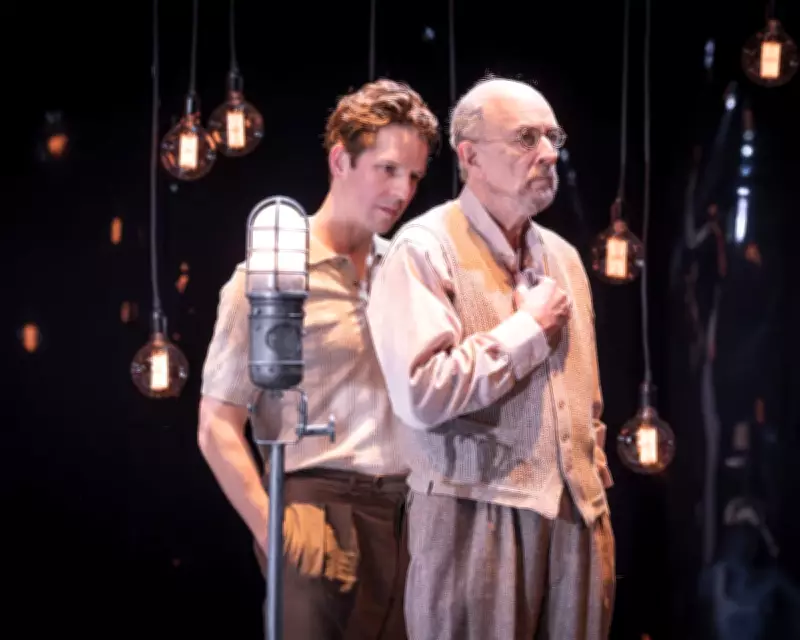
The play is based on the real-life 1941 meeting in Copenhagen between Danish physicist Niels Bohr, portrayed by Richard Schiff, and German scientist Werner Heisenberg, played by Damien Molony. Both were Nobel Prize-winning pioneers in quantum physics, yet found themselves on opposing sides during the Second World War. The drama explores the psychological uncertainty behind this encounter, mirroring Heisenberg's own uncertainty principle in physics.
No one knows exactly why the men met or what was discussed, but Frayn presents multiple hypotheses through contested memories and retrospective conversations. Bohr was half-Jewish, while Heisenberg was involved in Germany's nuclear programme, adding layers of tension and ideological divide to their interaction.

Political Echoes and Contemporary Relevance
At the heart of the play is a dangerous hard-right politician threatening to wipe out an entire civilisation, explicitly referencing Hitler but resonating strongly with contemporary figures like Donald Trump. This connection is underscored by recent geopolitical tensions, making Michael Longhurst's production feel extremely urgent and relevant.
The production also aligns thematically with the theatre's downstairs play, ROI (Return on Investment), which similarly examines the morality of science. Despite its relevance, the revival faces challenges in fully conveying the emotional depth and metaphorical meanings embedded in the scientific dialogue.
Performance Dynamics and Staging Elements
The chemistry between Schiff and Molony does not quite capture the intended dynamic. Bohr was 16 years older than Heisenberg and had once been his tutor, but here the age gap feels exaggerated, with Heisenberg appearing overly puppyish and Bohr too much like a retired professor. Schiff occasionally stumbles over his lines, further tempering the tension.
Alex Kingston delivers a formidable performance as Margrethe, Bohr's wife and editor, bringing much-needed humanity to the production. However, her character is forced to shoulder excessive emotional heavy-lifting, as the men's relationship lacks the intimacy or friction of friends, competitors, or rivals.
Joanna Scotcher's set design is a thrilling aesthetic highlight, featuring a non-realist circle surrounded by water. This cleverly references the "heavy water" used in Nazi bomb-making and alludes to a boating accident involving one of the Bohrs' sons, adding visual depth to the narrative.
Narrative Shortcomings and Historical Omissions
While Frayn's script raises compelling issues about friendship across ideological divides and the moral duties of scientists, the drama sometimes feels sleepy despite its central mystery. A glaring omission is the lack of focus on the destruction of Nagasaki and Hiroshima, with the play concentrating more on the fear of Hitler acquiring nuclear weapons than on the actual use of such weapons by the US.
This oversight dates the production, especially in an era marked by alarming displays of US military imperialism. The play reflects on decades after the initial meeting but fails to address the devastating impact of nuclear warfare, missing an opportunity to refocus on this irony.
Copenhagen runs at Hampstead Theatre in London until 2 May, offering a thought-provoking but emotionally uneven exploration of science, conscience, and political violence.