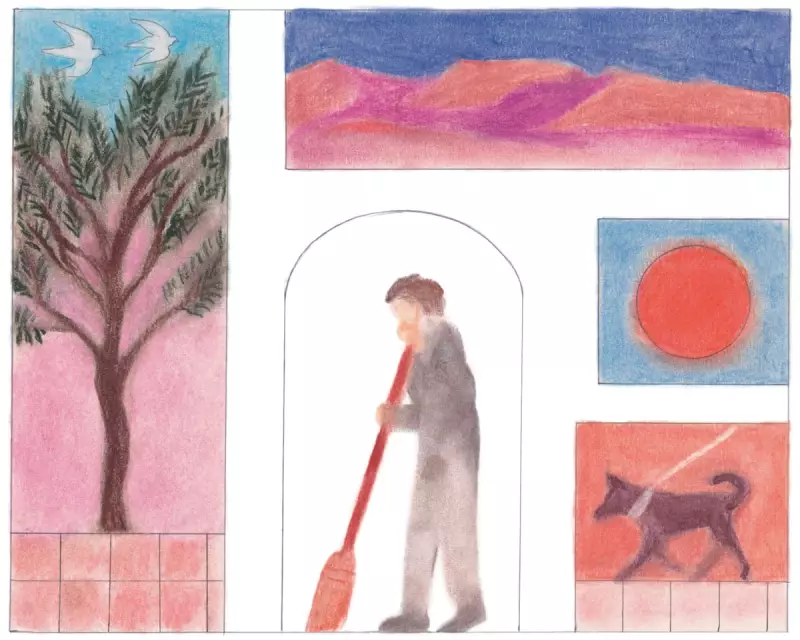
In an act of profound and peculiar dedication, writer Mark O'Connell spent an entire year sweeping a single, 100-foot stretch of sidewalk in the Nevada desert. This was not a chore, but a self-imposed, meditative ritual—a physical attempt to grapple with the vast, unsettling questions of existence, purpose, and what it means to live a meaningful life in a seemingly indifferent universe.
The Genesis of an Unusual Ritual
The project began not with a grand plan, but from a place of deep personal unease. O'Connell, an author known for exploring technology and the human condition, found himself increasingly preoccupied with existential dread and a sense of life's inherent absurdity. The idea emerged almost whimsically during a walk in the arid landscape near his temporary home. He noticed a segment of concrete path, a stark human imposition on the wild desert, perpetually covered in dust and debris.
He decided to sweep it. And then he decided to keep sweeping it, every day, for a year. The location was a sidewalk on South Loop Road, near Blue Diamond, Nevada, a place of stark beauty and extreme silence. His tools were simple: a standard dustpan and a broom he purchased from a local Walmart. This mundane act, repeated daily, became his framework for confronting the void.

Meditation, Monotony, and Meaning
What might sound like an exercise in futility became, for O'Connell, a form of active meditation. The rhythmic, repetitive motion of sweeping—the soft scrape of bristles on concrete, the gathering of dust, sand, and occasional cigarette butts—created a mental space. It was a deliberate counterpoint to the frantic, digital noise of modern life and the abstract, overwhelming nature of his anxieties.
"The action was pointless, but it was my pointlessness," he reflected. By committing to this utterly non-utilitarian task, he sought to examine the very foundations of why we do anything at all. The desert, with its immense timescales and relentless processes of erosion and renewal, served as the perfect backdrop. His small, human effort at order was instantly and continuously undone by the wind, a humble metaphor for the struggle against entropy and oblivion.
Over the 365 days of his project, the ritual took on different shades. Some days it felt peaceful and mindful; other days it was boring or frustrating. He documented the changing light, the wildlife like roadrunners and lizards that became accustomed to his presence, and the very rare passerby who might offer a puzzled glance. The act itself became the point, a grounding anchor in the face of life's unanswerable questions.
Insights from the Dust
O'Connell's year of sweeping did not yield a definitive answer to the meaning of life. Instead, it offered something perhaps more valuable: a shift in perspective. The project, concluded in late 2024, taught him the value of embracing small, conscious actions without the burden of expecting grand, permanent results. It was an exercise in accepting impermanence.
He found that meaning isn't always something to be discovered like a buried treasure, but can be something generated through commitment and presence, even to tasks that appear silly or futile from the outside. The discipline of showing up each day to perform his pointless duty became, in itself, a quiet rebellion against despair. It was a way of saying 'I am here' to the vast, empty sky.
Ultimately, O'Connell's story is less about a man cleaning a pavement and more about the universal human search for significance. In our goal-oriented culture obsessed with metrics and outcomes, his desert ritual stands as a poignant reminder of the potential for meaning in the process itself, in the simple, repeated act of engaging with the world on our own terms, one sweep at a time.