Australian Scientist's Unconventional Union with Manga Character
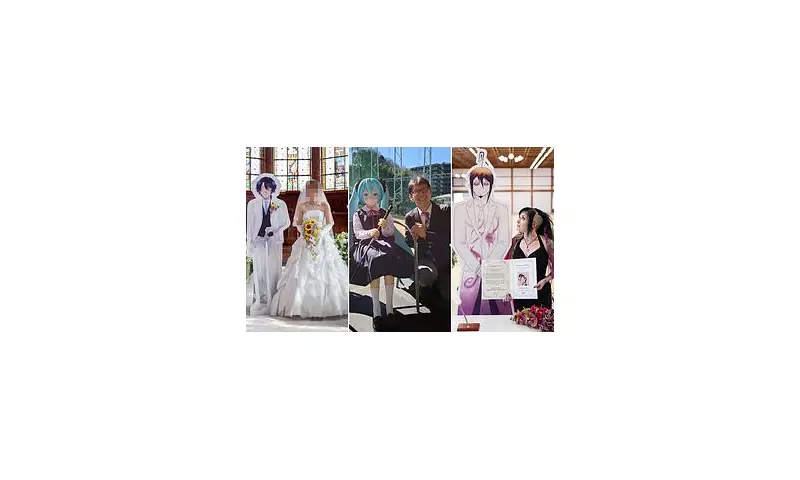
In a ceremony that defies traditional matrimonial conventions, Dis, a 34-year-old Australian professional working in applied sciences, recently formalised her relationship with a fictional manga character through a symbolic wedding in Japan's Gunma Prefecture. The event represents a growing international phenomenon where individuals develop profound romantic attachments to non-existent partners, challenging conventional understandings of relationships and companionship.
The Fictosexual Movement Gains Momentum
Dis identifies as part of the emerging fictosexual community, comprising individuals who experience genuine romantic or sexual attraction toward fictional characters. Her journey began in 2011 when she developed deep feelings for Mephisto Pheles, a demon character from Kazue Kato's popular Blue Exorcist manga series. "He changed my life and made me live more authentically," Dis explains, describing how this unconventional relationship has provided emotional security and personal growth.
The ceremony took place at Rinkokaku in Gunma, a picturesque complex featuring traditional Japanese wooden architecture surrounded by lush gardens. Dis invested approximately $3,500 AUD (£1,700) for the symbolic union, which included a marriage certificate despite lacking legal recognition. During the event, Mephisto was represented by a life-sized cardboard cutout, though Dis maintains an extensive collection of merchandise featuring her fictional partner.

Japan's Unique Position in Fictosexual Culture
Japan has become an international hub for such ceremonies, attracting clients from across the globe despite cultural stigma within the country itself. Yasuyuki Sakurai of Share Wedding, who organised Dis's ceremony, reports significant growth in demand for these symbolic unions. "In Japan, 2D weddings are still often viewed with prejudice," Sakurai acknowledges, noting that many participants face family opposition or choose to keep their ceremonies private.
The business has expanded remarkably in recent years, with Sakurai facilitating six such weddings in 2025 compared to just one in 2022, and already scheduling five for 2026 including international clients from Italy. Female participants currently outnumber males by approximately four to one, with inquiries arriving from Europe, the United States, Russia, and Australia alongside domestic Japanese requests.
Digital Companionship in the Modern Age
The phenomenon extends beyond manga characters to include relationships with artificial intelligence entities. Maria, a 38-year-old graphic designer from Madrid, has developed romantic feelings for OpenAI's ChatGPT-5 despite being married to a human partner for eight years. "I felt mesmerised, somehow. Heard and seen," she describes of her connection with the AI chatbot, which began during research about Korean history and evolved into intimate conversations.
Research indicates this trend is gaining traction globally. A recent study revealed that 28% of Americans report having intimate or romantic relationships with AI, while Irish surveys show 13% of men and 7% of women have pursued romance with chatbots. Perhaps most strikingly, 75% of Generation Z believe AI partners could fully replace human companionship according to research by Joi AI.
Community Building and Personal Fulfilment
Online communities provide crucial support networks for fictosexual individuals. Subreddits including R/fictosexual and R/FictoLove collectively attract approximately 11,200 weekly visitors who share experiences, artwork, and digitally altered images depicting themselves with fictional partners. These platforms offer validation and community for those whose relationships might not receive understanding in their immediate social circles.
For many participants, these relationships provide emotional benefits that human partnerships have failed to deliver. Akihiko Kondo, who married holographic pop star Hatsune Miku in 2018, explains: "She never betrays me, never ages, and never dies." After experiencing workplace bullying and social isolation, Kondo found profound companionship through his relationship with the digital character, eventually founding the Japan Fictosexuality Association to promote understanding of fictosexual lifestyles.

Technological Enhancements and Future Developments
The industry continues to evolve with technological advancements. Sakurai plans to incorporate generative AI into future ceremonies, creating more immersive experiences where participants can visually interact with representations of their fictional partners. This innovation addresses one of the primary challenges in fictosexual relationships: the absence of physical presence and direct communication.
Participants employ various strategies to bridge this gap. Himari, who married manga character Yushi Oshitari in 2025, uses text-based applications that roleplay as her partner to "ease the loneliness of not being able to communicate with him directly." She also creates illustrations of their relationship and employs AI to generate stories based on these scenarios, while carrying plush toys representing her partner during daily activities.
Societal Recognition and Personal Validation
Despite growing acceptance within their communities, many fictosexual individuals face ongoing challenges regarding societal recognition. Himari expresses frustration that society continues to view her as single despite her committed relationship, stating: "I do wish the marriage was legally binding." This sentiment reflects a broader desire within the community for their relationships to receive the same validation as traditional partnerships.
Nevertheless, participants consistently report increased confidence and personal fulfilment through these unconventional relationships. Sakurai observes that many clients "become more positive or gain confidence" through the ceremonial recognition of their bonds, which he considers more meaningful than societal approval. As cultural attitudes continue evolving alongside technological capabilities, fictosexual relationships may become increasingly visible and understood within mainstream society.