Black Fathers Transform Hair Care into Cherished Bonding Time
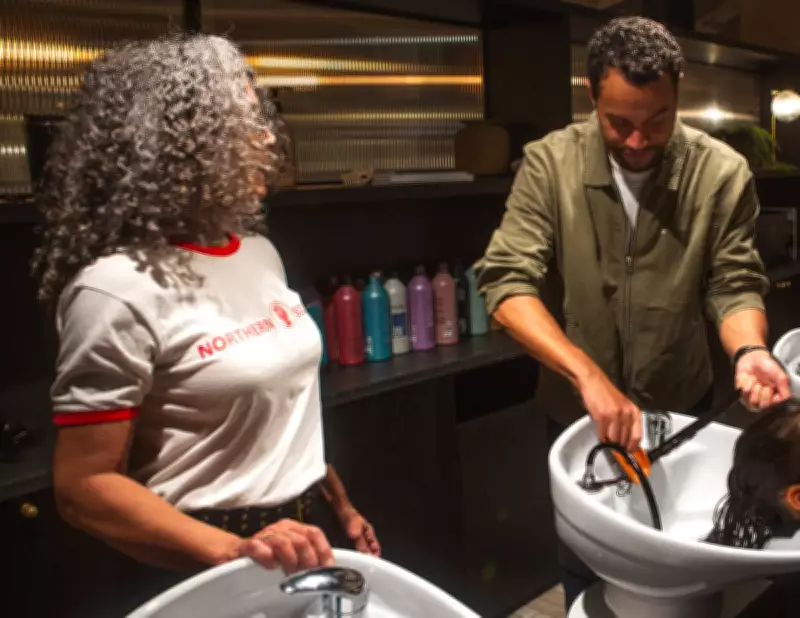
In a quiet basement salon in Marylebone, London, a quiet revolution is taking place. Stylist and curly hair advocate Jennie Roberts is patiently guiding Lanre Bakare through the intricacies of detangling his young daughter's hair. For Bakare, like many Black men, this represents a journey into unfamiliar territory—one that's transforming family dynamics and creating precious moments of connection.
Breaking Generational Patterns
"For me—and many other Black men—my experience of hair begins and ends in the barbershop," Bakare explains. "It's a male-only space of unsolicited political opinions, fades and buzzing clippers. Black female hair, however, has always remained something of a mystery."
This admission reflects a common experience within Black British communities, where hair care knowledge has traditionally followed gendered lines. Bakare recalls his earliest salon experiences watching his sisters endure painful combing sessions before family trips to Nigeria. "My memories are correct; in fact, there are more horror stories I wasn't privy to," he reveals, noting how one sister passed out after hours of braiding and both were emotionally scarred by inappropriate "thinning" treatments.

The Reality of Hair Trauma
Such experiences are far from isolated. A 2021 report by Pantene found that 93% of people with afro hair had faced discrimination, while painful salon visits have been historically accepted as something Black women simply endure. Roberts challenges this narrative directly. "I don't have trauma in my life around my hair," she states firmly. "I've always embraced my curls—it's never occurred to me to straighten my hair because I love it."
Yet Roberts acknowledges she represents an outlier. The statistics tell a different story: Black British women spend approximately £168 million annually on hair products, with individual spending typically three to six times higher than their white counterparts. This financial investment often accompanies significant emotional investment too.
A Growing Movement of Involved Fathers
Enter a new generation of Black fathers determined to change this dynamic. Jamelia Donaldson, founder of Black beauty company Treasure Tress, has been running crash courses specifically for Black men wanting to learn hair care skills. "Despite there also being hair-braiding courses for Black women, it's the Black men who always get attention on social media," Donaldson observes. "I think it is the juxtaposition of being dad and hair. People don't associate the two—they feel like the mums will just do it."
Poet and author Yomi Ṣode represents this growing cohort. He enrolled in a workshop to support his partner, who was managing multiple heads of hair in their household. "I wanted to learn so I can cover and step in and have this skill," Ṣode explains. "Also, if I can do a bad boy hairstyle, if I do the wickedest parting, I feel so proud. Even though it takes me 45 minutes to do what my partner can do in five minutes."
The Practical Transformation
Back in Roberts' salon, the practical lessons begin. Bakare discovers he's been making fundamental errors in his approach to his daughters' hair care. The tight elasticated hair ties he's been using are "a nightmare to remove," clinging painfully to strands. Roberts recommends silky, looser alternatives that slide off gently.
More significantly, his brushing technique needs complete overhaul. "At present I'm applying detangler, then combing from the scalp down to the end of the hair," Bakare admits. "That causes yelps of pain from my eldest daughter, and is—as Roberts tells me—a terrible approach."
The recommended method involves starting at the hair ends, identifying tangles, then using a specially designed manta comb (featured on Dragons' Den) with longer, widely spaced teeth to gently unpick knots before methodically working upward. The transformation is immediate: where there was previously screaming, there's now quiet cooperation.

Unexpected Insights and Lasting Change
Some advice proves unexpectedly practical. Roberts recommends replacing towels with old T-shirts for drying. "The T-shirt doesn't have a pile on it, which can cause friction and ruin the curls," she explains. "All you're doing is damaging the hair and undoing all the good you've done."
Product selection also requires refinement. Bakare discovers the products he's been using are too heavy for his daughters' hair type—better suited to much tighter curls. Lighter serums like those in the Curly Ellie range would better accentuate their natural texture.
Perhaps most importantly, Roberts emphasises patience over speed. The diffuser drying process she demonstrates takes nearly ten minutes compared to Bakare's usual two-minute blast. "In the hour or so the tutorial takes, there's a lot of information to take in," Bakare reflects. "I'm certainly not an expert but the key takeaways are patience, technique and jettisoning my current methods that often make things worse."
Beyond Practical Skills to Emotional Connection
Donaldson identifies the deeper significance of this movement. "A lot of them understood the significance of hair and the fact that it is an opportunity for bonding, and they just wanted to be more involved," she says of the fathers attending her courses. Many Black women have shared with her that their fondest childhood memories involve their fathers doing their hair. "It's not celebrated enough," Donaldson adds.
Ṣode echoes this sentiment, viewing hair care as vital to connecting with his daughter. For Bakare, the proof emerges during subsequent "salon nights" at home. While the process still requires patience (and several episodes of Jo Jo & Gran Gran to keep the girls still), the experience has transformed from traumatic to tender.
"There's also that pang of satisfaction Ṣode talked about when it's all done," Bakare observes. "I won't be opening Salon Bakare any time soon, but hair day just got a little easier—and much more meaningful."
This quiet revolution in London salons and living rooms represents more than just improved hair care techniques. It's about breaking generational patterns, creating new bonding rituals, and redefining what it means to be an involved Black father in contemporary Britain. The comb might be new, but the connection it facilitates is timeless.