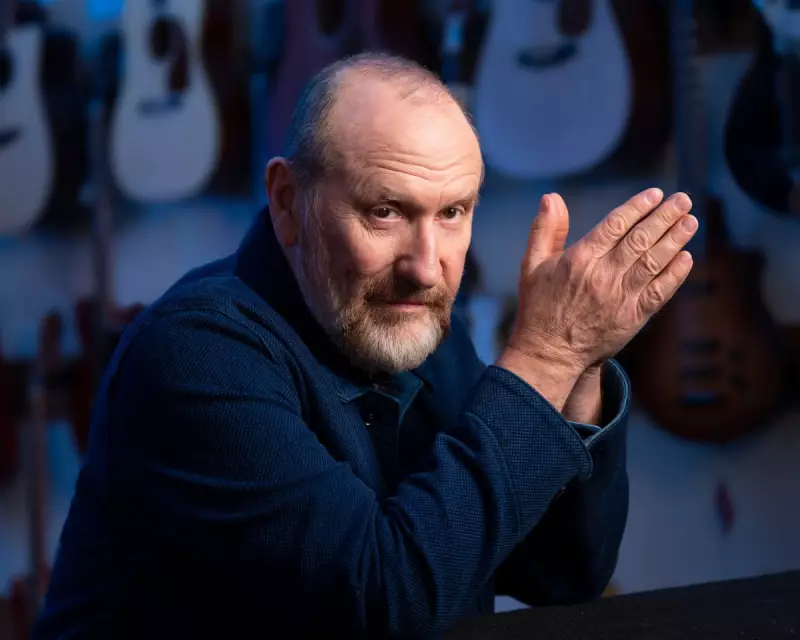
Colin Hay, the Scottish-born songwriter and former lead vocalist of the legendary Australian band Men at Work, has issued a forceful public statement condemning the use of his band's global hit Down Under by anti-immigration protesters. The musician, who emigrated to Australia as a teenager, specifically called out the group March for Australia, which has organised rallies across the country.
A Firm Disavowal from the Songwriter
In a post shared on his official Facebook and Instagram accounts, Hay made his position unequivocally clear. "I most strenuously disapprove of any unauthorized, unlicensed use of Down Under, for any 'March For Australia' events," he wrote. The singer, who signed the message "Colin Hay (immigrant)", emphasised that the song's spirit is fundamentally at odds with the group's message.
"Down Under, a song I co-wrote, does not belong to those who attempt to sow xenophobia within the fabric of our great land, our great people," Hay stated. He described the track as "ultimately a song of celebration" meant for pluralism, inclusion, and unity. His message concluded with a direct rebuke to the protesters: "Go write your own song, leave mine alone."

The Anthem's Journey and Legacy
Co-written by Hay and bandmate Ron Strykert, Down Under became a phenomenal success in the early 1980s. It reached number one in Australia in 1981 before topping charts in numerous countries including the UK, the US, New Zealand, Canada, and several European nations. In the United States alone, it sold two million copies.
The song's lyrics, featuring iconic references to a "Vegemite sandwich" and a land "where women glow and men plunder", depict an Australian traveller proudly describing his homeland. Over subsequent decades, it has evolved into an unofficial national anthem for Australia, frequently played at major sporting events and celebrations.
Its legacy continues to grow; the original recording surpassed one billion streams in 2022, and it has found new audiences through covers by artists like Perth producer Luude and the Yolngu Matha and English-singing band King Stingray.
A Growing Chorus of Musical Protest
Colin Hay is not the first Australian musician to distance themselves from the March for Australia group. In October of last year, country music icon John Williamson released a statement after his song True Blue was reportedly played at one of the group's protests. Williamson asserted that his song was for all Australians and should not be hijacked by any divisive group.
Similarly, just a month prior, representatives for the bands Cold Chisel and Icehouse issued a joint statement after the group used Flame Trees and Great Southern Land at a rally. The statement clarified that no approval was sought and no permission was given for the use of the music.
Punk rock band The Living End have also denounced the use of two of their songs at the rallies. In a social media post, the band stated, "The goals and philosophies of these marches are abhorrent to us, and we don't support them in any way. We believe in a fair go for everyone. Our songs are written to bring people together not to divide them."
This series of disavowals highlights a significant cultural clash, as artists reclaim the intended meaning of their work from groups whose ideologies they fundamentally oppose.