Take That Documentary Exposes Gary Barlow's Emotional Struggles and His Wife's Vital Role
In a remarkably candid journey through showbiz history, Take That's latest Netflix documentary offers a searingly honest portrayal that prioritises raw truth over polished public relations. The film, which has soared to the top of the streaming platform's ratings this week, unflinchingly examines the profound emotional toll exacted by the band's thirty-five-year journey in the relentless public eye.
Gary Barlow's Painful Openness and Dawn's Silent Strength
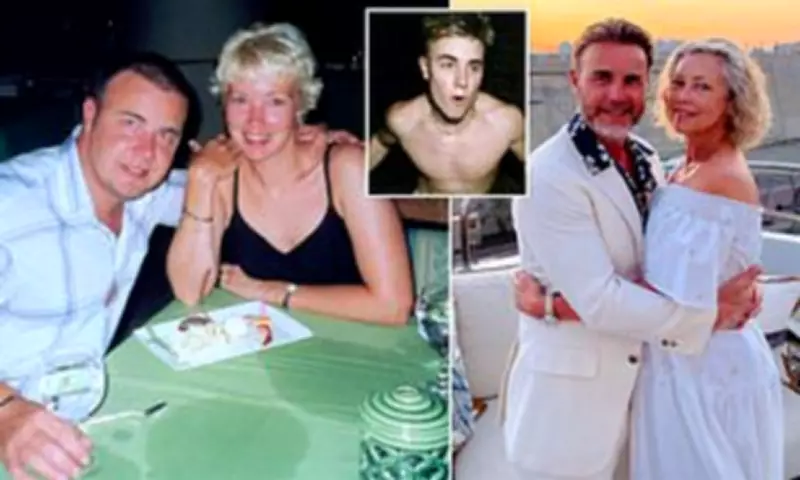
Among the band members, Gary Barlow emerges as perhaps the most vulnerable and transparent on camera, at times revealing his struggles with painful clarity. Yet, conspicuously absent from his narrative is any direct mention of his wife of twenty-six years, Dawn. Those close to the couple describe her as resolutely private and, crucially, the cornerstone of Gary's survival and stability.
'An absolute legend,' is how one insider characterises Dawn. Another source connected to Take That elaborates, 'Without Dawn, Gary would have probably remained in the many ruts he has found himself in forever. She is literally the unsung hero of his success. Somehow Dawn has been able to put so much of herself on hold to be Gary's rock. It's an astonishing relationship, but she's incredibly selfless.'

The source continues, 'There have been so many ups and downs, in their personal lives and in his career, but Dawn never falters. She's so strong for him - incredibly loyal, and never ever seeks to take the limelight. You almost can't begin to understand what she has had to put up with.'
Enduring Fame's Peak and a Battle with Bulimia
Dawn's resilience was tested from the outset, not only by the intense scrutiny that accompanied Take That's zenith of fame but also by Gary's subsequent, years-long battle with bulimia following the band's initial split in 1996. This struggle plunged him into a deep depression so severe he admits to being housebound for over a year.
At his heaviest, his weight reached seventeen stone. In the documentary, Gary describes his 'excruciating' relationship with food, a psychological rejection of fame itself that left him feeling so low he 'just wanted to crawl into a hole.' He reflects, 'There was a period of about 13 months when I didn't leave the house once. And I also started to put weight on. And the more weight I put on the less people would recognise me. I thought, "This is good, this is what I've been waiting for, living a normal life." So I went on a mission. If the food passed me, I'd just eat it... and I killed the pop star.'
He speaks openly about therapy, extreme self-loathing, and the emotional vulnerability triggered by the band's collapse. Friends confirm this period was 'extremely difficult' for Dawn, who remained his steadfast support.
A Dramatic Contrast: From Reclusion to the Royal Stage
The documentary highlights the stark contrasts in Gary's life. By 2012, a much-slimmed-down Barlow was performing alongside Cheryl Cole at the Queen's Diamond Jubilee concert at Buckingham Palace, a world away from his earlier reclusion. The pair had developed a 'very close friendship' during rehearsals.
'It was one extreme to the other,' observes a source. 'One minute Gary is obese and won't leave the house, then he's up on stage as a heartthrob and showbiz golden boy, starring into beautiful Cheryl's eyes at the biggest event of the year. Talk about ups and downs.'
The Foundation of a Private, Grounded Partnership
Friends describe Worcester-born Dawn, fifty-five, as resolutely level-headed, unimpressed by celebrity, and fiercely protective of her independence. She has never given a confessional interview. Those close to the couple, who reside in a twenty-million-pound house in London's Holland Park, portray Dawn as the family's 'emotional ballast'—practical, unsentimental, and fiercely loyal. Where Gary is introspective, she is resolute; where he absorbs criticism, she filters it out.

Her steadying influence is evident in their three children: Daniel, twenty-five, training to be a doctor; Emily, twenty-three, studying physiology; and Daisy, seventeen. The couple met in the mid-Nineties while Dawn worked as a dancer and choreographer during Take That's ascent. Their relationship was initially kept secret, first by management decree and later to preserve privacy.
Navigating Profound Loss and Public Scandal
The couple's commitment to privacy was deeply tested by tragedy in 2012 with the stillbirth of their daughter, Poppy. Gary later spoke of a grief that 'never goes away - it just changes shape.' Insiders say the fame made this intimate loss unavoidably public, adding to Dawn's anguish. 'It was the most awful moment of her life, but of course they understood they're a very famous couple - there was no way to avoid it becoming news,' one explains.
Barely recovered, Gary was soon embroiled in a highly publicised tax avoidance scandal, facing fierce public backlash. Friends reveal Dawn was furious at the vitriol, especially so soon after their bereavement, yet she remained silent, focusing on supporting her family. 'That was bloody tough but she had to keep Gary going, she had no choice,' said a source.
A Portrait of Hard-Won Peace and Continued Success
The documentary ultimately portrays a gentler Gary Barlow, a man who has spent a lifetime grappling with high expectations and self-criticism. His public treatment has not left him bitter, and Dawn's calming influence is palpable. Today, Gary appears happier and more at ease, with Take That enjoying a successful renaissance and another tour underway.
And just as she did from the very beginning, Dawn Barlow continues to stand firmly by her husband's side, steadfastly and gracefully remaining out of the relentless spotlight, the true unsung hero behind the star.